
Brentford /
Carpet Cleaning Brentford: Find the Source Before Treating the Patch
- Surface spills separated from leaks and hidden moisture
- Backing and underlay limitations explained before cleaning
- Routine textile care paused where the carpet is not safely dry
- Odour and staining discussed without pretending every source is accessible
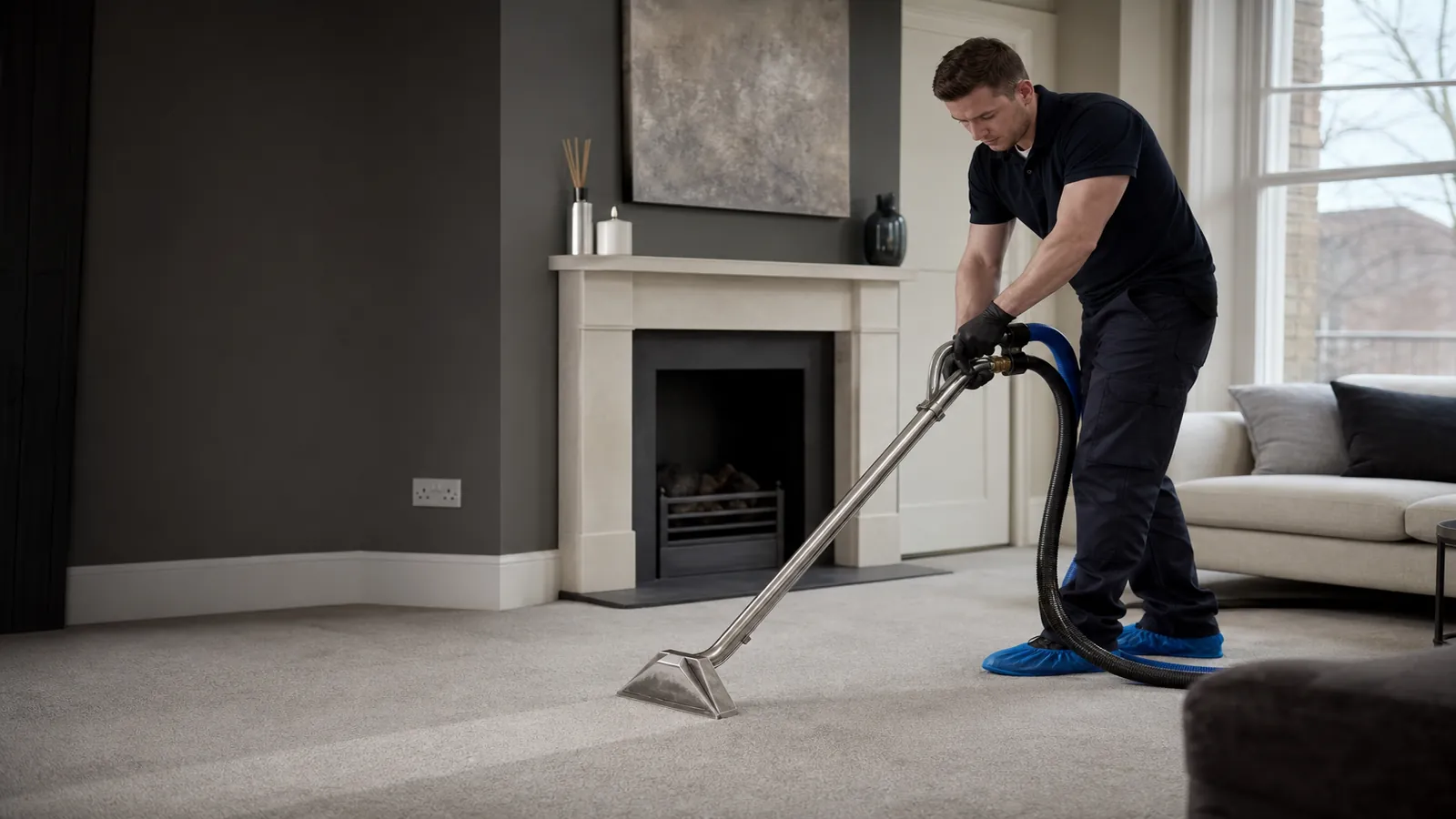
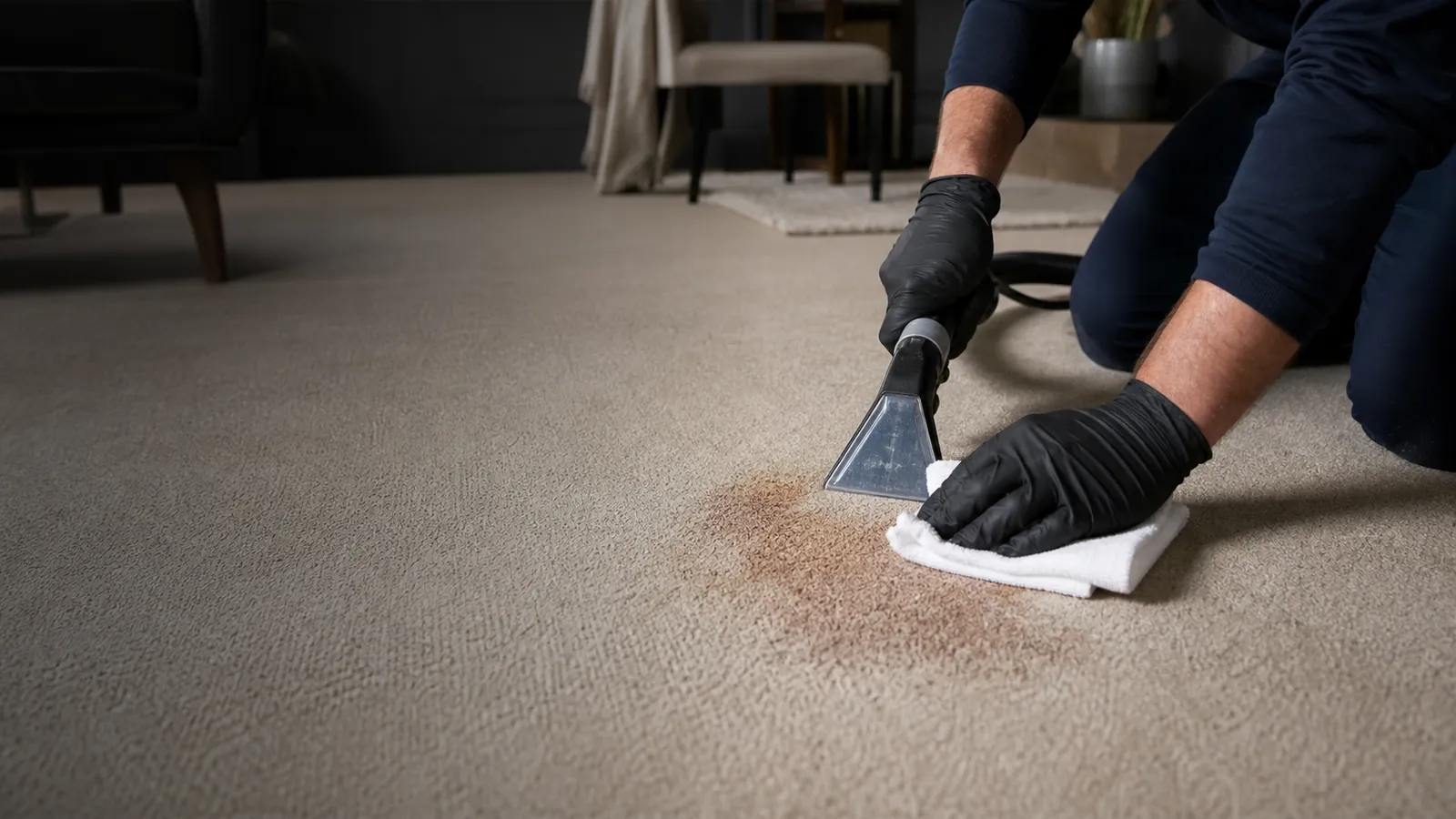
A dark or musty area may need investigation before cleaning
A carpet mark associated with moisture is not automatically a routine spill. A tipped drink, repeated wet mopping at a threshold, a plant pot, a plumbing leak and moisture rising from beneath the carpet create different risks. The visible surface may be only one part of the problem. For a Brentford enquiry, the first useful question is whether the source is known, stopped and dry enough for ordinary carpet work to proceed.
Professional carpet cleaning introduces controlled moisture for a defined purpose; it is not a remedy for an active leak or saturated underlay. If the carpet feels persistently damp, smells musty, shows spreading discolouration or sits beside recent water damage, disclose that history when booking. The company can decide whether an inspection is appropriate or whether the source needs attention from a different specialist first.
Where the issue is a contained surface spill, the normal carpet process can begin with fibre and colour checks, thorough vacuuming, local assessment and a suitable room method. Where contamination appears to extend into backing or underlay, the cleaner explains what is and is not reachable. Masking an odour with fragrance would not prove that hidden material has been resolved.
A larger property reset may include domestic cleaning, but ordinary room care should not spread hard-floor water or spray onto carpet edges. If another cleaner discovers dampness, pause work in that area and identify the cause. Coordinated services are useful only when they share relevant observations rather than cleaning over them.
The objective is a safe boundary. Dry, suitable carpet receives a proportionate textile service. Active moisture, structural causes and inaccessible contamination are documented as outside that boundary. The customer receives a clearer route forward instead of paying for repeated surface treatment while the underlying source remains unchanged.
SCOPE / CONFIRM BEFORE BOOKING
What a dining-area carpet clean provides
Included in this brief
- Spill chronology: review of likely substance, timing, temperature and products or techniques already used.
- Whole-area preparation: vacuuming of accessible carpet around furniture boundaries, chair routes and room edges.
- Tested local work: proportionate treatment selected after fibre, colour and mark assessment.
- Room handover: review of residual damage, drying, furniture placement and a safer response to future spills.
Outside this cleaning brief
- No guarantee is made for old food dye, bleaching, heat damage, worn pile or marks changed by several unknown products.
- Dismantling or moving unsafe dining furniture is not assumed; accessible carpet depends on the agreed room setup.
- Carpet cleaning does not include pest treatment or remediation of contamination that extends into inaccessible structural layers.
PREPARATION / BEFORE THE VISIT
Prepare the Brentford address without pre-cleaning it.
- Confirm the entrance and any requirement involving street-specific parking controls.
- List the rooms or items covered by carpet cleaning.
- Point out sensitive finishes, pets, alarms and anything that must not be moved.
- Agree the key return, completion contact and any building time restriction.
PRICING / CLEAR STARTING POINTS
List the room, furniture and spill priorities together
A quotation should include room dimensions, stairs if relevant, large furniture that remains and the number and history of priority marks. Dining areas can require deliberate work around table boundaries and chair routes even when the overall floor is modest. General guidance appears under cleaning prices, while the confirmed scope should state whether routine spot attention and furniture assumptions are included. A photograph can show position but not reveal sugar, fat, dye or previous detergent. Avoid accepting a price based on guaranteed stain removal from an image. Professional value lies in assessment, preparation and knowing when further chemical action risks colour or texture.
01
Single room
From £15 / room
Compact bedroom or study
02
Double room
From £15 / room
Standard double bedroom
03
Lounge
From £15 / room
Living room with clear equipment access
04
Stairs
Quotation
Standard flight, subject to construction
05
Hallway
Quotation
Reachable hall or landing
06
Whole property
Quotation
Measured rooms and fibre types
Prices are guide prices.
Final quotation depends on the property, condition and requirements.
SERVICE TEAMS / THE AGREED WORK
Four parts of a useful spill history

The original substance
Food and drink contain different mixtures of water, colour, oil, protein and sugar. Identifying the likely material guides testing. An unknown mark remains an uncertainty, not an invitation to use the strongest product.

The time before blotting
Fresh free liquid behaves differently from dried residue. Record how quickly the area was addressed and whether heat was involved. Timing helps explain why an apparently small incident may have travelled deeper.

The home-cleaning attempt
Name the detergent, disinfectant, stain remover or improvised mixture used. Residue and dye change can come from the response as well as the spill. This history prevents accidental product layering.

The surrounding traffic
Chair movement and footwear can spread residue and add dry soil. The technician assesses beyond the centre, then integrates local treatment into the full room process.
Dining chairs with fabric seats can be discussed through upholstery cleaning. Their fabric, filling and construction receive separate tests from the carpet below.
PROCESS / FOUR DECISIONS
A carpet appointment with the route already solved
01
Record the building instructions
The booking captures entry contacts, floor level, stairs or lift, parking information supplied by the customer and any time window imposed by the property.
02
Confirm the route on arrival
Before unloading fully, the technician checks that access matches the description and identifies a safe setup position. Material discrepancies are discussed instead of ignored.
03
Inspect and clean the booked carpet
Rooms are assessed, dry debris is removed and suitable treatment proceeds in the agreed sequence. Practical logistics do not replace fibre testing, spot judgement or controlled solution use.
04
Review and clear the route
The customer inspects completed areas and receives aftercare advice. Machinery is taken out carefully, doors or access systems are handled as agreed, and shared routes are left tidy.
VISIT / HANDOVER
Send access information in one usable message

Include the full address, correct entrance, floor, lift or stair information, arrival contact and any time-limited building procedure. Clear personal belongings from the route inside the property and let the cleaner know if a room must stay available. Do not promise parking or loading rights that you do not control. If permission from a manager or landlord is required, obtain it before the booking date.
A lift changes carrying, not carpet chemistry
Easier equipment access may make setup more efficient, but it does not decide the cleaning method. Once inside, the technician still examines fibre, colour, wear and marks. Conversely, stairs may slow carrying without making a stronger product appropriate.
Home working needs a temporary boundary
Computers, cables and wheeled chairs should be discussed before a study is cleaned. The user secures sensitive equipment and identifies essential access. The carpet then needs protection from repeated chair movement and foot traffic until it is dry.
Communal carpet is a different client brief
Passing over a shared hallway does not authorise treatment of it. Responsibility, insurance expectations, access and the area included may involve a managing party. Keep the private booking confined to the agreed property unless a separate authorised instruction exists.
Soft furnishings may alter the room order
If seating is also booked through upholstery cleaning, allow a setup that gives both textiles space and airflow. The upholstery survey remains independent, and cleaned furniture should not be placed onto damp carpet without protection and agreement.
MAP / COVERAGE CONTEXT
Route planning for carpet cleaning in Brentford.
Coverage context for Brentford. This map does not represent a staffed local office.
RELATED SERVICES / SAME AREA
Related services in Brentford
NEARBY AREAS / SAME SERVICE
Carpet Cleaning near Brentford
Contact the company immediately. The carrying route, safety and available appointment time may change. The technician should not be expected to improvise unsafe transport of equipment.
Access questions for Brentford carpet cleaning
What if the lift is unavailable on the day?
Only if that arrangement has been accepted in advance. Key collection adds time, responsibility and another access point, so it should never be assumed from a note left on the day.
Can the cleaner collect keys elsewhere?
Possibly, depending on the layout and work sequence. Identify it during booking. Hoses, machinery and drying carpet still create temporary restrictions that the occupier must respect.
Can one room remain in use?
No, not unless they are specifically authorised and quoted. A private residential booking normally covers only the carpeted areas identified within that scope.
Are shared hallways included in my room price?
No. The map describes service coverage; it does not identify a staffed local branch.
Describe how the cleaner reaches the carpet
For carpet cleaning in Brentford, send the room list together with entry, floor and carrying-route details. Mention any controlled access or room that must stay usable. With logistics settled early, appointment time can be devoted to inspection, preparation and a careful finish rather than avoidable searching and delay.