
Chesham / HP5
Carpet Cleaning Chesham: A Condition-Led Plan for the Floor
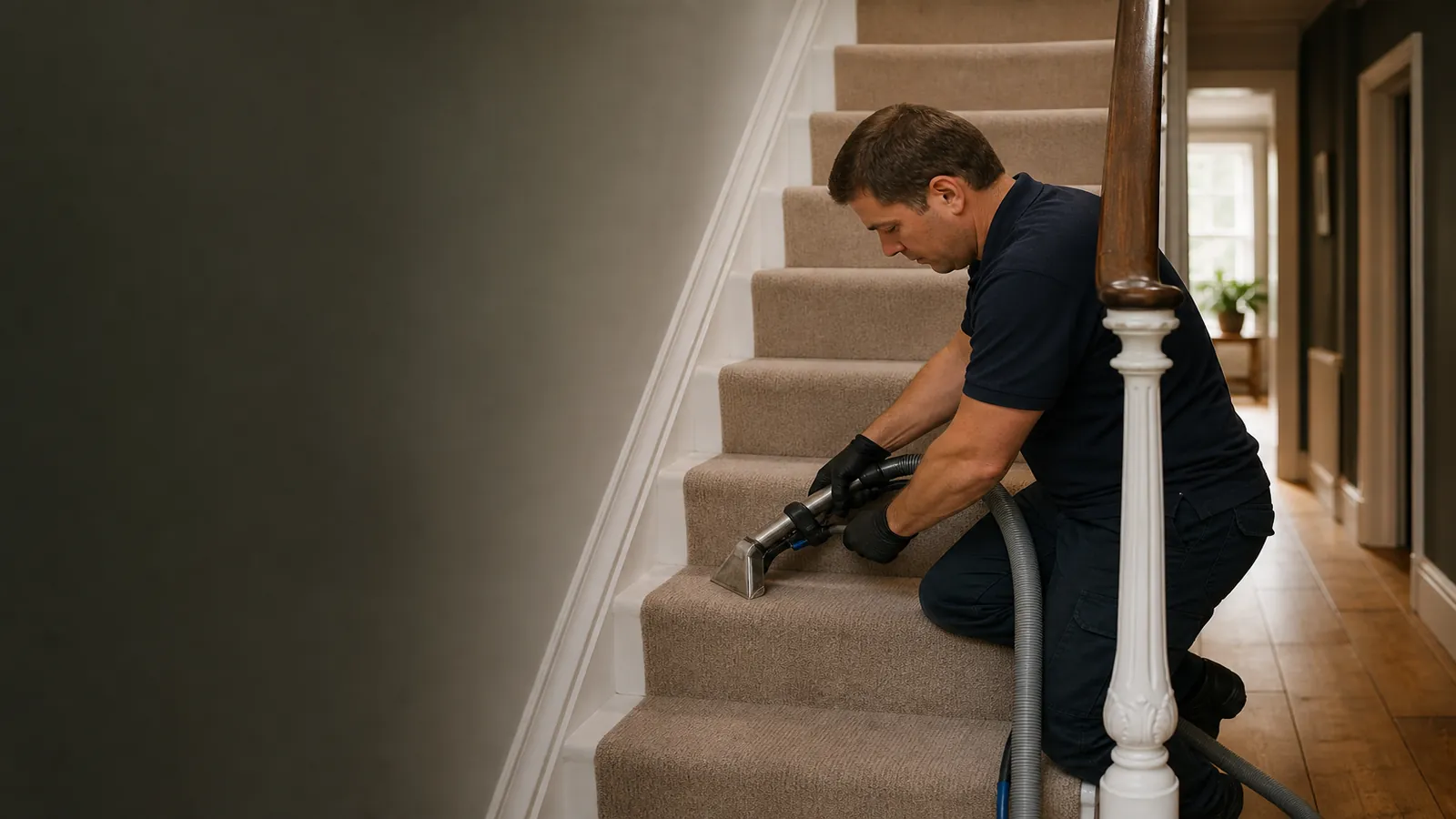
- Treads counted separately from adjoining rooms
- Nosings and turns inspected for wear before cleaning
- Edge soil removed without forcing moisture into gaps
- Safe access maintained while each section is treated
The safest clean begins with material knowledge
Two carpets can carry similar grey traffic lanes and still require notably different handling. Fibre content, twist, backing, dye behaviour, age and earlier treatments affect what can be done safely. Our Chesham page therefore approaches the appointment from the fibre outward: establish the material’s working range, then design the soil-removal steps inside it.
Identification is not based on appearance alone. Labels and customer records are useful when available, while inspection and a discreet response test add evidence on site. Wool-rich pile, synthetics and blends can each perform well under an appropriate system, but they should not be pushed through one standard temperature, solution strength or agitation routine for convenience.
The condition survey also looks for problems that cleaning cannot correct. Fuzzing, abrasion, loose seams, colour loss and changes caused by sunlight may become more visible once surrounding soil is removed. Noting them beforehand protects the carpet and sets an honest expectation: cleanliness can improve without the textile becoming new.
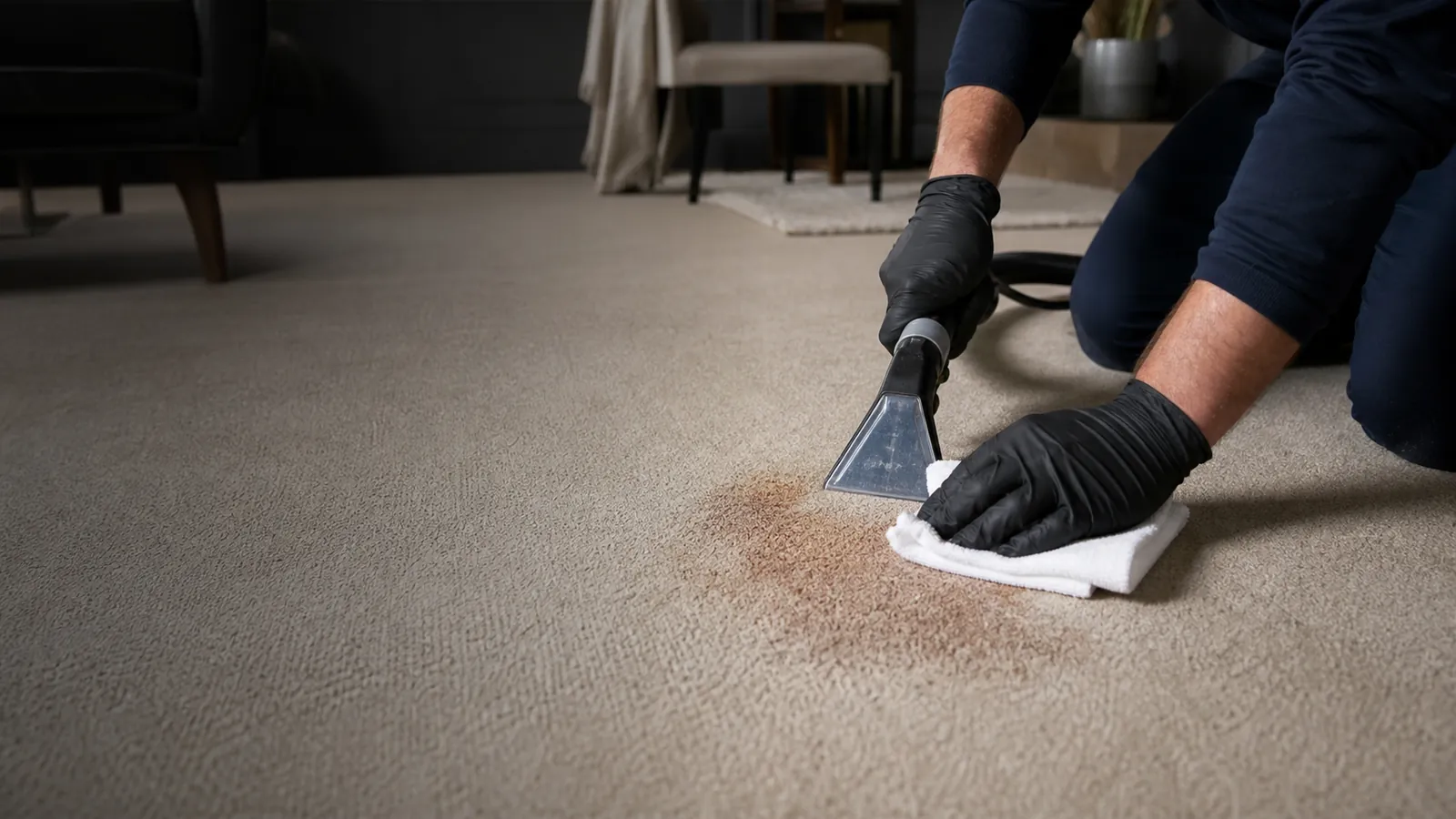
Stain work remains subordinate to fibre safety. A stubborn patch does not justify repeated strong applications when test results show limited movement or colour risk. We may make a second controlled attempt using a different principle, but we stop where the likely benefit no longer outweighs the possibility of setting, spreading or damaging the mark.
Related textiles deserve the same independence. An armchair is not treated with a carpet setting merely because it appears wool-like, and a mattress has its own layered construction. Customers can scope upholstery cleaning or mattress cleaning separately so every material receives a specific assessment.
SERVICE SCOPE / READ BEFORE BOOKING
The boundaries of a low-disruption Chesham clean
Included in this brief
- A room-use, access and furniture discussion before work begins
- Condition inspection and methodical dry-soil removal
- Fibre-compatible pre-treatment, agitation, rinse and recovery
- A handover covering drying, room access and lasting limitations
Outside this cleaning brief
- Moving loaded shelving, fragile collections or connected electronics
- A guarantee of silent operation or a universal return-to-use hour
- Document, book, curtain and furniture cleaning unless separately scoped

PRICING / CLEAR STARTING POINTS
The soil pattern contributes to a clear quotation
Rooms, stairs, measured area, carpet type, furnishings, access and notable contamination are described before work is priced. Consult current price guidance, then provide the Chesham job details. A traffic lane can require attention without being turned into an unsupported local characteristic.
01
Single room
From £15 / room
Compact bedroom or study
02
Double room
From £15 / room
Standard double bedroom
03
Lounge
From £15 / room
Living room with clear equipment access
04
Stairs
Quotation
Standard flight, subject to construction
05
Hallway
Quotation
Reachable hall or landing
06
Whole property
Quotation
Measured rooms and fibre types
Prices are guide prices.
Final quotation depends on the property, condition and requirements.
SERVICE TEAMS / THE AGREED WORK
Signals that guide the next maintenance decision

Vacuuming no longer restores clarity
When careful dry care leaves an even grey cast, bonded soil may have accumulated. The floor is assessed before assuming stronger household product or immediate full-property extraction.

One route changes faster than the rooms
Entrance and corridor use can justify a targeted discussion. The cleaner considers blending and textile continuity so partial work does not leave a sharp visual boundary.

A recurring sticky patch
The history may involve spill residue or earlier cleaning product. It receives testing and a separate record, preventing the whole maintenance interval from being determined by one local problem.

Permanent wear used as a false alarm
An abraded strip can remain dull even when clean. Documenting it at baseline stops repeated unnecessary treatment being triggered by a colour that soil removal cannot change.
Evidence-based frequency requires ordinary notes, not complex monitoring. A dated photograph in comparable light, a record of major spills and attention to how the pile responds to vacuuming are enough to make the next conversation more useful. Household changes such as rearranged furniture, a new entrance route or different occupancy can reset the pattern. The interval is reconsidered rather than defended because it appeared on an old reminder.
PROCESS / FOUR DECISIONS
Create a baseline that future care can use
01
Record today’s pattern
The operative maps traffic, protected pile, spots and existing damage. Previous intervals and products provide context but do not dictate the method chosen for the current textile.
02
Remove dry and bonded loads in order
Vacuum extraction reduces grit; compatible pre-treatment and agitation release films. Extraction rinses the pile and uses recovery strokes to avoid leaving a sticky maintenance problem behind.
03
Define the honest clean baseline
After grooming, the cleaner marks any fading, shading, dents or wear that remains. The customer can distinguish these stable features from new soil during later observation.
04
Agree what to watch, not a sales date
Aftercare covers equipment suitability, higher-use zones, spill blotting and drying. A future booking is suggested only when condition evidence supports it, not as an automatic conclusion.
VISIT / HANDOVER
Share care records and protect fragile surroundings


Provide labels or manufacturer guidance where available, remove small decorative objects and identify anything that must not be moved. Avoid fresh spot products. For coordinated property work, keep end of tenancy cleaning as a separate specification with a sequence that protects the carpet.
Why a burn test is not casual on-site theatre
Material identification should use available labels, professional observation and suitable low-risk checks. A destructive test is not performed merely to create certainty for a sales explanation. Where composition remains uncertain, the method is chosen conservatively and adjusted from observed response.
Temperature is one variable, not the service
Warm solution can support some cleaning systems, but more heat is not a universal measure of quality. Fibre, dye, backing and the contaminant all influence the safe range. Preparation and recovery may matter more than pursuing a dramatic machine setting.
Colour change can sit beneath soil
Removing grey residue sometimes reveals fading or a previous chemical mark that was already present. This does not mean the cleaning created missing dye. Pre-condition notes and photographs help distinguish a revealed defect from a new event.
Routine care between professional visits
Use vacuum equipment appropriate for the pile and avoid repeated passes with a brush setting that distorts delicate fibres. Blot fresh spills, do not scrub them sideways, and seek advice before layering several products onto an uncertain material.
MAP / COVERAGE CONTEXT
Plan the route into the Chesham property.
Coverage context for Chesham. This map does not represent a staffed local office.
EXPLORE / NEXT
Related services in Chesham
EXPLORE / NEXT
Nearby areas for carpet cleaning
Only if the agreed working area, equipment route and safety allow it, which is often impractical. Clearing the room or using another space usually supports a more complete and efficient treatment.
Chesham questions about low-disruption carpet care
Can I stay at my desk while the carpet is cleaned?
Professional vacuum and extraction equipment produces operating noise. We can discuss timing, but should not misrepresent the necessary stages as silent or reduce them to protect a marketing claim.
Will the machinery be quiet?
Items securely above the working area may remain when the customer accepts the arrangement, but floor-level or vulnerable materials should be removed. Loaded shelving itself is not moved casually.
Can books remain on fixed shelving?
Yes, when it is declared and assessed under upholstery cleaning. Its fabric, cushions and drying plan remain separate from the fitted carpet method.
Can an armchair be cleaned at the same time?
No. It describes service coverage and practical local context, not a staffed branch.
Explain what created dust in the Chesham carpet
Send the work history, room list, stairs, photographs and confirmation that dust-producing tasks have ended. Identify sharp or uncertain material rather than sweeping it into the pile. This allows us to assess whether ordinary carpet cleaning is suitable and to allocate enough dry preparation before any rinse begins.