
Streatham / SW16
Carpet Cleaning Streatham: A Practical Plan Built Around Condition
- Recent decorating or building residue disclosed in advance
- Dry containment and extraction given priority
- Edges and air-deposition lines assessed separately
- Wet treatment begins only after the loose load is reduced
SERVICE TEAMS / THE AGREED WORK
Four zones within a possible whole-home booking

An entrance and circulation route
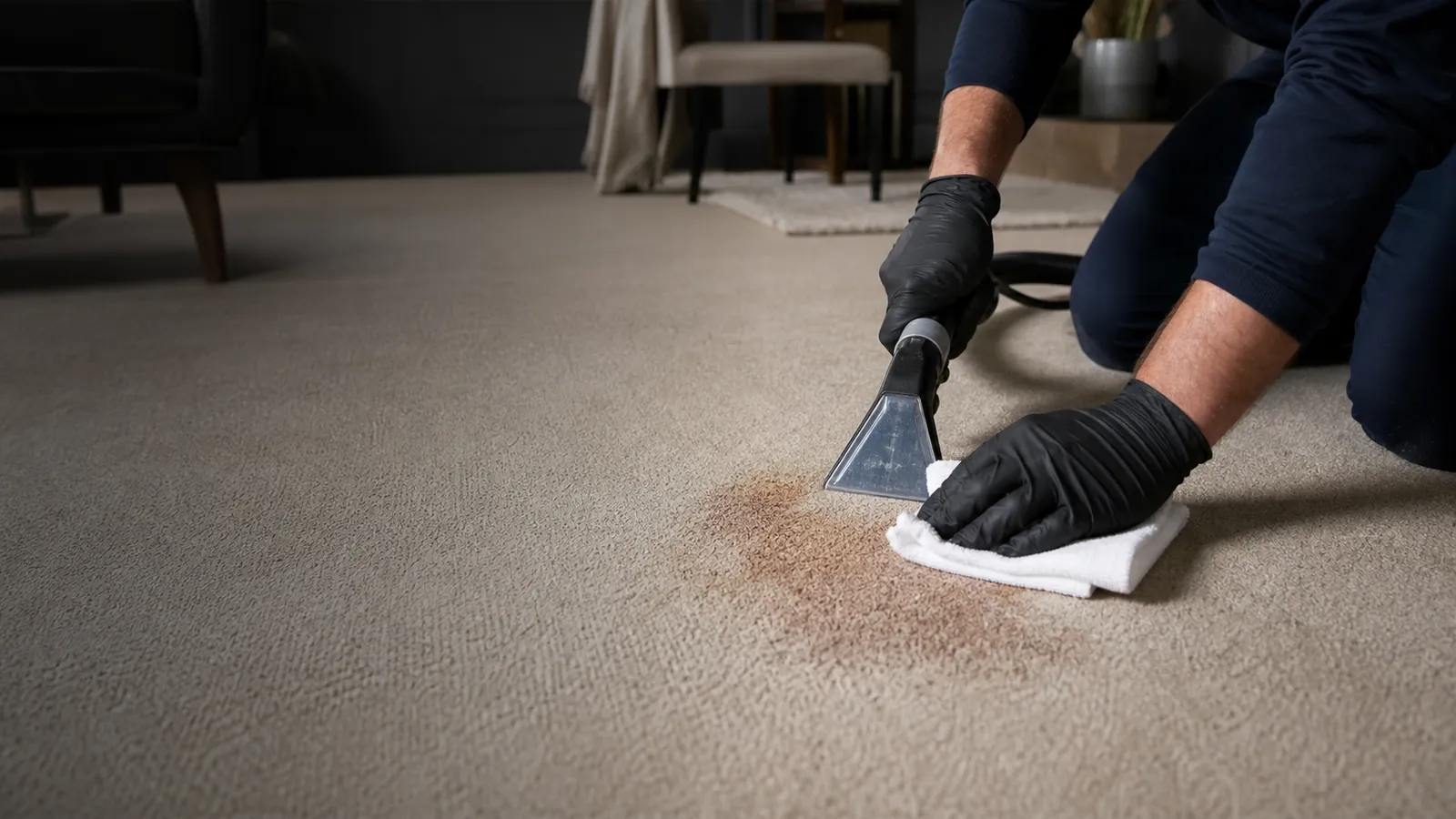
Loose grit and bonded tracking may overlap with fibre wear. Vacuum preparation addresses the particulate load first, after which the rinse is judged against a protected edge rather than a promise to rebuild the pile.

A furnished sitting area
The accessible carpet is agreed around sofas, tables and connected items. Shading beneath furniture becomes useful evidence, but an unreachable section is stated openly instead of implied within the cleaned area.

A quieter bedroom
Lower visible soil does not remove the need for inspection or dry extraction. Treatment strength and agitation can remain proportionate, avoiding unnecessary work merely to make every room follow the same dramatic routine.

Stairs between the zones
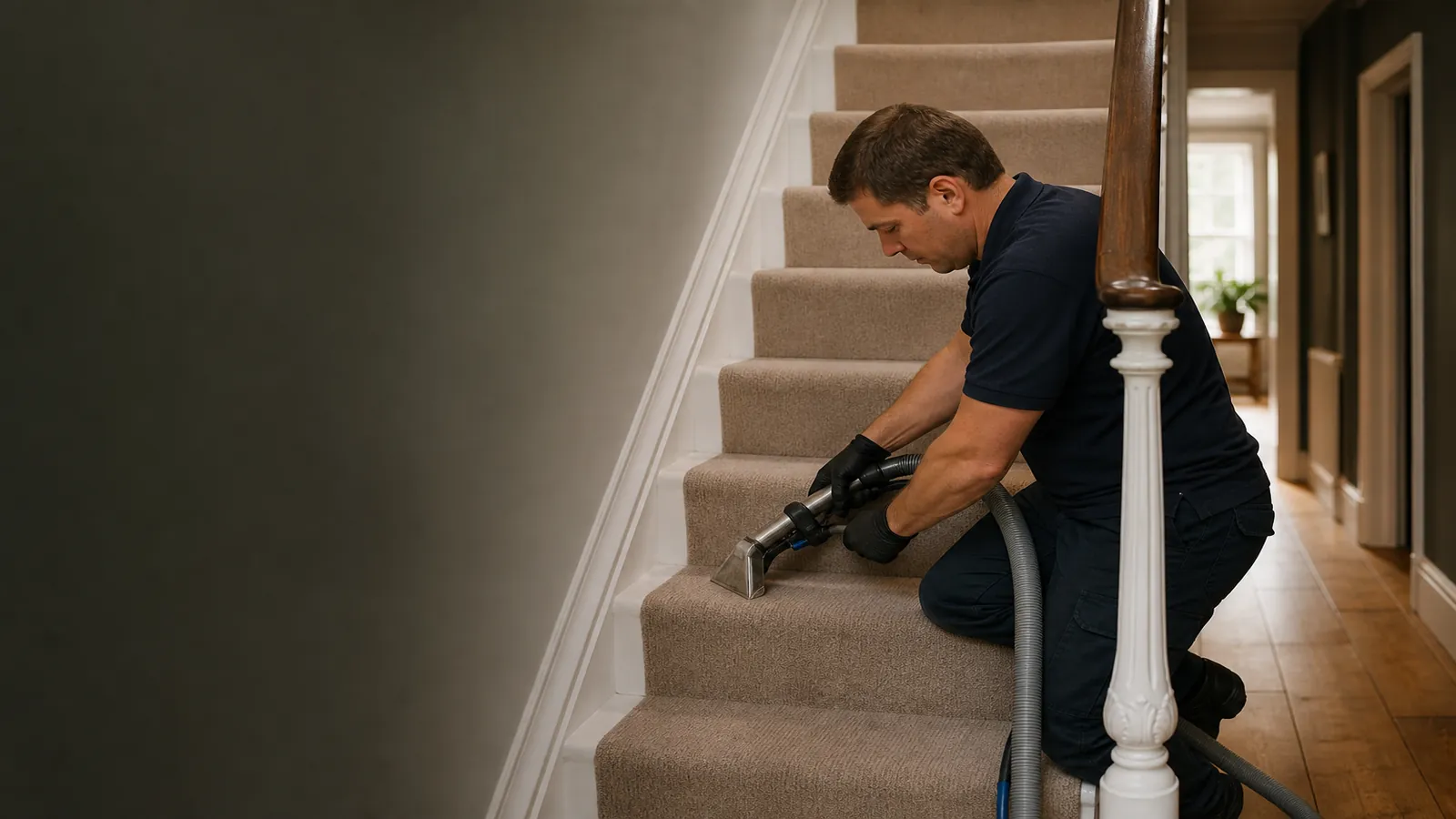
Treads, turns and landings are counted independently. Their edges and nosings collect soil differently from flat floors, and the working sequence must preserve a safe route while equipment is positioned.
These zones illustrate planning decisions, not a claim about a standard Streatham household. The survey uses the layout, construction and condition supplied by the actual property. A zone can also change after furniture is moved or dry soil is extracted, so the map remains a working document rather than a rigid label imposed before the technician has seen the complete pile. The map should record practical boundaries as well as visual ones. A doorway may divide two fibres; a large rug may conceal a cleaner reference patch; a corridor can connect otherwise independent rooms. When a spot sits exactly on a transition, the technician checks both constructions rather than carrying one treatment blindly across the join. This detail also improves the quotation: customers can see which areas received ordinary preparation, which required targeted work and which remained unreachable. The resulting room plan is useful at handover because different drying advice can be attached to a dense section, stairs or a lightly treated bedroom without pretending that one instruction fits the entire property.
Drying begins with decisions made before extraction
Customers often ask when a carpet will be ready before describing the floor. A useful answer needs fibre, pile depth, backing, room temperature, ventilation and the intensity of treatment. Our Streatham editorial angle is therefore return-to-use planning: understand when each room is needed, then design a responsible sequence without inventing a universal drying guarantee.
The plan may prioritise one bedroom, divide a larger area into workable zones or leave a route available where the property allows it. These are choices made from the customer’s actual layout, not claims about Streatham buildings. Furniture position and safe equipment access remain part of the discussion because they determine which sections can be completed without creating new obstacles.
Moisture control does not mean under-cleaning. Thorough vacuuming reduces the dry load, suitable pre-treatment loosens bonded matter, and measured agitation helps chemistry work before the rinse. Extraction then uses enough solution to carry released soil away while repeated recovery strokes remove what the pile no longer needs to hold.
Ventilation is considered sensibly. Opening windows may help where safe and appropriate; heating, airflow and seasonal conditions also matter. We do not prescribe one action remotely or tell occupants to compromise security. The technician reviews the available options and explains how to support drying after the equipment has been removed.
If a property-wide service is being coordinated, end of tenancy cleaning should be ordered so other work does not cross damp carpet. Separate scopes keep responsibility clear. The final handover states which sections were treated, what lasting marks remain and how use can resume without undoing the clean.
SERVICE SCOPE / READ BEFORE BOOKING
The boundaries of a low-disruption Streatham clean
Included in this brief
- A room-use, access and furniture discussion before work begins
- Condition inspection and methodical dry-soil removal
- Fibre-compatible pre-treatment, agitation, rinse and recovery
- A handover covering drying, room access and lasting limitations
Outside this cleaning brief
- Moving loaded shelving, fragile collections or connected electronics
- A guarantee of silent operation or a universal return-to-use hour
- Document, book, curtain and furniture cleaning unless separately scoped
PRICING / CLEAR STARTING POINTS
The quotation records different materials rather than averaging them away
List rooms, stairs, carpet changes, labels, marks, furnishings and access. Refer to the published prices for current guidance. The Streatham scope can state separate treatment considerations while keeping one understandable quotation for the agreed appointment.
01
Single room
From £15 / room
Compact bedroom or study
02
Double room
From £15 / room
Standard double bedroom
03
Lounge
From £15 / room
Living room with clear equipment access
04
Stairs
Quotation
Standard flight, subject to construction
05
Hallway
Quotation
Reachable hall or landing
06
Whole property
Quotation
Measured rooms and fibre types
Prices are guide prices.
Final quotation depends on the property, condition and requirements.
Vacuum stripes are temporary presentation
Lines left by a vacuum or groomer can make a clean floor look deliberately finished, but they are not themselves proof of soil removal. Assessment considers recovered contamination, feel, residue and the view after normal pile movement.
Photography needs comparable conditions
A bright flash in one image and side light in another can manufacture an apparent transformation. Useful records keep position and lighting reasonably consistent, while acknowledging that a camera still cannot capture every textile response.
Furniture creates a protected comparison
Carpet beneath a movable item may be less faded, less worn and less dirty. Its colour is informative but not an unconditional target. Handling must be agreed before the item is shifted for inspection.
Fabric furniture has its own shading behaviour
Velvet and other upholstery can also change with nap direction. Request upholstery cleaning for a separate fabric assessment instead of transferring conclusions from the floor.
PROCESS / FOUR DECISIONS
Create a baseline that future care can use
01
Record today’s pattern
The operative maps traffic, protected pile, spots and existing damage. Previous intervals and products provide context but do not dictate the method chosen for the current textile.
02
Remove dry and bonded loads in order
Vacuum extraction reduces grit; compatible pre-treatment and agitation release films. Extraction rinses the pile and uses recovery strokes to avoid leaving a sticky maintenance problem behind.
03
Define the honest clean baseline
After grooming, the cleaner marks any fading, shading, dents or wear that remains. The customer can distinguish these stable features from new soil during later observation.
04
Agree what to watch, not a sales date
Aftercare covers equipment suitability, higher-use zones, spill blotting and drying. A future booking is suggested only when condition evidence supports it, not as an automatic conclusion.
VISIT / HANDOVER
Preserve information before the technician arrives
Blot fresh liquid with a clean pale towel, lift solids carefully and avoid scrubbing. Keep containers or photographs of products already used. If the job is connected with end of tenancy cleaning, disclose the timetable so spot work and final floor drying are not squeezed into an unrealistic gap.
MAP / COVERAGE CONTEXT
Plan the route into the Streatham property.
Coverage context for Streatham. This map does not represent a staffed local office.
EXPLORE / NEXT
Related services in Streatham
EXPLORE / NEXT
Nearby areas for carpet cleaning
Not necessarily. Remove small and fragile belongings, then describe larger items. The practical solution depends on safe lifting, available space and whether moving an object could damage it or the property.
Streatham access and carpet-care questions
Do I have to empty the entire room?
The operative will reassess what can be completed safely. A substantial undisclosed restriction may change reachable scope or timing; it is better to resolve such details before the appointment.
Can cleaning continue if access differs from the booking?
That cannot be guaranteed without knowing the textile and conditions. Share the deadline early. We can plan responsibly and advise after extraction, but material behaviour takes precedence over a marketing promise.
Will the carpet be dry before an evening event?
Furniture handling must be agreed. Movable chairs may be cleared, while desks with equipment or cabling require a safe plan. Carpet cleaning does not include dismantling a workstation.
Are office chairs and desks included?
No. It describes service coverage and practical local context, not a staffed branch.
Give the Streatham carpet mark a useful history
Tell us what happened, when it occurred, what you did immediately and which products have touched the area since. Add the room schedule, stairs, carpet information and access notes. That evidence allows a careful quotation and a targeted plan without turning an uncertain stain into an unsupported guarantee. A photograph taken before further treatment is especially useful when the patch changes as it dries or when pile direction alters its appearance.