
Charlton / SE7
Carpet Cleaning Charlton: A Practical Plan Built Around Condition
- Busy routes separated from low-use perimeter carpet
- Access windows and occupants declared before booking
- Spot incidents logged instead of blended into general soil
- Return-to-use guidance based on the completed treatment
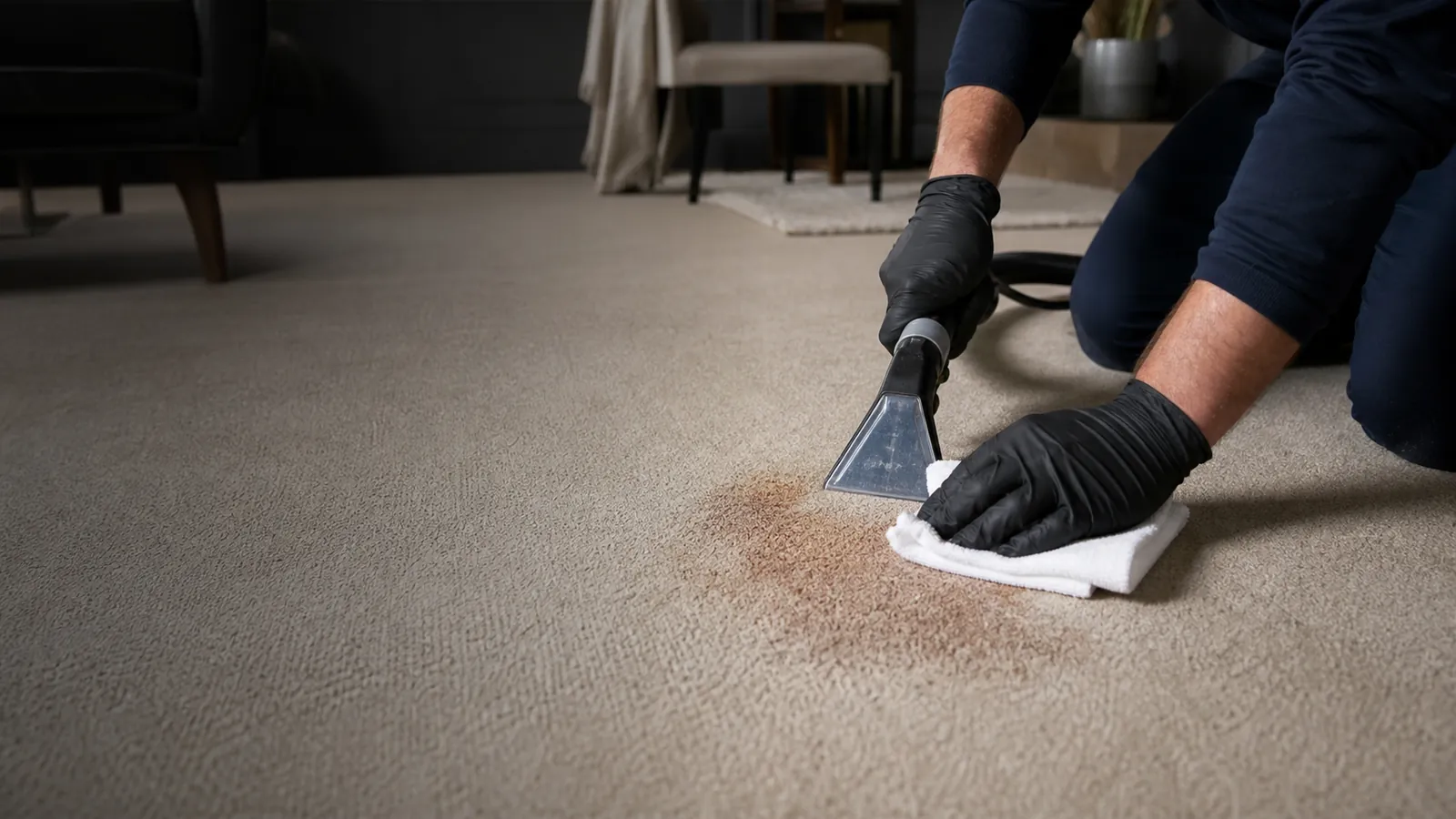
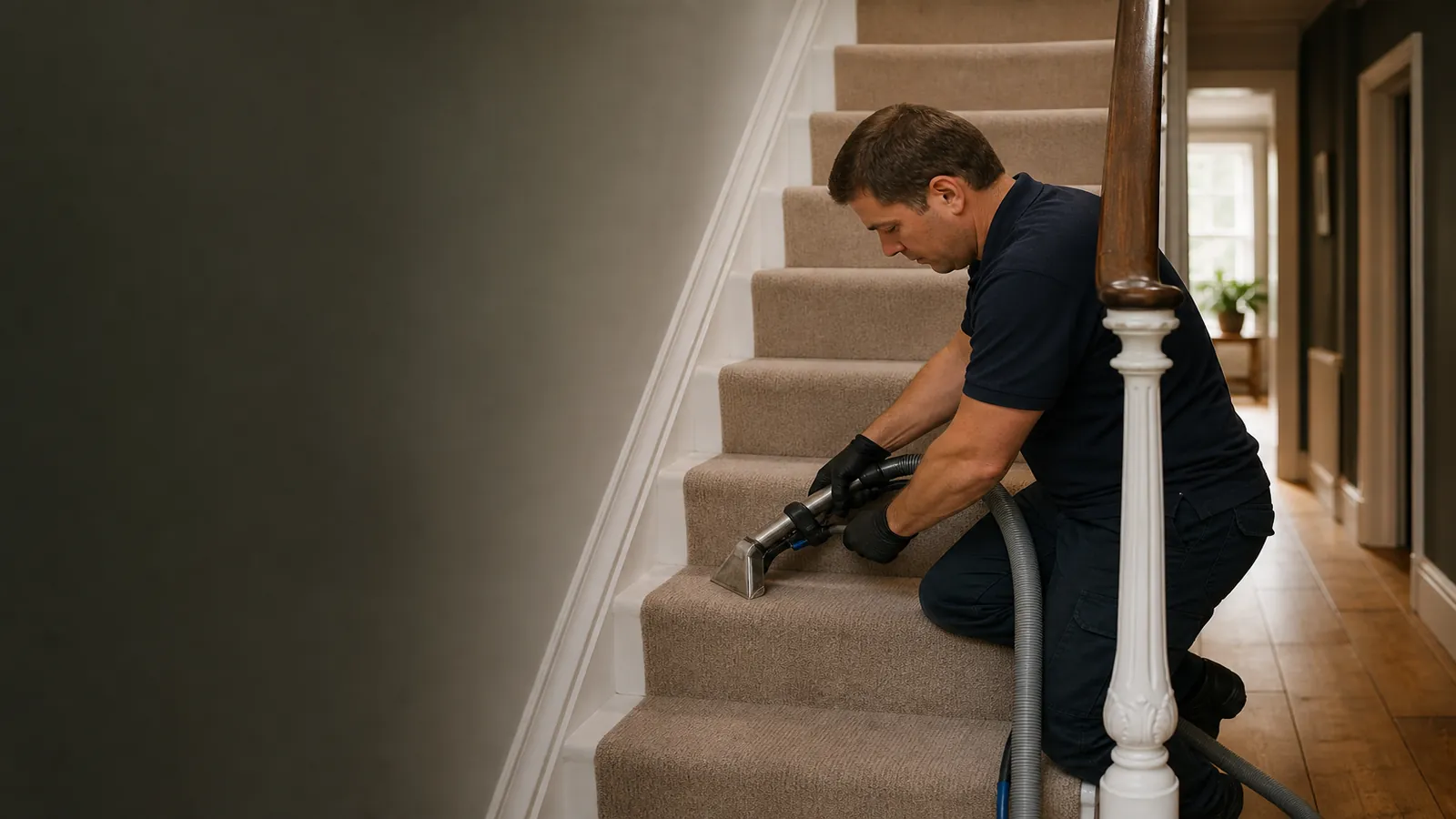
Furniture changes access, soil patterns and expectations
Most carpet is cleaned in rooms that contain something. Sofas protect one section from light while concentrating use around their edges; beds create narrow working routes; desks may be connected to equipment that cannot be shifted casually. The Charlton page treats furnishing as part of the cleaning brief rather than an awkward detail discovered after setup.
The customer lists what can be cleared, what may be moved by agreement and what must stay. The operative then distinguishes nominal floor area from carpet that is genuinely reachable. This protects belongings, prevents promises about hidden sections and makes the quotation understandable without assuming any standard Charlton room arrangement.
Exposed carpet is compared with protected pile because the contrast can reveal soil, fading or compression. Cleaning may bring the open area closer to its sheltered reference, but sunlight and wear can preserve a difference. The final result is judged honestly instead of moving furniture back quickly to conceal a limitation.
Working order matters in a crowded room. Dry extraction reaches edges and accessible gaps first; light items are placed only where they remain safe; pre-treatment and extraction proceed in sections that do not force the technician onto freshly cleaned pile. Moisture recovery and furniture protection form part of the same plan.
Fabric seating is not simply another obstacle or a bonus cleaning surface. Its labels, cushion fillings, piping and dye response require separate examination. Customers can combine the appointment with upholstery cleaning, provided both scopes are declared before the team arrives.
SERVICE SCOPE / READ BEFORE BOOKING
The components of a maintenance reset
Included in this brief
- Review of previous cleaning attempts, current texture and visible residue clues
- Dry particulate removal across open areas, edges and established traffic routes
- Proportionate pre-conditioning, agitation and extraction for the identified carpet
- Post-clean review with sensible guidance for drying and ongoing vacuum care
Outside this cleaning brief
- Promises to reverse pile wear, bleaching, fading or damaged construction
- Application of protective products unless specifically assessed and agreed
- Cleaning of curtains, seating or beds as unlisted additions

PRICING / CLEAR STARTING POINTS
Layered contamination needs a declared scope
Provide carpeted area, stairs, fibre, furnishings, access, spill history and any section with a different feel. Published information is on the prices page. The Charlton quote covers the floor treatment described, not unlisted cleaning of the surrounding source.
01
Single room
From £15 / room
Compact bedroom or study
02
Double room
From £15 / room
Standard double bedroom
03
Lounge
From £15 / room
Living room with clear equipment access
04
Stairs
Quotation
Standard flight, subject to construction
05
Hallway
Quotation
Reachable hall or landing
06
Whole property
Quotation
Measured rooms and fibre types
Prices are guide prices.
Final quotation depends on the property, condition and requirements.
SERVICE TEAMS / THE AGREED WORK
Details that can alter the safe treatment range

A contrasting woven border
Different yarn colours or construction may require a discreet check before the main field is treated. The operative avoids assuming that every decorative element shares one dye response.

A hand-finished join
The seam is examined for stability and recorded. Cleaning takes place around a sound join with controlled moisture; looseness is not pulled, concealed or presented as something extraction can mend.

Pile shading across a large area
Light and direction can create dramatic bands without a corresponding soil boundary. Viewing and grooming from several angles helps prevent unnecessary repeated treatment of an optical effect.

A valuable but immovable furnishing
The item defines a protected section of carpet and an access limit. It is left in place unless competent handling has been agreed, and the quotation identifies the reachable floor honestly.
A detailed register is documentation, not alarmism. Most observations simply provide a shared reference and allow the cleaner to choose a proportionate method with fewer assumptions. It should include ordinary facts as well as defects: where furniture stood, which direction the pile ran and which lighting condition revealed a mark. Those details make later comparison fairer. They also discourage unnecessary repeat treatment when the recorded difference is clearly structural or optical rather than recoverable soil. Decorative carpet also deserves an agreed viewing standard. A border can appear darker because its yarn lies in another direction, while a central field may have faded around protected furniture. The cleaner records those contrasts before grooming alters them. If a customer has a care document, only instructions relevant to the actual construction are carried into the plan; a generic label is not used to overrule an on-site colour response. During handover, the register becomes a concise explanation rather than a catalogue of warnings. It shows why one patch received a restrained second attempt and why another was left alone once testing indicated permanent dye change.
PROCESS / FOUR DECISIONS
A sequence designed around an occupied interior
01
Confirm entry and working space
On arrival, the operative verifies the rooms and equipment route, checks that agreed objects have been cleared and identifies anything that cannot be shifted without risk. The plan is adjusted before hoses and tools obstruct circulation.
02
Inspect the textile in place
Pile, edges, seams, visible wear and marks are reviewed under the available light. A discreet test is used where fibre or colour behaviour requires evidence, and permanent concerns are noted before cleaning changes the appearance.
03
Clean in a controlled order
Dry debris is extracted first. Pre-treatment and agitation follow the carpet’s tolerance; rinsing proceeds from the planned working position with enough recovery passes to avoid leaving excess solution simply for speed.
04
Reopen the room carefully
The final check covers edges, traffic routes and isolated treatments. Items are returned only where sensible, protective measures are used when appropriate, and the customer receives clear advice about ventilation and temporary restrictions.
VISIT / HANDOVER
Prepare a room list that includes differences


Clear portable belongings and note rooms that contain a different carpet, recent spill or access constraint. Identify what furniture remains. If the appointment accompanies end of tenancy cleaning, order the services so later work does not carry debris through completed zones.
Colour matching is not fibre identification
Manufacturers can produce similar shades in wool, nylon, polypropylene and blends. Material claims need labels, construction evidence or cautious testing. Appearance alone is too weak a basis for chemistry or temperature.
A threshold is both join and decision point
The strip is inspected for looseness and sharp edges. It also marks where tools, product or moisture settings may change. Stable joins can be cleaned around; repair remains outside the extraction service.
Rugs should be declared, not treated as loose carpet
A removable rug can have dyes, fringes and backing unlike the fitted pile below. It receives a separate suitability check and is not included merely because it lies within the measured room.
Furniture fabric creates another construction
Seating requires its own fibre and dye assessment. Use upholstery cleaning when chairs or sofas belong in the brief, keeping each textile’s test meaningful.
MAP / COVERAGE CONTEXT
Plan the route into the Charlton property.
Coverage context for Charlton. This map does not represent a staffed local office.
EXPLORE / NEXT
Related services in Charlton
EXPLORE / NEXT
Nearby areas for carpet cleaning
Method choice depends on carpet construction, condition and soil. Extraction can be highly effective, but no process should be assigned solely from a service-page label before inspection.
Charlton questions about moisture and extraction
Is hot-water extraction always the best option?
Some passes apply and recover solution; others focus on recovery. The pattern aims for even rinsing and sensible residual moisture, not repeated wetting without purpose.
Why make several passes over the same area?
Wet cleaning involves moisture entering the pile, and construction differs. The operative controls application and recovery, but an absolute remote guarantee about unseen backing would be misleading.
Can you guarantee that the backing will stay dry?
It should not be assumed. A bed’s layers and intended use demand a distinct plan. Review mattress cleaning and declare the item during enquiry.
Can mattress work use the same extraction setting?
No. It describes service coverage and practical local context, not a staffed branch.
Describe how soil travels through the Charlton property
Send the room and stair list, measurements, carpet information and photographs of traffic routes or distinct spots. Explain recent building dust, outdoor tracking or products used on the pile. A clear history helps us plan dry extraction, targeted treatment and a maintenance handover without confusing abrasion with dirt. Mention whether your vacuum has struggled with the pile or repeatedly fills from one zone. That observation does not diagnose the floor, but it can direct the initial survey towards an area carrying an unusual particulate load.