
Chessington / KT9
Carpet Cleaning Chessington: A Practical Plan Built Around Condition
- Seams, trims and pre-existing marks documented first
- Method chosen from construction rather than appearance
- Furniture and decorative edges handled within agreed limits
- The handover distinguishes cleaning from restoration
SERVICE TEAMS / THE AGREED WORK
Four timing questions worth resolving early

Which room is needed first?
Priority can influence the sequence when access permits. It does not remove inspection or safe dwell time, but it helps the team avoid finishing the most urgent space last without a reason.

Where will furniture stand?
An item cannot be moved onto freshly cleaned pile merely to expose another patch. Agreeing safe positions beforehand prevents a furnished room from becoming an improvised obstacle course.

What airflow is genuinely available?
The cleaner asks about ventilation options on site and gives proportionate advice. No particular window, balcony, fan or building system is presumed from the Chessington location name.

Will another team enter afterwards?
Decorators, movers and general cleaners can re-soil damp fibres. Their schedule should be shared so carpet treatment is not placed immediately before heavy traffic through the same rooms.
Return-to-use planning manages expectations and sequencing. It cannot override the physical time required for a specific pile and backing to release moisture safely.
Fine dust changes the preparation, not just the appearance
Sanding, drilling and decorating can leave particles much finer than ordinary crumbs. They settle across open pile, gather at skirting and may continue arriving from uncleared surfaces. The Chessington editorial theme is dust-first recovery: establish whether the source has stopped, remove as much material as possible while dry, and only then decide what bonded residue needs wet cleaning.
A carpet cleaner should not enter an active dusty workspace and pretend extraction alone will complete the property. The customer confirms that work has finished, loose debris is safe, and contractors’ waste has been removed. Hazardous or unidentified material requires appropriate handling outside an ordinary cleaning appointment.
The survey looks beyond the central floor. Fine lines near walls, beneath doors and around air routes may be filtration soil or recent dust deposition. Protected carpet beneath furniture offers a reference. Abrasion and old fading are recorded so a newly exposed contrast is not attributed automatically to missed particles.
Dry passes are slow and repeated, using tools suited to edges and accessible gaps. Bags, filters and equipment must be managed for the load. Introducing moisture too early can create paste, carry material deeper and make recovery harder. Pre-treatment therefore waits until the cleaner is satisfied that loose dust has been reduced responsibly.
The later rinse addresses remaining films and ordinary soil within the carpet’s safe range. It cannot guarantee removal of dust still falling from untreated walls, vents or furniture. A complete handover explains what was extracted, which surrounding sources remain and how to protect the floor from renewed deposition.
SERVICE SCOPE / READ BEFORE BOOKING
The components of a maintenance reset
Included in this brief
- Review of previous cleaning attempts, current texture and visible residue clues
- Dry particulate removal across open areas, edges and established traffic routes
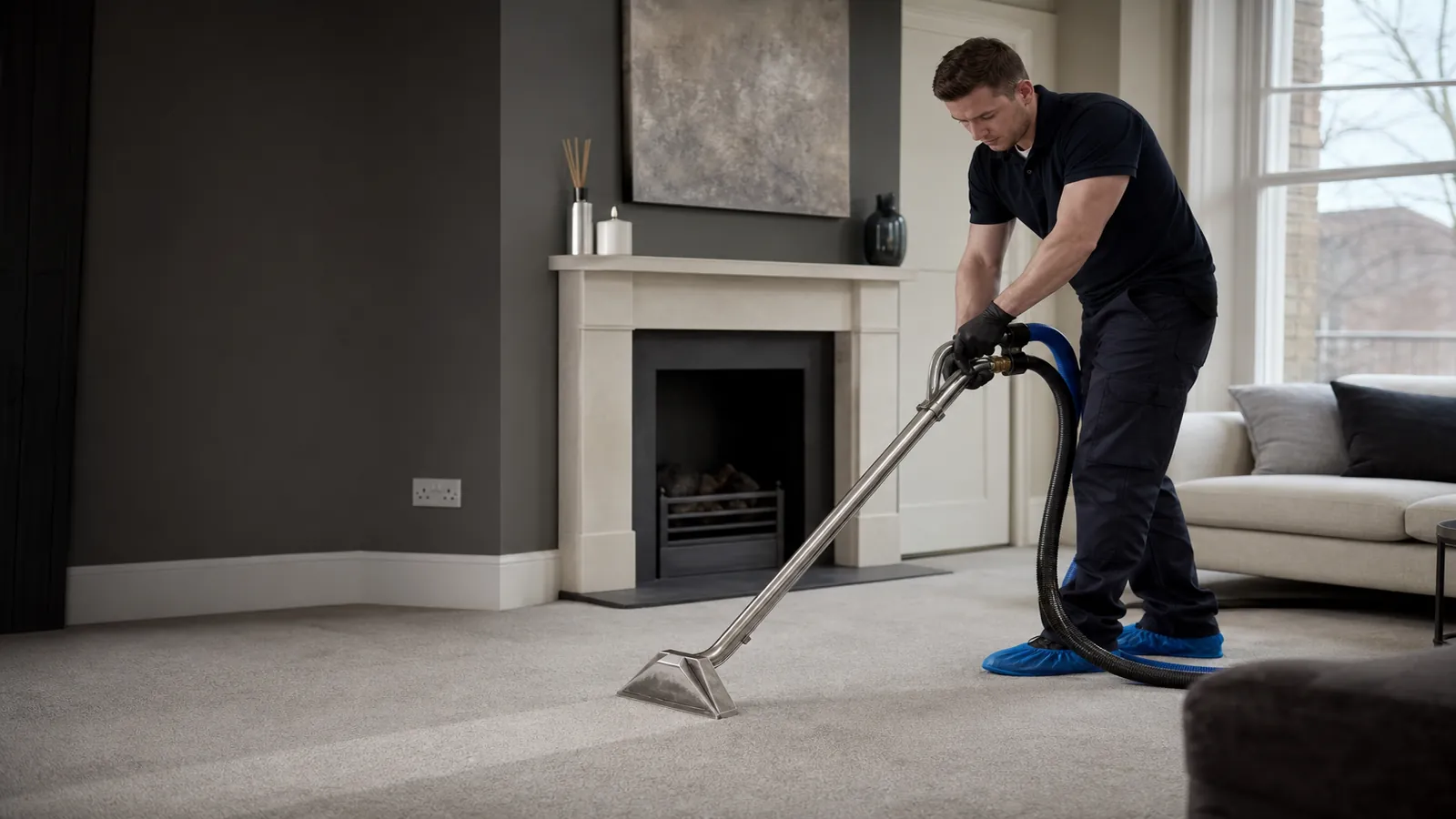
- Proportionate pre-conditioning, agitation and extraction for the identified carpet
- Post-clean review with sensible guidance for drying and ongoing vacuum care
Outside this cleaning brief
- Promises to reverse pile wear, bleaching, fading or damaged construction
- Application of protective products unless specifically assessed and agreed
- Cleaning of curtains, seating or beds as unlisted additions

PRICING / CLEAR STARTING POINTS
Quotation separates the room clean from exceptional spot work
Room dimensions, stairs, fibre, overall soil, access and the number and history of notable marks define the proposed work. Current information is maintained on the cleaning prices page. The Chessington address itself neither predicts stain removal nor substitutes for a complete scope.
01
Single room
From £15 / room
Compact bedroom or study
02
Double room
From £15 / room
Standard double bedroom
03
Lounge
From £15 / room
Living room with clear equipment access
04
Stairs
Quotation
Standard flight, subject to construction
05
Hallway
Quotation
Reachable hall or landing
06
Whole property
Quotation
Measured rooms and fibre types
Prices are guide prices.
Final quotation depends on the property, condition and requirements.
Commercial language does not change fibre physics
A deadline or business use cannot make solution evaporate on command. Construction, treatment and ventilation still determine drying. The service can plan carefully without representing operational pressure as a textile method.
Chair marks may combine soil and distortion
Castors and repeated turning can flatten pile and deposit residue. Cleaning removes what is recoverable, while dents or abrasion may remain. Furniture protection and safe repositioning are discussed at handover.
Office furniture is not automatically movable
Desks, cabinets and equipment require clearance, safe weight and an available holding area. The cleaner does not disconnect devices or move loaded storage simply to expand an estimated floor measurement.
Fabric seating needs its own incident log
A spill that crosses from chair to floor involves two constructions. Request upholstery cleaning so fabric response and cushion depth are assessed independently.
PROCESS / FOUR DECISIONS
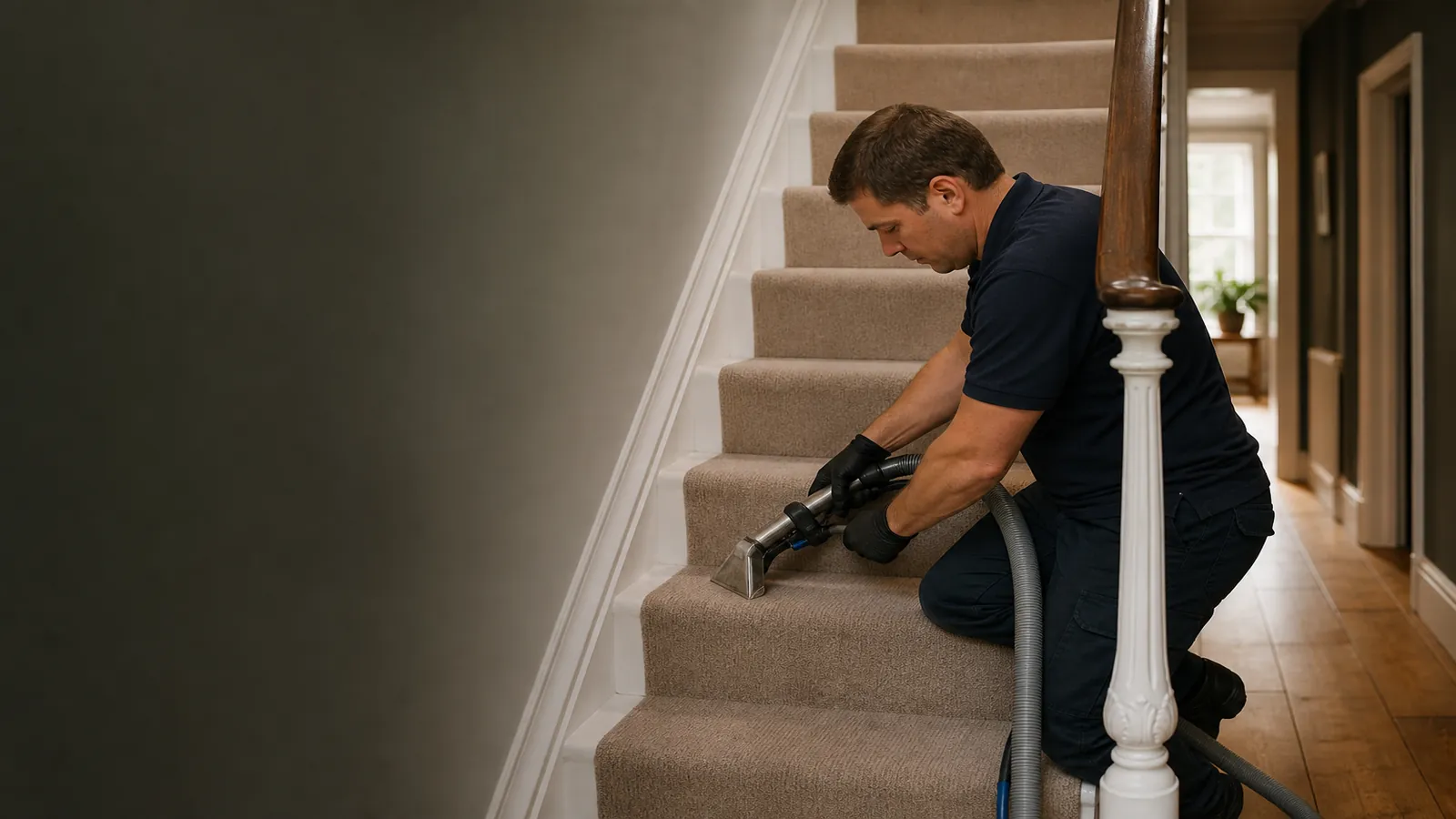
Clean a furnished room without improvising midway
01
Mark the reachable floor
The operative confirms the furniture agreement and examines protected versus exposed pile. Existing dents, fading, rust risk or loose edges are noted before anything approved for movement changes position.
02
Prepare boundaries and open areas
Vacuum tools address accessible edges, traffic lanes and gaps. Dry material is removed before items are repositioned, reducing the chance of transferring debris into a section already prepared.
03
Treat in a workable sequence
Pre-conditioner and agitation match the carpet. Extraction moves through planned zones with sufficient recovery, while the cleaner avoids trapping themselves or the furniture behind newly rinsed floor.
04
Protect the finish during reset
Only agreed pieces are returned, using suitable tabs or blocks where necessary. The customer is told when protection may be removed and which hidden or compressed areas remain outside the cleaned scope.
VISIT / HANDOVER
Prepare a room list that includes differences
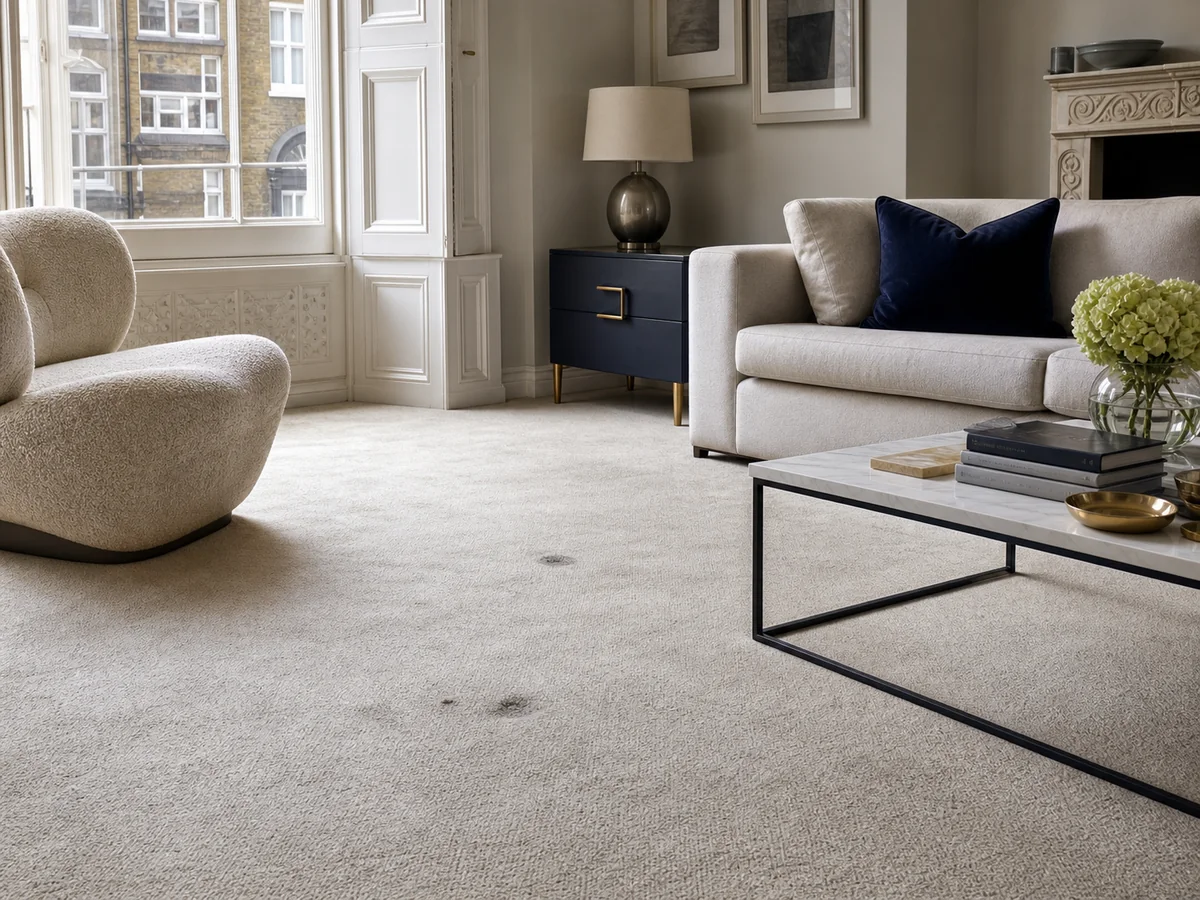
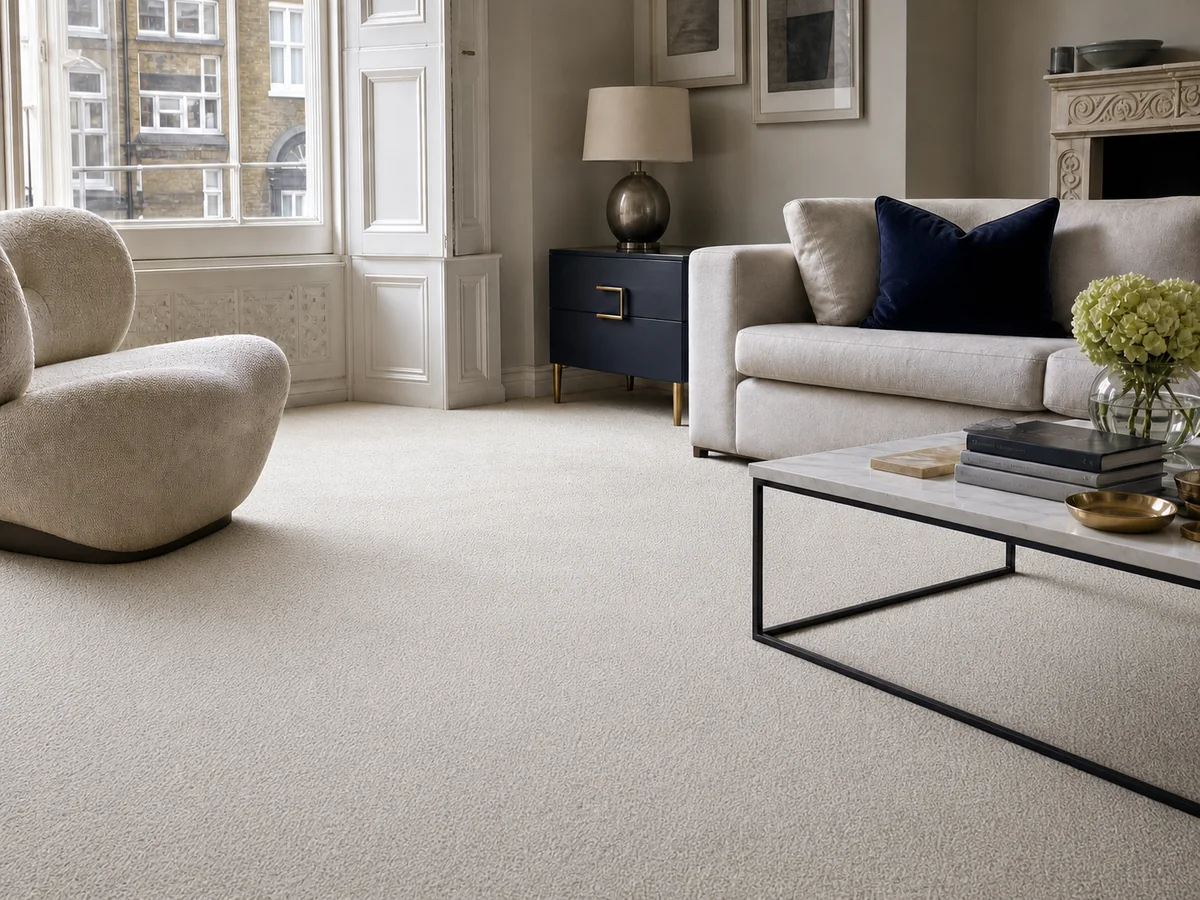
Clear portable belongings and note rooms that contain a different carpet, recent spill or access constraint. Identify what furniture remains. If the appointment accompanies end of tenancy cleaning, order the services so later work does not carry debris through completed zones.
MAP / COVERAGE CONTEXT
Plan the route into the Chessington property.
Coverage context for Chessington. This map does not represent a staffed local office.
EXPLORE / NEXT
Related services in Chessington
EXPLORE / NEXT
Nearby areas for carpet cleaning
Method choice depends on carpet construction, condition and soil. Extraction can be highly effective, but no process should be assigned solely from a service-page label before inspection.
Chessington questions about moisture and extraction
Is hot-water extraction always the best option?
Some passes apply and recover solution; others focus on recovery. The pattern aims for even rinsing and sensible residual moisture, not repeated wetting without purpose.
Why make several passes over the same area?
Wet cleaning involves moisture entering the pile, and construction differs. The operative controls application and recovery, but an absolute remote guarantee about unseen backing would be misleading.
Can you guarantee that the backing will stay dry?
It should not be assumed. A bed’s layers and intended use demand a distinct plan. Review mattress cleaning and declare the item during enquiry.
Can mattress work use the same extraction setting?
No. It describes service coverage and practical local context, not a staffed branch.
Describe how soil travels through the Chessington property
Send the room and stair list, measurements, carpet information and photographs of traffic routes or distinct spots. Explain recent building dust, outdoor tracking or products used on the pile. A clear history helps us plan dry extraction, targeted treatment and a maintenance handover without confusing abrasion with dirt. Mention whether your vacuum has struggled with the pile or repeatedly fills from one zone. That observation does not diagnose the floor, but it can direct the initial survey towards an area carrying an unusual particulate load.