
Chingford / E4
Carpet Cleaning Chingford: Give Dining-Room Spills a Timeline
- Food, drink and greasy residues kept as separate concerns
- Home remedies recorded before a professional spot decision
- The complete room cleaned without overworking one blemish
- Furniture returns only after the carpet is properly dry

The sequence after a spill can change what happens next
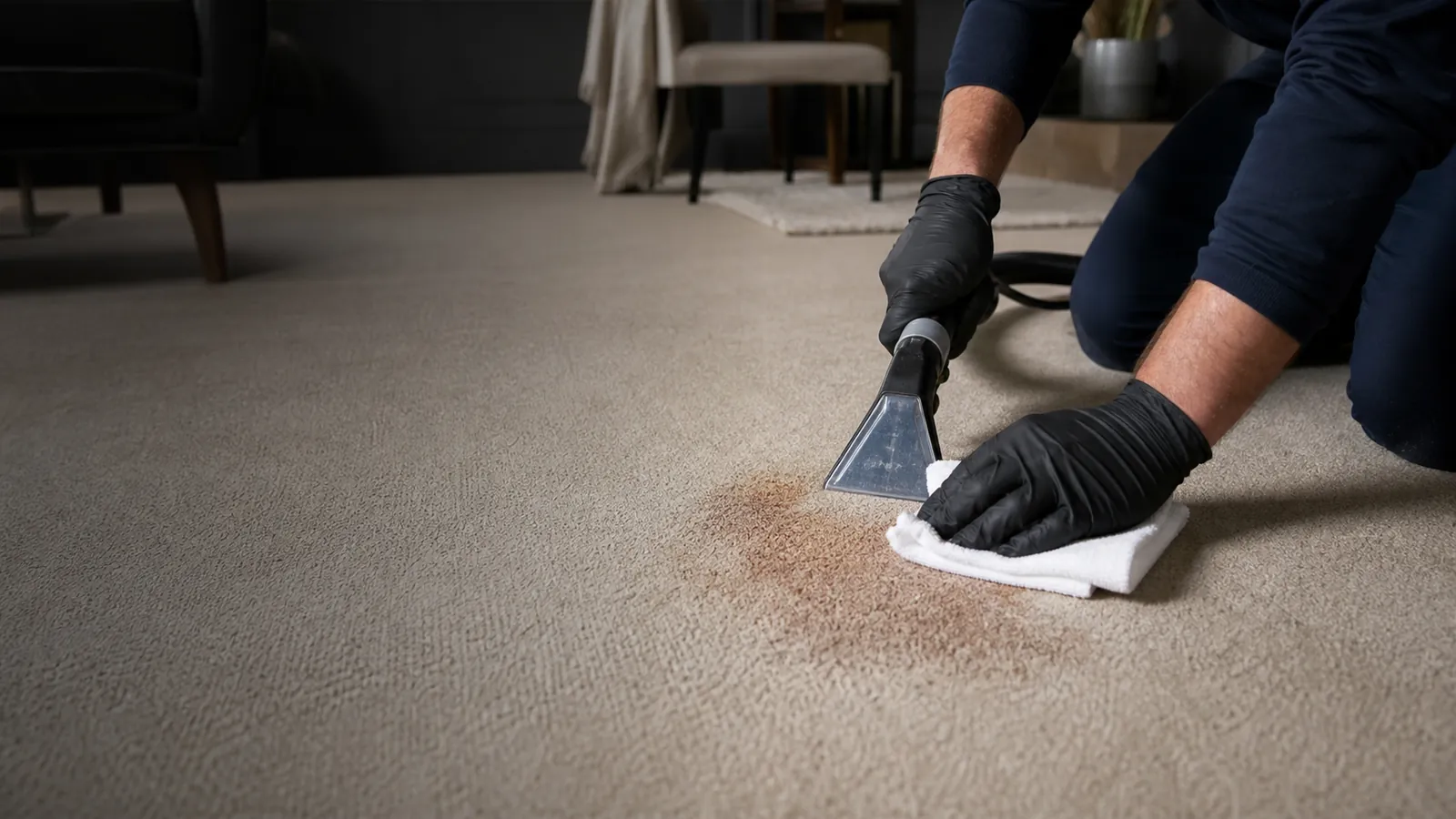
A dining-room mark is rarely described fully by its colour. A dark patch may contain sugar, fat, milk, sauce, wine or a mixture carried by a cleaning cloth. Heat, time and rubbing alter how that material sits in the pile. For a Chingford carpet appointment, a short chronology—what spilled, when it happened and what followed—provides a safer starting point than choosing a product from the shade alone.
Prompt blotting can remove free liquid, while scrubbing tends to spread the affected area and distort fibres. Household detergent may leave a sticky film that later attracts soil. A bleaching product may remove dye and create a pale patch that is no longer a stain. The technician asks about these steps without criticism; undisclosed chemistry is more dangerous than an imperfect home response described honestly.
The room around the mark still matters. Chair routes, serving paths and the area beneath a table can contain dry debris and compressed pile. Preparation covers the accessible carpet before local treatment. This gives the final room a coherent appearance and avoids using repeated spot work as a substitute for cleaning the broader agreed area.
If an event is part of a larger household plan, domestic cleaning can address surfaces and room presentation separately. Schedule carpet care after dusty tasks and with enough drying time before guests, furniture rearrangement or ordinary dining resumes. A fixed event date should prompt earlier booking, not a guarantee that every substance will disappear.
The final conversation distinguishes cleanliness from restoration. Suitable spills may improve greatly; old dye change, pile wear or heat damage can remain. The customer receives advice for future incidents and for replacing chairs or a table without trapping moisture.
SERVICE TEAMS / THE AGREED WORK
Four points where the room register earns its value

At a doorway between installations
A threshold may separate carpets installed years apart. The cleaner checks pile, backing, fitting and colour response again instead of assuming continuity. This small pause prevents a decision made in the first room from becoming an untested rule for the next.

On stairs and turning points
Stair carpet carries concentrated traffic and can expose backing or edge issues not present in bedrooms. Texture change may remain after soil is removed. The register keeps wear observations attached to the stairs rather than describing the whole property as heavily soiled.

Where a room has been replaced or repaired
A newer section may react differently from the surrounding floor and may not share the same history of products or sunlight. The technician records the boundary, tests as appropriate and avoids aggressive blending attempts that could make the contrast worse.

During the final comparison
Each room is reviewed against its own starting condition, use and limitations. This gives the customer a more honest account than comparing a little-used bedroom with an entrance route. Different outcomes can both represent careful work.
Where beds are part of the project, mattress cleaning is logged independently. A mattress cover, filling and construction introduce different checks from the fitted flooring around it.
A photograph can support consistent observation
Take the dry carpet from a repeatable position and similar lighting. The image is not a laboratory measurement, but it can show gradual change in traffic routes. Avoid comparing a damp post-clean photograph with a dry image from another season.
Vacuum frequency follows traffic
Entrance lanes and favourite seating routes may need attention more often than quiet edges. Use equipment suitable for the carpet and empty or maintain it as directed. Slow, overlapping passes are usually more useful than rapid daily gestures.
Renovation dust changes the plan
Fine building residue should be addressed carefully before ordinary maintenance resumes. Describe recent work when booking. The presence of dust does not justify saturating the carpet; effective dry preparation becomes especially important.
Maintenance and moving are separate triggers
A planned end of tenancy cleaning may set a deadline, while routine carpet care is normally flexible. Where both apply, schedule enough drying time and keep the textile scope explicit.
PRICING / CLEAR STARTING POINTS
Quote the collection of areas, not a fictional average room
For an accurate enquiry, list each carpeted room, stairs and landings separately. Note obvious changes in material, approximate dimensions, furniture restrictions, heavy-use routes and spots that need assessment. Several small spaces can require more setup and threshold decisions than one open room of the same total area, while stairs have their own working pattern. The cleaning prices page offers general context, but the confirmed quotation should identify what has been counted and any assumptions about access. Known fibre labels or purchase information are useful; guessing is not necessary. Photographs can show colour and layout but may conceal construction differences. A transparent quote leaves room for responsible adjustment if inspection reveals that a carpet cannot support the expected method. Any material scope change should be explained before proceeding rather than hidden behind a generic whole-house label.
01
Single room
From £15 / room
Compact bedroom or study
02
Double room
From £15 / room
Standard double bedroom
03
Lounge
From £15 / room
Living room with clear equipment access
04
Stairs
Quotation
Standard flight, subject to construction
05
Hallway
Quotation
Reachable hall or landing
06
Whole property
Quotation
Measured rooms and fibre types
Prices are guide prices.
Final quotation depends on the property, condition and requirements.
PROCESS / FOUR DECISIONS
Use the previous baseline to inform, not dictate
01
Review what changed
The customer describes use since the last clean, current concerns and previous products. Permanent features noted earlier are separated from new condition changes.
02
Reassess the textile
The cleaner checks fibre behaviour, fitting, colour and wear afresh. A method is not repeated merely because it was once suitable.
03
Complete the justified work
Dry preparation, appropriate spot attention and room cleaning proceed in a controlled sequence. Areas outside the agreed maintenance scope are not added without discussion.
04
Create the next reference point
After drying guidance, the customer records the settled result and any acknowledged limitations. Future timing can then follow observation instead of memory.
VISIT / HANDOVER
Bring useful history, not a demand to repeat everything


Locate any previous care notes if available and list new spills, products and changes in use. Vacuum normally rather than hiding the condition with last-minute wet products. Clear small items and decide which rooms genuinely need inclusion. If a permanent mark was identified previously, point it out so the technician can check for change without repeatedly pursuing it.
SCOPE / CONFIRM BEFORE BOOKING
A multi-carpet visit with one clear standard
Included in this brief
- Room register: identification of every included carpet, stairs and landing, with changes in material or condition noted.
- Individual suitability checks: inspection and, where useful, tests that inform the safest plan for each distinct textile.
- Adapted preparation and cleaning: consistent care delivered through methods that may vary when the carpet gives a reason.
- Area-by-area review: outcome, remaining wear and drying guidance explained against the starting notes for each room.
Outside this cleaning brief
- A method suitable for one room is not automatically promised for a second carpet with different construction or colour response.
- The service cannot correct installation faults, delamination, loose seams, burns, bleaching or pile that has been physically worn away.
- Rugs and loose specialist textiles are not silently included as fitted carpet. They should be described and scoped separately before work.

PREPARATION / BEFORE THE VISIT
Prepare the Chingford address without pre-cleaning it.
- Confirm the entrance and any requirement involving narrow residential or village roads.
- List the rooms or items covered by carpet cleaning.
- Point out sensitive finishes, pets, alarms and anything that must not be moved.
- Agree the key return, completion contact and any building time restriction.
MAP / COVERAGE CONTEXT
Route planning for carpet cleaning in Chingford.
Coverage context for Chingford. This map does not represent a staffed local office.
RELATED SERVICES / SAME AREA
Related services in Chingford
NEARBY AREAS / SAME SERVICE
Carpet Cleaning near Chingford
It depends on carpet guidance, traffic, household use, condition and priorities. Observe the floor and maintain it routinely rather than relying on one universal interval.
Maintenance questions for Chingford carpet care
How often should professional cleaning be booked?
Suitability, technique and moisture matter more than a slogan about frequency. Unnecessary or poorly controlled work can be unhelpful; justified professional care should follow inspection.
Does frequent cleaning damage carpet?
Yes, request the rooms that need work and list stairs separately. Each included carpet is assessed, and quiet areas do not have to be added merely for symmetry.
Can I book only the high-use rooms?
Keep notes on permanent limitations, drying, products used if provided, and a dry reference image. Monitor traffic routes and new incidents rather than expecting the carpet to remain unchanged.
What should I record after the visit?
No. The map describes service coverage; it does not identify a staffed local branch.
Build the booking from what the carpet shows now
For carpet cleaning in Chingford, list the areas that have changed, the use behind that change and any previous products or professional work. The appointment can then create a reliable new baseline, with no artificial recurring interval and no pressure to include rooms that do not need attention.