
CRAYFORD / CARPET AND STAIR CARE
Carpet Cleaning Crayford: Account for Every Product Already Used
- DIY sprays and earlier professional work included in the history
- Sticky residue separated from a returning original stain
- Colour and fibre tested before another chemical layer
- Rinsing considered only where the carpet supports it
- Rooms, landings and stairs measured separately
- Pet and spill history discussed before treatment
- Traffic lanes and edges prioritised
- Dry routes kept available where practical
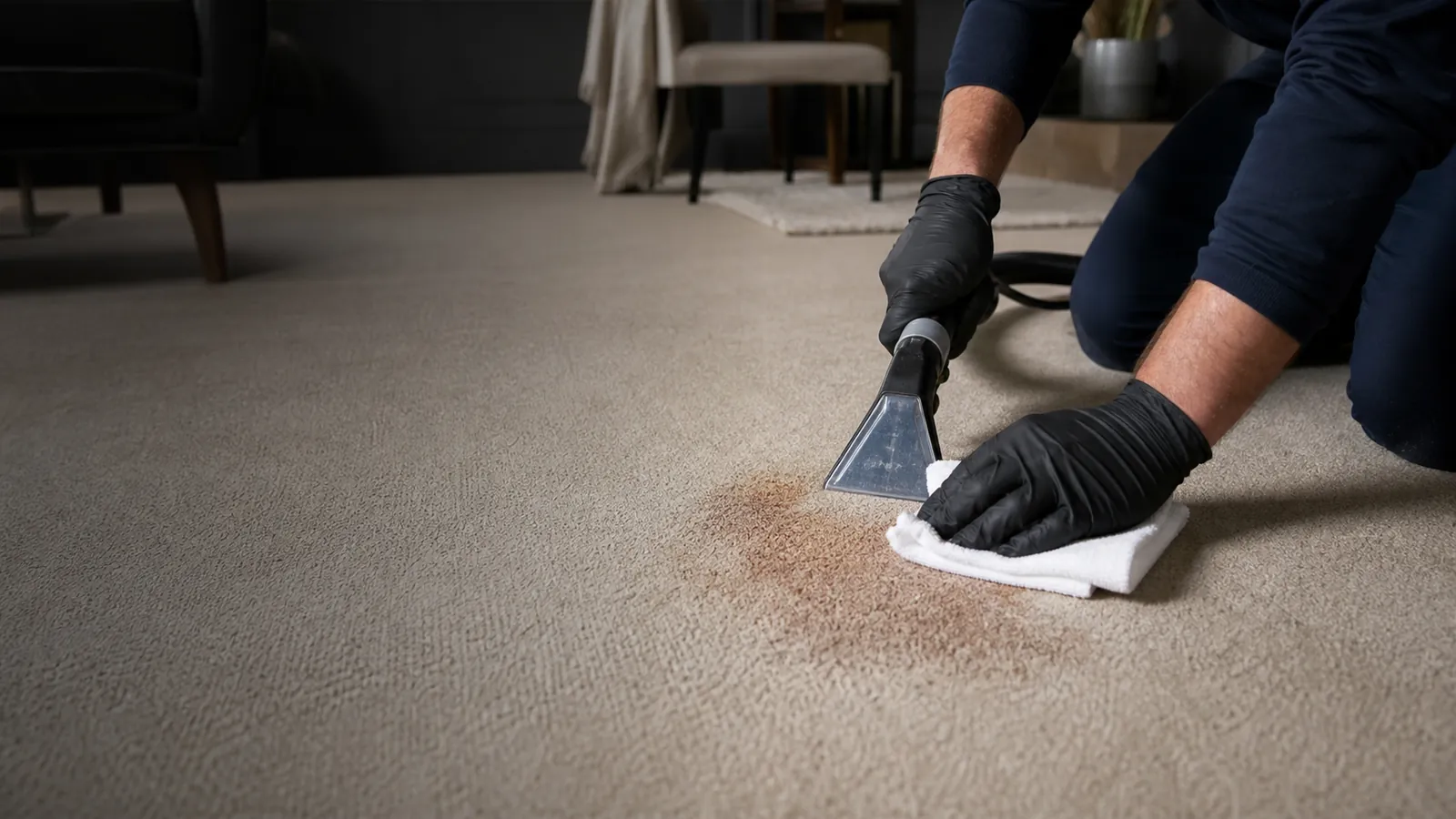
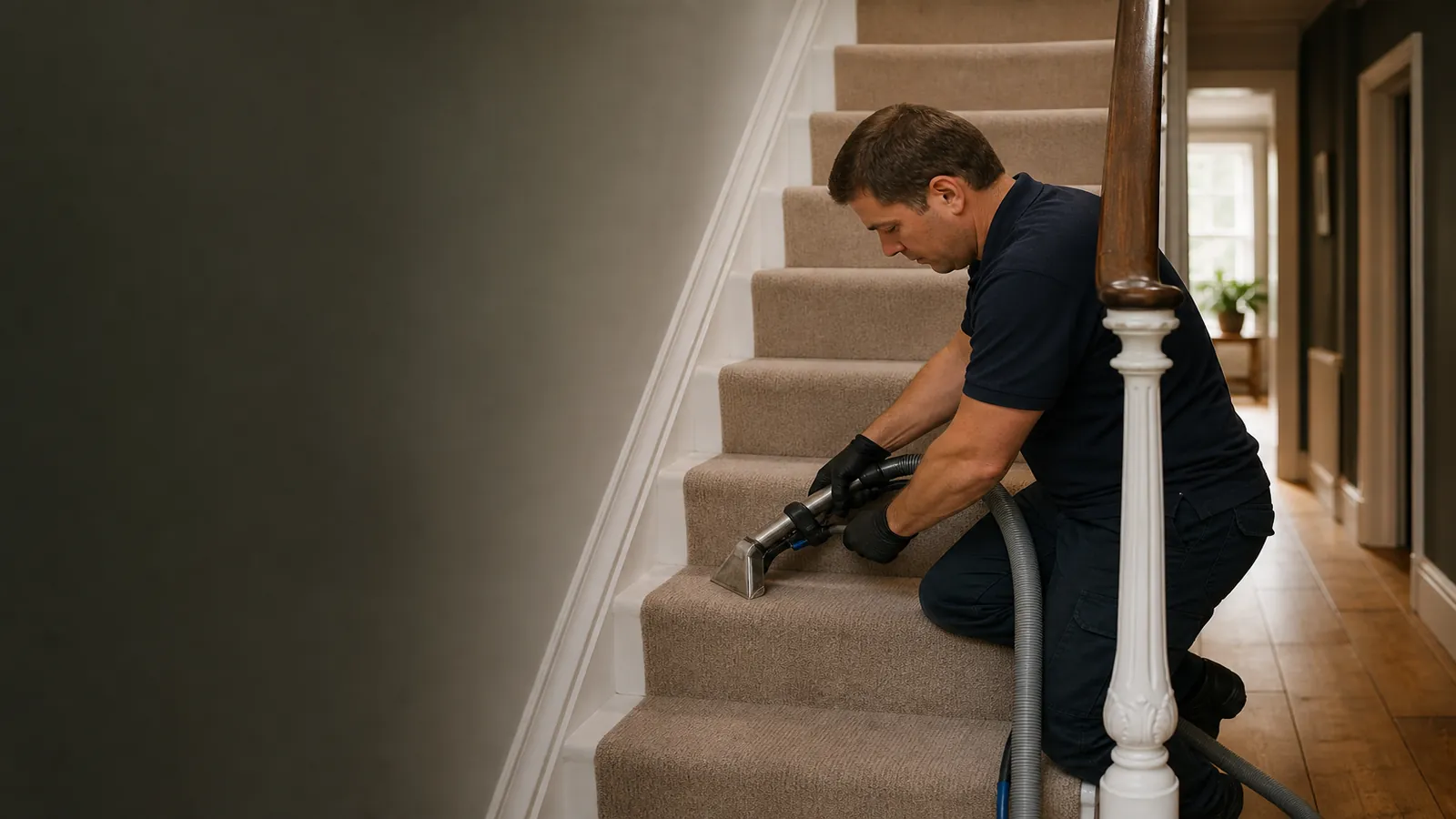
The carpet may be carrying the attempted solution as well as the problem
A mark that repeatedly darkens can contain more than the original spill. Detergent, soap, disinfectant, fragranced spray or an earlier spotter may remain in the pile and attract new soil. Several products can also change colour or make later chemistry less predictable. For a Crayford carpet-cleaning enquiry, product history is part of condition, even when the bottle appeared to have no effect.
Customers are not expected to know chemical names from memory. A photograph of the label, a receipt or a plain description is useful. Explain whether the area was soaked, scrubbed, heated or extracted and how it looked once dry. The technician uses that record to decide whether a test, controlled rinse, local treatment or deliberate stop is sensible.
Residue should not be diagnosed from stickiness alone. Fibre damage, oily contamination and soil attracted by wear can create overlapping symptoms. Full-room dry preparation removes loose debris and lets the affected area be compared with its surroundings. Applying another product before that step can hide rather than clarify the cause.
A regular domestic cleaning routine should keep general floor sprays and mop solution away from carpet boundaries. Overspray can build gradually near a threshold. Clear responsibilities help the carpet remain a textile surface rather than the accidental recipient of every room product.
PROCESS / FOUR DECISIONS
Document, compare, test, then decide
01
Build the treatment history
The customer supplies labels, timing, dilution if known and techniques used. The cleaner records uncertainty instead of filling gaps.
02
Remove loose debris and compare
Dry preparation covers the accessible room. The affected patch is checked against nearby carpet for residue, colour and texture differences.
03
Use a supported response
Testing informs a proportionate local procedure or controlled rinsing where suitable. The full room method remains balanced rather than revolving around endless spot attempts.
04
Observe the dry behaviour
The customer receives advice on drying and re-soiling. Permanent change is identified so future cleaning is not expected to reverse it.
VISIT / HANDOVER
Keep the labels and stop layering products


Do not apply a final spray to make the area look better before arrival. Gather bottles or photographs, note whether the carpet was soaked or scrubbed and say if a hire machine was used. Vacuum normally outside a fresh spill. Keep children and pets away from unknown residue. A complete history is more valuable than a confident claim that the product was harmless.
A hire machine can leave more than moisture
Incorrect dilution, slow recovery or repeated passes can leave detergent and extend drying. Describe the machine and product. The technician assesses the present carpet rather than criticising the attempt.
Powder products can remain near the backing
Fine material may not leave through a quick vacuum pass and can mix with later solution. Thorough dry preparation and disclosure help determine whether additional work is appropriate.
Disinfectant is not a universal carpet spotter
A product intended for a hard surface may affect dye or leave residue on textile. Hygiene claims on a bottle do not establish suitability for the carpet, dilution or contamination involved.
A mattress product has another material context
If the same household product reached a bed, discuss mattress cleaning separately. Filling, drying and skin-contact considerations differ from fitted carpet.
SERVICE TEAMS / THE AGREED WORK
Four ways earlier products alter the decision

Detergent attracts fresh debris
A patch can look clean when wet and darken after ordinary use because sticky material remains. Suitable rinsing and recovery may help, but the cleaner first checks fibre and what else was applied.

Bleaching changes the target
When dye is lost, the pale area is no longer removable soil. Adding chemistry can enlarge it. The technician records the colour change and avoids promising that cleaning will recreate pigment.

Scrubbing alters texture
Aggressive rubbing can fuzz, untwist or flatten pile. Different reflection may then resemble a stain. Viewing from several directions helps distinguish texture from remaining residue.

Multiple unknowns increase caution
Products can interact or leave misleading signs. If the history is incomplete, an unobtrusive test and restrained plan are safer than assuming the last bottle named by the customer is the only one present.
Where a product was also used on seating, upholstery cleaning needs a separate fabric history. The same spray can behave differently on another textile and filling.
PRICING / CLEAR STARTING POINTS
Treatment history can change the real scope
Provide room sizes, stairs, furniture and marks, then list anything used on the carpet. A small patch with several previous products may require more caution than a recent untreated spill, though it does not automatically justify an expensive add-on. General cleaning prices offer context; the confirmed quotation should describe routine spot assessment and any uncertainty requiring inspection. Photographs show position but rarely reveal residue or dye stability. A low price tied to a guaranteed instant removal should be treated carefully, as should an open-ended charge for repeated attempts. Transparent value comes from testing, preparation, proportionate action and the judgement to stop before further damage.
01
Single room
From £15 / room
Compact bedroom or study
02
Double room
From £15 / room
Standard double bedroom
03
Lounge
From £15 / room
Living room with clear equipment access
04
Stairs
Quotation
Standard flight, subject to construction
05
Hallway
Quotation
Reachable hall or landing
06
Whole property
Quotation
Measured rooms and fibre types
Prices are guide prices.
Final quotation depends on the property, condition and requirements.
SCOPE / CONFIRM BEFORE BOOKING
A carpet visit that audits previous treatment
Included in this brief
- Product record: discussion of sprays, detergents, machines, powders and professional work already used on priority areas.
- Comparative inspection: assessment of the patch beside untreated carpet, with fibre and colour checks where useful.
- Controlled response: suitable preparation, spot work or rinsing selected according to evidence rather than residue assumptions.
- Dry-result guidance: explanation of potential re-soiling, colour loss and signs worth monitoring after the visit.
Outside this cleaning brief
- The service cannot guarantee reversal of bleaching, dye migration, fibre distortion or damage caused by earlier products.
- Unknown product combinations are not pursued through unlimited chemical experimentation.
- A temporary fragrance change is not evidence that sticky residue or an odour source has been removed.

PREPARATION / BEFORE THE VISIT
Prepare the Crayford rooms and stair route
- Remove small objects, cables and loose items from listed zones.
- Vacate the stairs during active cleaning and the advised drying period.
- Share pet, spill and previous spot-treatment history.
- Confirm where furniture, occupants and pets will remain during the visit.
MAP / COVERAGE CONTEXT
Crayford coverage and carpet-equipment route
Coverage context for Crayford. This map does not represent a staffed local office.
RELATED SERVICES / SAME AREA
Related services in Crayford
NEARBY AREAS / SAME SERVICE
Carpet Cleaning near Crayford
Fresh soil may be adhering to sticky residue, or the original material may remain deeper. Wear and colour change can also affect appearance. Assessment is needed.
Previous-product questions for Crayford carpets
Why did the stain return after I cleaned it?
Avoid adding more water without understanding carpet construction and recovery. Keep the product information and seek advice first.
Should I rinse the detergent myself?
No universal neutraliser exists for every unknown mixture and textile. Testing and cautious method selection are essential.
Can you neutralise any product?
No. Suitable residue removal may reduce rapid re-soiling, but household use, damage and unknown prior chemistry prevent an unconditional promise.
Will you guarantee the patch stays clean?
No. Fibre, pile, construction, airflow and method can create different drying times by zone.
Send the product history with the carpet details
For carpet cleaning in Crayford, list the rooms and identify every spray, powder, detergent or machine used on the priority areas. That evidence helps the technician separate residue from staining and physical change, select a cautious response and avoid adding another unhelpful chemical layer.