
Crouch End / N8
Carpet Cleaning Crouch End: A Practical Plan Built Around Condition
- Spills discussed by history, not guessed from colour
- General soil and isolated spots prepared independently
- Escalation stopped when textile risk overtakes likely gain
- Remaining damage documented in a clear handover
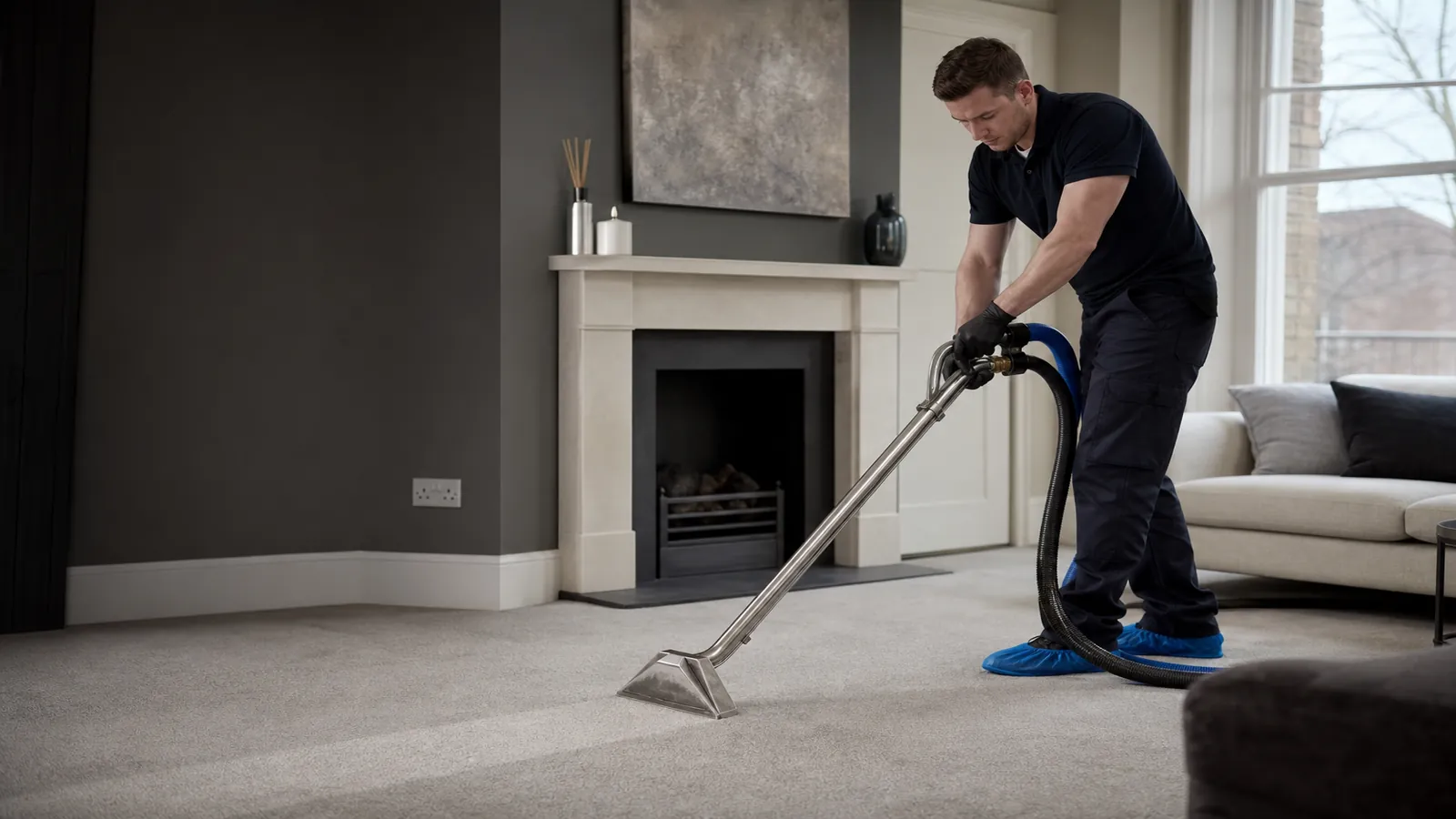
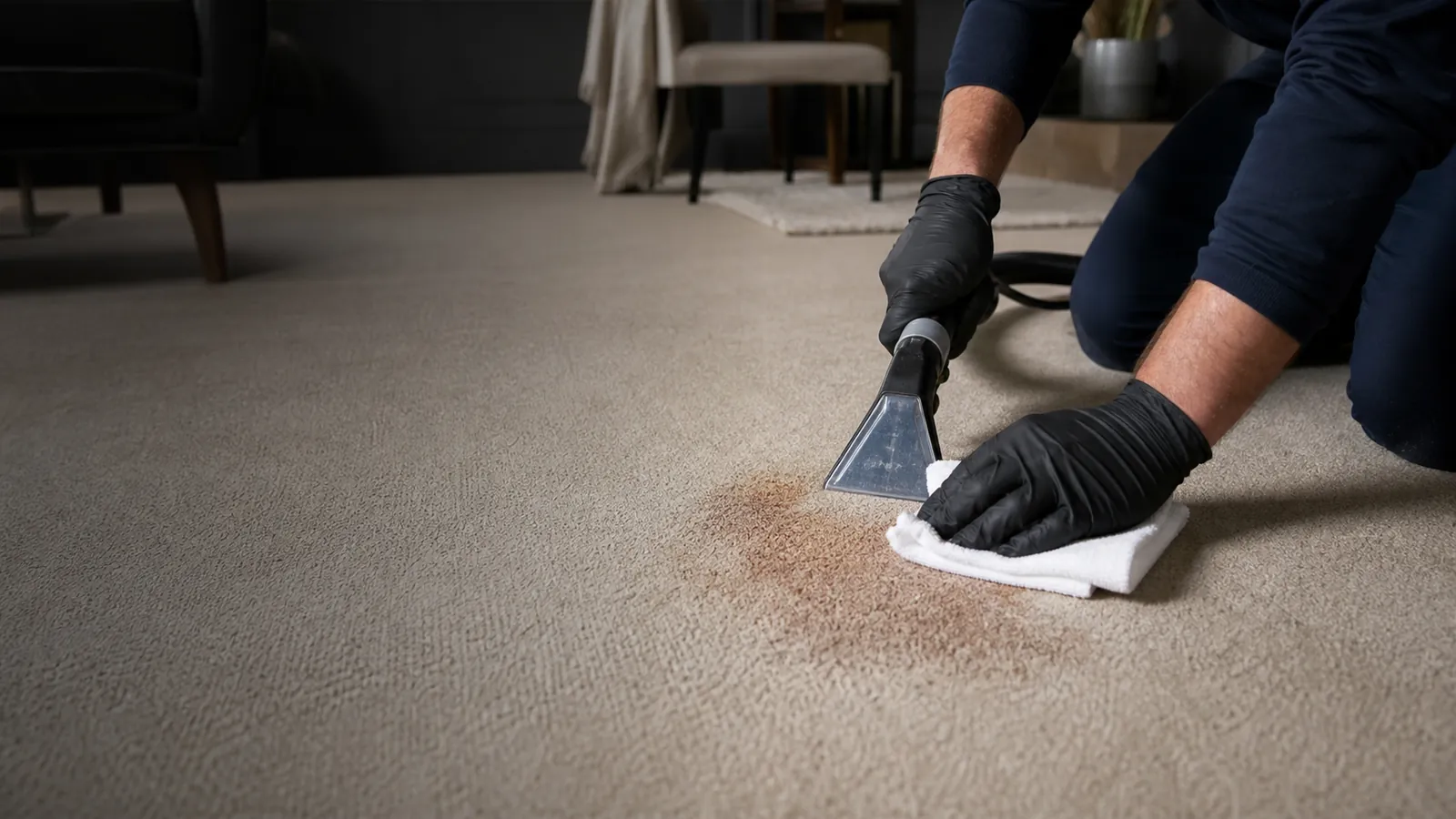
SERVICE TEAMS / THE AGREED WORK
Where moisture decisions become especially important

A dense or absorbent pile
Solution can take longer to recover from a deep construction. The cleaner adjusts application and adds dry passes while still providing enough rinse to remove the loosened contamination.

A questionable seam
An unstable join is photographed or noted before treatment. Moisture near it is controlled, and carpet repair remains outside the cleaning promise rather than being improvised during extraction.

A repeatedly treated spot
Previous products may have left residue or changed dye. A small response test comes before further liquid, and the attempt stops if continued wetting offers no defensible improvement.

A room with limited ventilation
The condition is disclosed before booking where known. Method and scheduling can be discussed, but safe advice is finalised on site rather than based on an imagined Crouch End layout.
Controlled moisture does not mean a token surface clean. It means every application has a cleaning purpose and every rinse is paired with proportionate recovery. The operative can still give a heavily used section the preparation it requires; restraint concerns avoidable water, not a reduced commitment to removing soil. Where testing shows that a stronger attempt would threaten colour or construction, the limitation is recorded rather than concealed beneath another wet pass. That record also gives the customer a useful reference for future maintenance instead of leaving an unexplained patch to be treated repeatedly.
Start by working out what the carpet is telling you
A carpet rarely becomes dull for one reason alone. Fine grit settles close to the backing, sticky residue catches fresh soil, and regular footfall changes the way the pile reflects light. In an Crouch End booking, we begin by separating those effects instead of treating every dark patch as a stain. That distinction matters because loose particles, bonded soil and physical wear each need a different response.
The first walk-through is deliberately unhurried. We compare open areas with pile that has been protected by furniture, inspect edges and thresholds, and ask about any substance already used on a mark. A pale patch may be colour loss; a dark band may be compacted soil; a patch that changes when brushed may simply be pile direction. Establishing which is which prevents needless chemical escalation.
Once the condition is understood, the service can be planned room by room. A hallway may need especially thorough dry extraction, while a sitting-room spill receives a small compatibility test before wider pre-treatment begins. Stairs are counted and reviewed as their own working area. This approach avoids flooding the whole floor merely because one section needs extra attention.
If carpet work is being arranged alongside end of tenancy cleaning, the order should protect the newly treated pile and allow enough time for moisture to leave the textile. The two services have different boundaries: carpet extraction addresses the floor covering, whereas a tenancy clean concerns the wider property specification.
The intended result is a carpet with recoverable soil removed as evenly as its condition allows. Cleaning cannot replace abraded fibres, reverse sunlight fading or mend weakened backing. We identify those limitations plainly, then concentrate on the improvement that can be achieved without asking the material to tolerate excessive agitation or water.
SERVICE SCOPE / READ BEFORE BOOKING
A maintenance-baseline service for Crouch End
Included in this brief
- Condition record across routes, rooms, edges and old marks
- Dry preparation and compatible treatment for current recoverable soil
- A post-clean baseline separating improvement from permanent wear
- Practical monitoring, vacuum and spill-response guidance
Outside this cleaning brief
- A mandatory recurring schedule unrelated to carpet condition
- Promises that regular cleaning will reverse abrasion or fading
- Automatic treatment of every room when only a defined area is requested

PRICING / CLEAR STARTING POINTS
Material, scope and condition belong in the quotation
The price discussion uses room dimensions, steps, furnishings, carpet information, contamination and access rather than an Crouch End label. Published guidance remains on the prices page. Photographs and manufacturer details can support the enquiry, although final method decisions follow the textile inspected on site.
01
Single room
From £15 / room
Compact bedroom or study
02
Double room
From £15 / room
Standard double bedroom
03
Lounge
From £15 / room
Living room with clear equipment access
04
Stairs
Quotation
Standard flight, subject to construction
05
Hallway
Quotation
Reachable hall or landing
06
Whole property
Quotation
Measured rooms and fibre types
Prices are guide prices.
Final quotation depends on the property, condition and requirements.
Documentation is useful when soil hides damage
A dark layer can reduce contrast around a pale chemical mark or faded strip. When surrounding soil is removed, the pre-existing issue may become clearer. Before photographs and notes help explain that reveal without making unsupported claims.
Protective treatment is not assumed
A protector changes the service scope and may not suit every fibre, finish or customer objective. It should be discussed, tested and priced explicitly rather than applied as an automatic premium step after cleaning.
Seating fabrics need another condition register
Piping, cushions, trims and hidden linings make furniture a separate textile object. Request upholstery cleaning so its own marks and vulnerabilities are documented instead of borrowing the carpet record.
Aftercare should preserve evidence, not create panic
Follow ventilation and furniture guidance, but do not scrub a remaining patch while the pile is damp. If an unexpected change is noticed, photograph it in consistent light and contact the service provider before adding household chemicals.
PROCESS / FOUR DECISIONS
Move from preparation to a calm handover
01
Agree what the room must protect
The operative verifies cleared belongings, immovable items and required access. Existing dents, cable routes, loose edges and marks are noted before any approved furniture changes position.
02
Remove the dry load deliberately
Vacuum preparation covers open carpet, edges and reachable gaps. This stage may be audible, but it is not replaced by a quick decorative pass merely to reduce appointment noise.
03
Treat in an efficient working order
Pre-conditioner and agitation match the material. Extraction proceeds without trapping equipment behind freshly treated pile, and extra dry strokes improve recovery instead of relying on excessive solution or heat.
04
Return the room with conditions stated
The technician checks the finished pile, identifies permanent concerns and explains when furniture, books and ordinary foot traffic can return. Advice is tied to the actual moisture and ventilation observed.
VISIT / HANDOVER
Information to provide before the Crouch End appointment

List the rooms and stairs, describe entry controls and disclose any time-limited access. Clear portable belongings and tell us which furniture must stay. If a broader household visit is needed, domestic cleaning should be requested in its own right rather than assumed within carpet extraction.
MAP / COVERAGE CONTEXT
Plan the route into the Crouch End property.
Coverage context for Crouch End. This map does not represent a staffed local office.
EXPLORE / NEXT
Related services in Crouch End
EXPLORE / NEXT
Nearby areas for carpet cleaning
Share the event timing before booking, but do not assume the floor will be ready by a guaranteed hour. Inspection, required treatment and conditions determine whether the proposed window is responsible.
Crouch End questions about drying and room use
Can I book carpet cleaning on the morning of an event?
No. Too little rinsing can leave released soil or solution behind. The aim is appropriate flow combined with effective recovery, not winning a contest for the smallest amount of moisture.
Does using less water always produce a better clean?
Do not make a large change solely from generic advice. The technician will consider safe ventilation and room conditions after the clean. Balanced warmth and airflow may help, but the property setup matters.
Should I turn the heating up?
It may be possible when access and sequencing support it, but the fabric needs a separate test. Request upholstery cleaning in advance so equipment and drying plans do not conflict.
Can a sofa be cleaned while the carpet dries?
No. It describes service coverage and practical local context, not a staffed branch.
Map the Crouch End footfall before requesting a slot
Send carpet dimensions, stairs, fibre, entrance and turning routes, specific spill records, furniture limits and exact access times. Explain how the floor must be used afterwards. These facts support an efficient sequence and transparent handover without turning a busy carpet into an excuse for excessive chemistry or a false drying guarantee.