
Crystal Palace / SE19
Carpet Cleaning Crystal Palace: A Practical Plan Built Around Condition
- Use of the room discussed before equipment is positioned
- Books, papers and delicate belongings kept outside the work zone
- Cleaning stages sequenced to preserve safe access
- Drying advice matched to the textile and room conditions
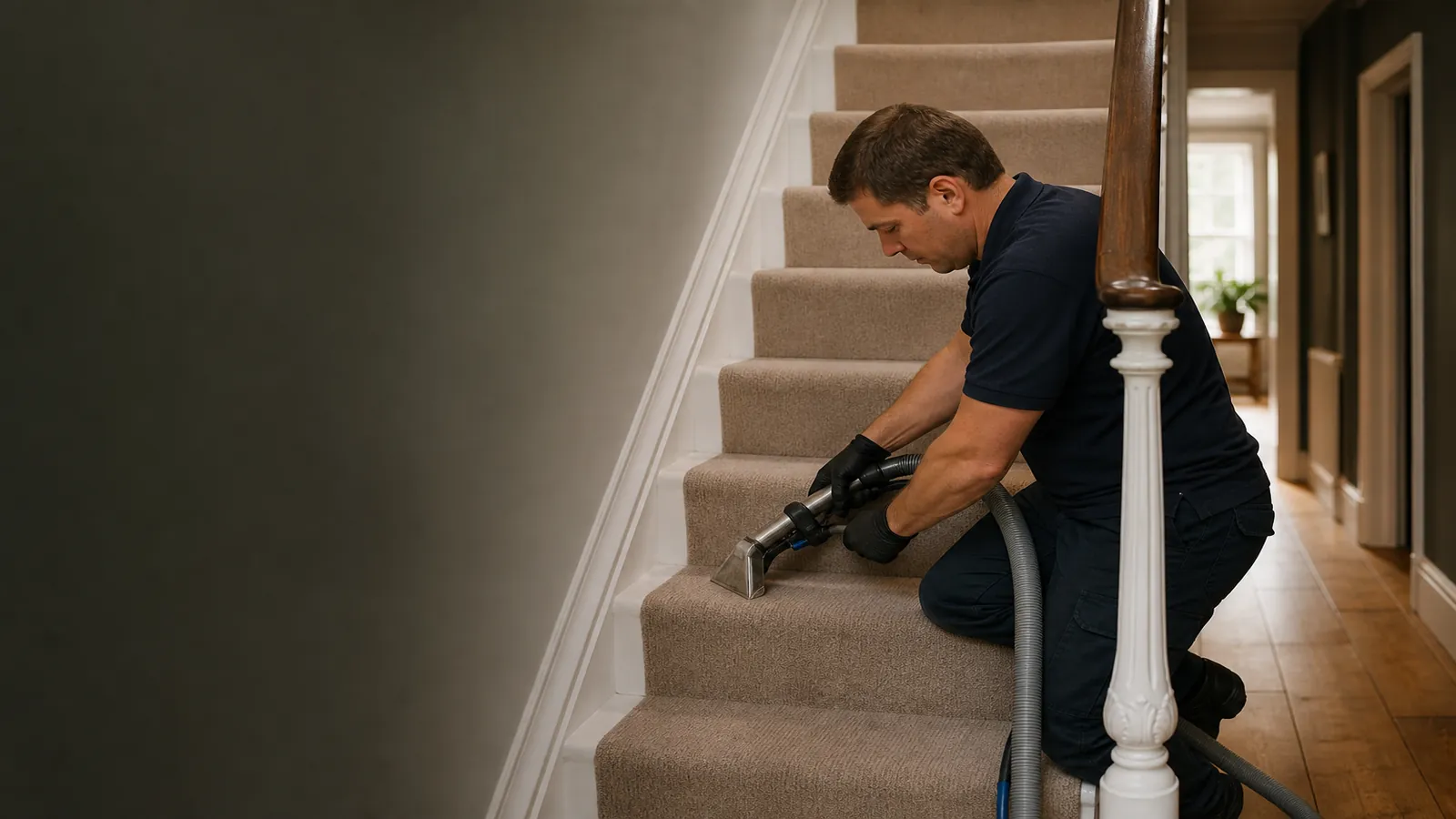
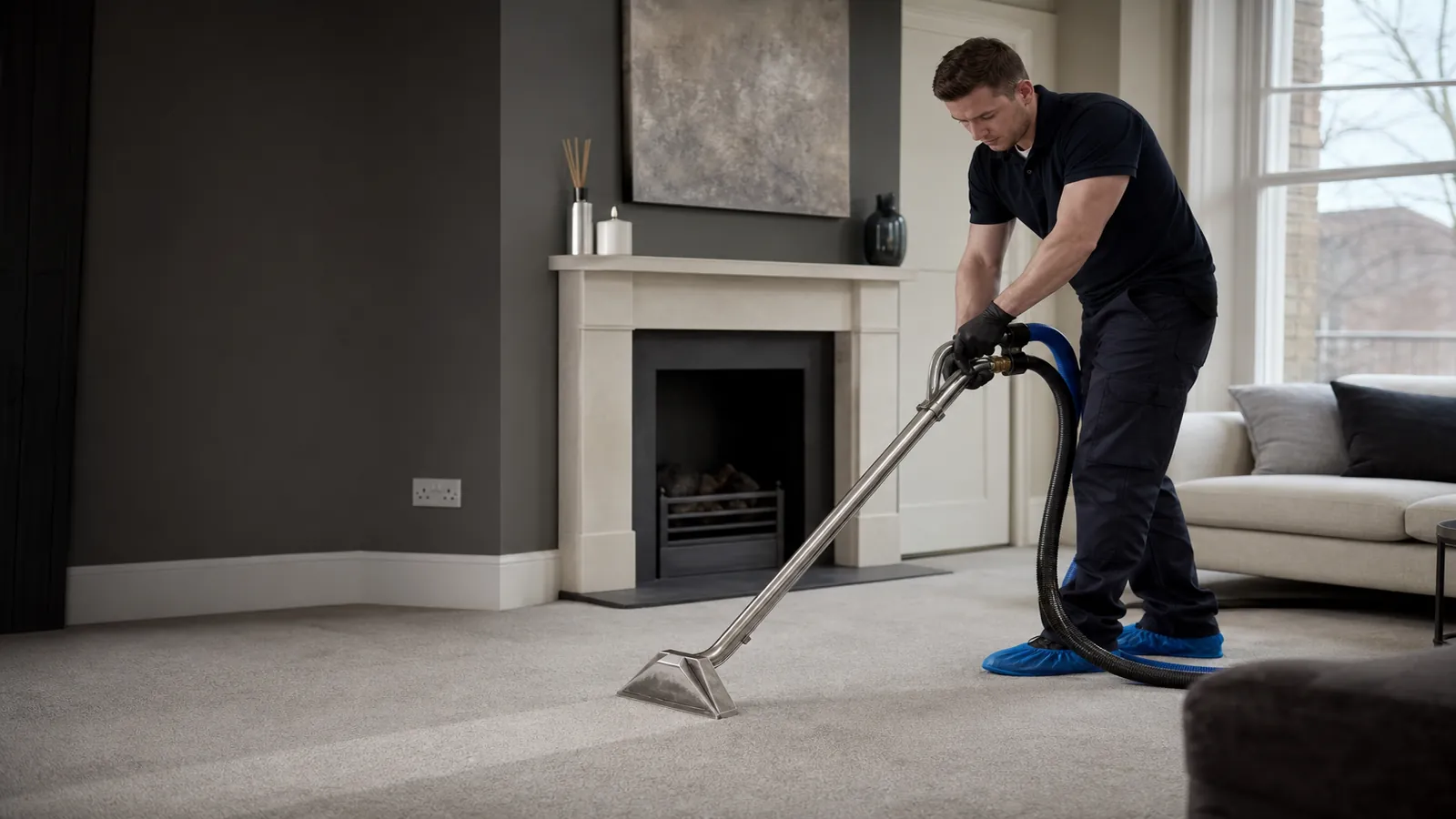
A clean carpet should not become a dirt magnet
Some carpets look better immediately after attention yet lose that clarity surprisingly quickly. The cause can be an incomplete rinse, detergent left by earlier DIY work, or dry grit that was never removed before wetting. For an Crystal Palace enquiry, our editorial focus is the maintenance reset: take away what attracts new soil and leave the pile straightforward to care for afterwards.
That begins with questions about the carpet’s recent history. We want to know whether a hired machine has been used, which household products were applied, and where the floor feels tacky or stiff. Residue cannot be diagnosed by assumption, but this information directs inspection and helps explain why one room may behave differently from another despite looking similar.
Dry vacuuming is given proper time because it reduces the burden placed on the rinse stage. Pre-treatment is then measured against the kind of soil present, not applied at maximum strength as a precaution. The operative works for adequate contact and controlled agitation, allowing chemistry and movement to loosen contamination before extraction carries it away.
A maintenance-minded service also looks beyond the appointment. Entrance control, suitable vacuuming and prompt blotting of spills influence how long the floor remains presentable. Customers who want regular help with the rest of their home can read about domestic cleaning; that service complements carpet care but does not replace textile-specific treatment.
No rinse can restore fibre already worn flat, and no responsible cleaner will claim that recurring discolouration is always dirt. We distinguish residue from abrasion, shading and permanent colour change. The objective is a neutral-feeling, evenly treated floor whose limitations have been understood, rather than a heavily perfumed surface offering a short-lived impression of cleanliness.
SERVICE TEAMS / THE AGREED WORK
Four questions before fine-dust carpet work

Has the source genuinely stopped?
Cleaning before sanding or drilling is complete invites immediate resettlement. The customer confirms that dust-producing tasks and loose waste removal have finished before the carpet appointment begins.

Is the material safe to vacuum?
Ordinary inert decorating dust differs from sharp fragments or an unknown substance. Anything presenting a hazard must be identified and handled through an appropriate service rather than hidden in a carpet brief.

Where has air carried the particles?
Edges and doorway lines can contain concentrated deposits. Narrow-tool extraction addresses reachable boundaries, while the handover notes sources outside the textile that may continue releasing material.

What does protected pile reveal?
A sheltered patch helps compare colour and dust load. It does not promise that exposed fibre will match perfectly, because sunlight, traffic and abrasion may have changed it independently.
Fine-dust preparation can be intensive, but it remains carpet cleaning rather than site clearance. The distinction protects equipment, technicians and the customer’s expectation. Before arrival, the room should be checked for screws, splinters, broken blades and other small hazards that disappear visually into pale powder. These are removed safely by the responsible contractor or occupant, not pushed towards the carpet edge. The cleaner can then focus on textile recovery instead of discovering construction waste through damaged equipment. Dust on the carpet may also be only one part of the load. Window boards, radiator tops, shelves and the upper faces of doors can release particles after the floor has been treated. The booking brief should state whether those surrounding surfaces have been cleared and whether ventilation equipment has continued moving dust. This does not convert carpet cleaning into a builders’ clean; it reveals the risk of immediate resettlement. Once dry extraction is complete, the operative can use a clean pale cloth or another suitable observation to decide whether loose powder remains before introducing pre-treatment for the bonded soil underneath.
Colour matching is not fibre identification
Manufacturers can produce similar shades in wool, nylon, polypropylene and blends. Material claims need labels, construction evidence or cautious testing. Appearance alone is too weak a basis for chemistry or temperature.
A threshold is both join and decision point
The strip is inspected for looseness and sharp edges. It also marks where tools, product or moisture settings may change. Stable joins can be cleaned around; repair remains outside the extraction service.
Rugs should be declared, not treated as loose carpet
A removable rug can have dyes, fringes and backing unlike the fitted pile below. It receives a separate suitability check and is not included merely because it lies within the measured room.
Furniture fabric creates another construction
Seating requires its own fibre and dye assessment. Use upholstery cleaning when chairs or sofas belong in the brief, keeping each textile’s test meaningful.
PRICING / CLEAR STARTING POINTS
The quotation reflects treatment, not a machine label
Provide dimensions, stair numbers, fibre details, condition, stains, furnishings and access. Published figures belong on the prices page. The Crystal Palace scope explains the work proposed; it does not inflate value by advertising water temperature or tank size without reference to the carpet.
01
Single room
From £15 / room
Compact bedroom or study
02
Double room
From £15 / room
Standard double bedroom
03
Lounge
From £15 / room
Living room with clear equipment access
04
Stairs
Quotation
Standard flight, subject to construction
05
Hallway
Quotation
Reachable hall or landing
06
Whole property
Quotation
Measured rooms and fibre types
Prices are guide prices.
Final quotation depends on the property, condition and requirements.
PROCESS / FOUR DECISIONS
Plan around use without reducing the cleaning stages
01
Confirm traffic and availability
The operative verifies the floor map, later occupants, furniture limits and known incidents. Existing wear and unstable details are recorded before equipment changes the route.
02
Extract particulate matter by load
All agreed carpet is vacuumed, with added direction changes and edge work in concentrated routes. Filters and airflow are monitored so long preparation remains effective.
03
Treat general soil and incidents separately
Compatible pre-conditioner and agitation address the wider floor. Spot agents remain precise; extraction balances rinse flow and recovery without saturating a lane because it is visibly worn.
04
Set a responsible reopening plan
The completed pile is reviewed from several directions. Remaining marks, permanent compression and residual dampness are reported, then access advice is attached to the actual conditions.
VISIT / HANDOVER
Send photographs that do not rely on one angle


Photograph notable areas from the doorway and the opposite side in ordinary light. Avoid applying a new spot product. Clear portable belongings and describe furniture that covers comparison areas. If end of tenancy cleaning is planned, protect the finished pile from later traffic.
SERVICE SCOPE / READ BEFORE BOOKING
A carpet clean with an explicit handover plan
Included in this brief
- Discussion of room priorities, furnishings and intended use after the visit
- Pre-clean survey and detailed removal of loose dry matter
- Compatible treatment with controlled rinse and moisture recovery
- Condition-specific ventilation, access and aftercare guidance
Outside this cleaning brief
- A fixed drying promise made without inspecting the textile and room
- Moving occupants’ fragile or powered equipment without prior agreement
- Restoration of worn pile, faded dye or structural carpet faults
MAP / COVERAGE CONTEXT
Plan the route into the Crystal Palace property.
Coverage context for Crystal Palace. This map does not represent a staffed local office.
EXPLORE / NEXT
Related services in Crystal Palace
EXPLORE / NEXT
Nearby areas for carpet cleaning
There is no honest universal interval. Fibre, use, occupants, entrance control, spills and routine vacuuming matter. Inspect condition and seek advice when ordinary care stops managing it evenly.
Crystal Palace questions about carpet-cleaning frequency
How often should my carpet be professionally cleaned?
Sometimes, if construction and blending make partial treatment sensible. The cleaner should explain any risk of a visible boundary and quote the defined area transparently.
Can one traffic lane be cleaned alone?
A suitable professional method is designed to clean safely, but unnecessary or poorly controlled treatment adds no benefit. Condition-led timing avoids both excessive intervention and accumulated abrasive soil.
Does frequent extraction wear carpet out?
No. Seating has different fibres, use and soil. Upholstery cleaning should be assessed independently rather than attached to a carpet calendar.
Should upholstery follow the same schedule?
No. It describes service coverage and practical local context, not a staffed branch.
Send the Crystal Palace rooms as a condition map
List carpeted rooms, stairs and landings; mark the busiest routes, known spills, fibre changes and furniture restrictions. Include photographs from more than one direction. That information helps us price meaningful zones, choose a safe working order and explain why a clean can be consistent without pretending that every section will become visually identical.