
Cubitt Town /
Carpet Cleaning Cubitt Town: Keep the Rental Evidence Clear
- Rooms and pre-existing limitations recorded before treatment
- Cleaning outcome kept separate from deposit decisions
- Enough time allowed for drying and a final walkthrough
- No promise to erase wear, fading or historic damage

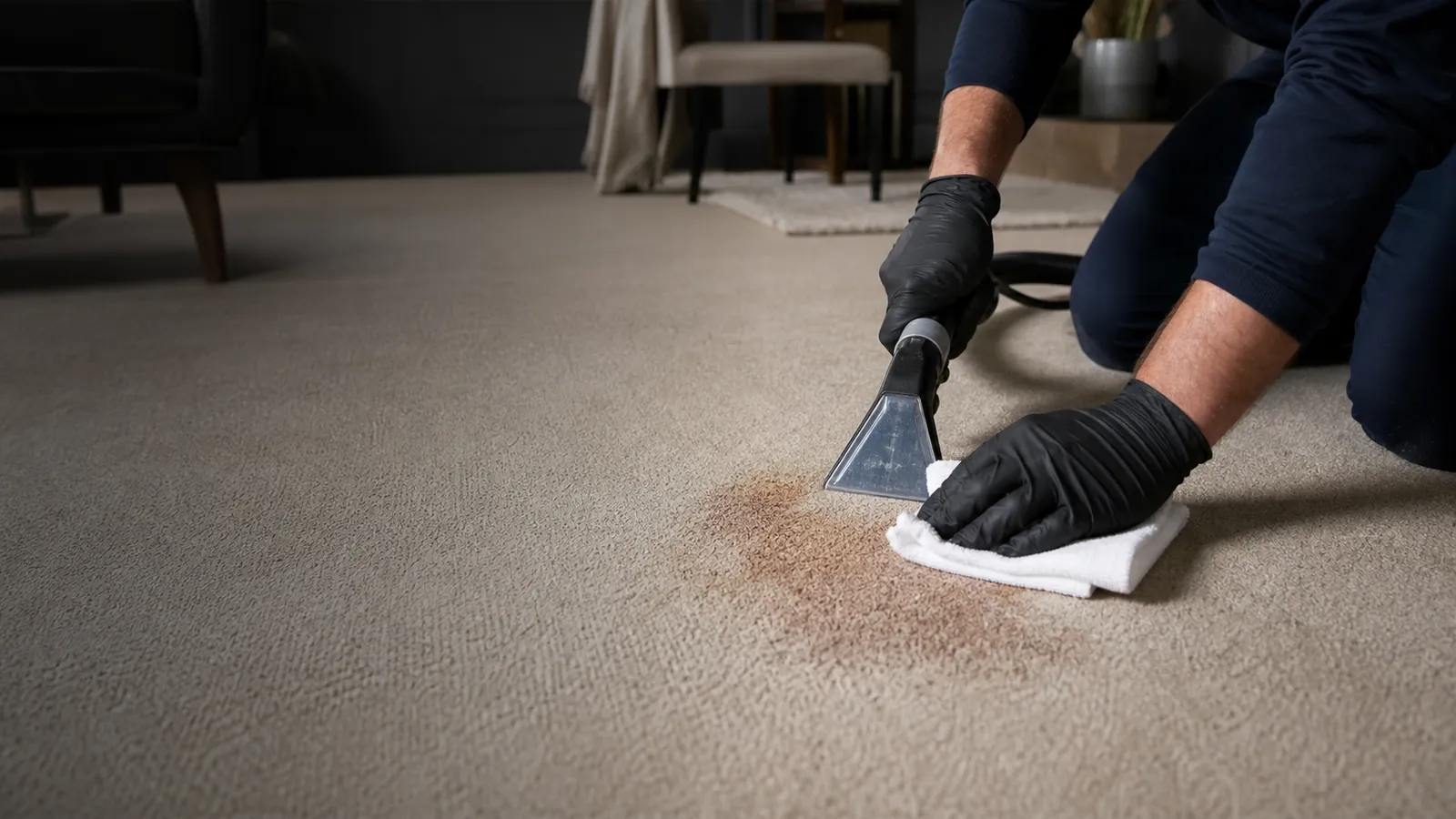
A clean carpet and a clear condition record serve different purposes
Rental transitions often place carpet work close to an inspection, key return or new occupancy. That deadline makes documentation important, but it does not alter what cleaning can physically achieve. Wear on a stair turn, sunlight fading, old bleaching and damaged seams remain even when removable soil has been addressed. For a Cubitt Town booking, the room list and visible limitations should be recorded before work so the finished carpet is judged against a fair starting point.
The cleaner is responsible for carrying out the agreed textile service, not for deciding a deposit dispute or interpreting a tenancy agreement. Inventory photographs, landlord instructions and tenant concerns can help identify priority areas, yet none creates a stain-removal guarantee. Where evidence conflicts, the booking party should resolve authority and scope rather than asking the technician to choose sides at the door.
Timing deserves space. Dusty cleaning tasks, repairs and furniture removal should generally happen before the carpet stage. The floor then needs to dry before close photography, heavy traffic or replacement of items. Compressing professional cleaning into the final hour can produce a damp handover and leaves little opportunity to discuss a limitation. A sensible schedule treats drying as part of completion.
Carpet work can sit within end of tenancy cleaning, but the scopes should remain visible. The wider service deals with agreed fixtures and room surfaces; carpet care requires fibre inspection, dry preparation, appropriate treatment and aftercare. Listing both avoids a vague ‘everything included’ expectation that tends to fail at handover.
The final review identifies what improved and what remains. If a mark appears permanent or further treatment would risk colour or texture, that judgement is stated without pretending the carpet has been ignored. The customer can then photograph the dry result and attach the explanation to their own condition record. Honest evidence is more useful than repeated wetting performed only to show activity.
SCOPE / CONFIRM BEFORE BOOKING
What stays complete in a priority booking
Included in this brief
- Room ranking: comparison of use, visible condition, household need and drying access before the final list is accepted.
- Full preparation: systematic vacuuming and access checks across each included carpet, not merely around the main mark.
- Condition-led treatment: suitable local attention and room cleaning chosen after inspection.
- Maintenance handover: outcome notes for cleaned areas and practical signs to monitor in deferred rooms.
Outside this cleaning brief
- Rooms omitted from the accepted quotation are not treated through a vague expectation that nearby carpet is automatically included.
- A reduced room count does not guarantee removal of stains, wear, fading, burns or other permanent changes.
- The service does not prescribe unnecessary repeat visits for quiet rooms that show no evidence supporting professional work.

PREPARATION / BEFORE THE VISIT
Prepare the Cubitt Town address without pre-cleaning it.
- Confirm the entrance and any requirement involving street-specific parking controls.
- List the rooms or items covered by carpet cleaning.
- Point out sensitive finishes, pets, alarms and anything that must not be moved.
- Agree the key return, completion contact and any building time restriction.
PRICING / CLEAR STARTING POINTS
A transparent quote can reflect real priorities
List every carpeted room, stair and landing, then identify which areas are priorities and why. Approximate dimensions, condition, furniture, marks and access help the company compare options. The cleaning prices page offers general context; a confirmed quotation should make the selected areas unambiguous. If budget limits the booking, reduce scope openly rather than accepting a low figure that quietly removes preparation or normal spot assessment. A future room can be quoted later when its condition changes. This approach also prevents a rarely used space from subsidising repeated aggressive work in one difficult traffic lane. Professional value lies in completing the right process for a justified set of areas.
01
Single room
From £15 / room
Compact bedroom or study
02
Double room
From £15 / room
Standard double bedroom
03
Lounge
From £15 / room
Living room with clear equipment access
04
Stairs
Quotation
Standard flight, subject to construction
05
Hallway
Quotation
Reachable hall or landing
06
Whole property
Quotation
Measured rooms and fibre types
Prices are guide prices.
Final quotation depends on the property, condition and requirements.
SERVICE TEAMS / THE AGREED WORK
Four questions for ranking carpeted rooms

Does proper vacuuming still leave dullness?
Persistent colour loss in a traffic route may involve embedded soil, but it can also reflect wear. Inspection helps decide whether professional cleaning is timely and what appearance is realistic.

Is there a known spill or residue?
A fresh incident, recurring sticky patch or previous home product may justify earlier assessment. Describe substance and treatment history rather than selecting a room solely because a mark looks dark.

Can the room dry without creating a problem?
Bedrooms, stairs and main routes have different household consequences. Booking order and selected rooms should allow a safe temporary route and enough time before furniture or heavy use returns.

Is the concern actually physical damage?
Fading, pile loss and loose fitting do not become cleaner through frequent visits. Identifying them can move the room down the cleaning priority list and towards repair advice if appropriate.
Where a priority bedroom also includes the sleep surface, mattress cleaning remains a separate textile scope. It is not bundled merely because the carpet is selected.
PROCESS / FOUR DECISIONS
Create the register, choose per area, review per area
01
Inventory the booked textiles
The walkthrough confirms the room list and marks changes at doorways, stair sections or repaired areas. Customer information and labels are noted without replacing observation.
02
Test where a decision needs evidence
Colour response and material behaviour are checked in unobtrusive locations when appropriate. The cleaner links each test to a practical choice rather than testing for show.
03
Prepare and clean in compatible groups
Areas with a shared, supported method can be sequenced efficiently. A carpet needing another approach is handled on its own terms. Dry debris removal and tidy equipment practice apply throughout.
04
Close the register with outcomes
Treated rooms are checked, limitations are matched to the correct area, and drying guidance accounts for differences in pile and method. The customer can ask about any variation before handover ends.
VISIT / HANDOVER
Help identify where the carpet changes


Provide labels, invoices or fibre information if readily available, but do not worry if they are unknown. List every room and stair section rather than using ‘whole house’ without detail. Remove small items and point out repaired seams, loose edges, historic leaks or products previously applied. If one area must not be treated or contains a particularly delicate carpet, make that boundary explicit before the room sequence is agreed.
Colour similarity proves very little
Two beige carpets can contain different fibres, dyes and backing. Age and sunlight also alter response. The inspection therefore follows construction and behaviour, not the impression that matching colour must mean matching treatment.
Why the gentlest room does not dictate every room
A cautious method required for one vulnerable carpet need not prevent suitable work elsewhere. Equally, a robust carpet in the hallway does not justify carrying stronger agitation into a delicate bedroom. The register gives those decisions clear boundaries.
Mixed use changes maintenance
Entrance routes, stairs and family rooms usually collect debris faster than a spare room. Aftercare frequency can reflect that pattern. Vacuuming every area on an identical calendar is less useful than watching how each part of the property is actually used.
Coordinating a larger household schedule
A visit may follow domestic cleaning, provided dusty tasks are ordered sensibly and products are not sprayed onto the carpet. Keep the room register available so both services understand which textiles are still awaiting assessment.
MAP / COVERAGE CONTEXT
Route planning for carpet cleaning in Cubitt Town.
Coverage context for Cubitt Town. This map does not represent a staffed local office.
RELATED SERVICES / SAME AREA
Related services in Cubitt Town
NEARBY AREAS / SAME SERVICE
Carpet Cleaning near Cubitt Town
Not necessarily. Equipment and method follow suitability, access and condition. The same professional standard can involve different techniques where carpets do not match.
Mixed-carpet questions for Cubitt Town bookings
Will all rooms be cleaned with the same machine?
No, although reliable labels or purchase information are helpful. The technician still inspects the carpet and uses tests where they can inform a decision.
Do I need to know the fibre type?
Pile, construction, treatment level, airflow and indoor position can differ. Follow the room-specific handover rather than assuming the slowest or fastest area sets a rule for all.
Why did one room dry before another?
Mention them before the appointment. Rugs may require different handling, testing and workspace and are not automatically part of a fitted-carpet quotation.
Can loose rugs be added when you arrive?
No. The map describes service coverage; it does not identify a staffed local branch.
Turn a whole-property request into an accurate room register
For carpet cleaning in Cubitt Town, list every room, staircase and landing and mention where the flooring changes. Add any known fibre information, repairs, priority marks and furniture limits. The technician can then build a plan that is consistent in care but flexible in method, with each carpet reviewed against its own condition.