
East Ham / E6
Carpet Cleaning East Ham: A Practical Plan Built Around Condition
- Cleaning frequency based on use rather than a fixed calendar
- Traffic routes reviewed against quieter reference pile
- Spill records kept separate from gradual dullness
- Aftercare creates evidence for the next decision
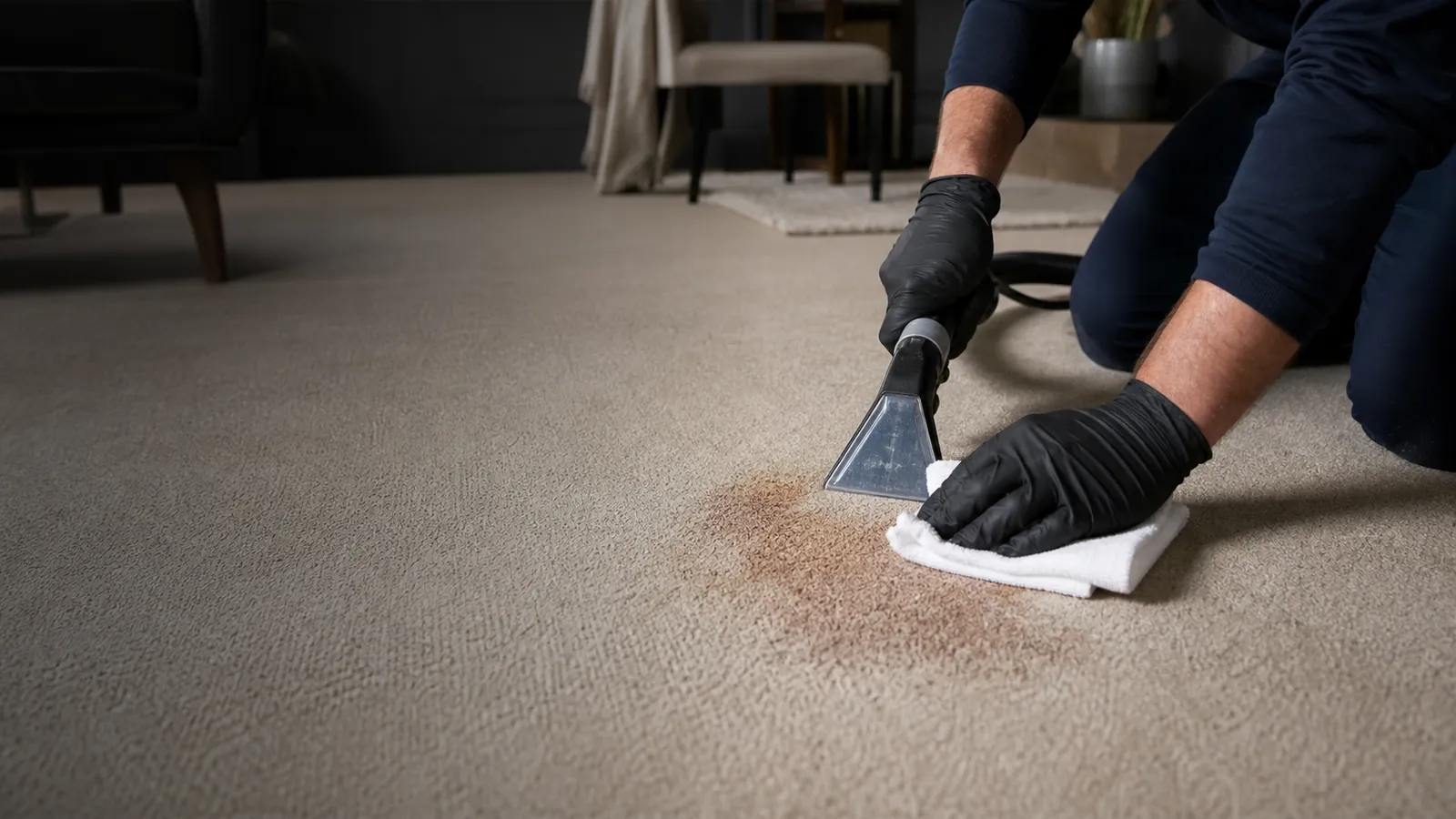

A stain is an event, not simply a coloured patch
When a customer points to a mark, the most useful information is often what happened before it appeared. A drink, tracked material, pet accident, household product or unknown substance can leave similar colours while behaving differently under treatment. For an East Ham booking, we build the spot plan from history and testing rather than selecting chemistry by visual guesswork.
Age matters as well. A fresh spill that has been blotted may still sit mainly within the pile; an older patch may have oxidised, migrated into backing or been altered by several cleaning attempts. We ask when the incident occurred, whether heat or scrubbing was used, and how the appearance changed. An honest ‘unknown’ is safer than a confident but invented answer.
Spot treatment is then separated from the whole-room clean. General dullness benefits from detailed dry extraction and even pre-conditioning. The isolated concern receives its own discreet test and controlled application. Keeping those tasks distinct prevents an unnecessarily strong solution from being spread across sound carpet merely because one mark is stubborn.
Not every colour can be extracted. Bleaching removes dye; abrasion changes fibre; some substances permanently bond or transfer colour. Continuing to wet such an area may spread it, disturb backing or delay drying without improving the finish. A professional result includes knowing when to stop and explaining why the remaining patch is no longer ordinary soil.
Customers planning several household services should keep each one visible in the brief. Upholstery cleaning can address a related spill on seating, and domestic cleaning covers routine surrounding surfaces. Neither should be assumed within the carpet quotation merely because the contamination crossed from one item to another.
PROCESS / FOUR DECISIONS
Keep one service plan while changing method responsibly
01
Mark every textile transition
The technician walks the property, checks labels, joins and pile differences, and records damage. Individual tests are assigned where material or dye uncertainty requires them.
02
Prepare each pile appropriately
Vacuuming remains thorough but brush and suction choices respect construction. Dry grit is removed before product, with fragile loops protected from needless mechanical stress.
03
Change the wet plan at real boundaries
Pre-treatment and agitation suit the current carpet. Tools and solution are managed when moving rooms; extraction uses adequate rinse and recovery without assuming one moisture tolerance.
04
Write a room-specific handover
The cleaner compares each result with its own starting condition, notes permanent variation and explains drying. Different responses are not concealed beneath one generic completion statement.
VISIT / HANDOVER
Make the room easier to assess


Remove small valuables and fragile objects, but discuss heavy or connected furniture rather than moving it unsafely. Tell us about previous spot products and access constraints. Routine housekeeping is a separate service described under domestic cleaning.
Nominal room size is not reachable carpet
A floor plan may include space occupied by fitted units, loaded storage or objects that have nowhere safe to go. The useful measurement is paired with a furniture discussion. This yields a realistic working area and prevents disagreement about sections that could never be accessed.
Known marks still need a textile test
Advance photographs help locate concerns but cannot reveal backing condition, dye stability or every product previously applied. The technician assesses the spot on site, beginning conservatively and stopping when further treatment would add risk rather than meaningful improvement.
Drying is part of room logistics
Ventilation, temperature, pile depth and recovered moisture all influence the handover. Occupants should avoid outdoor shoes, replace heavy items only when advised and leave air paths open where safe. A generic clock-based answer would disregard those variables.
Mattresses have a different return-to-use question
A bed cannot be treated as another patch of floor. Layers, filling and intended use require their own inspection and moisture plan. See mattress cleaning when that item belongs in the wider booking.
SERVICE TEAMS / THE AGREED WORK
Four reasons a carpet may change across the view

Pile running in another direction
Fibres reflect light differently as their orientation changes. Gentle grooming and movement around the room help reveal this effect before the cleaner decides that a dark area needs more chemistry.

Compression through a traffic lane
Cleaning can remove soil and improve presentation, but repeatedly crushed pile may not stand like protected fibre. The remaining texture is documented rather than disguised as a wet patch.

Fading near a source of light
Missing colour cannot be rinsed back. Soil removal may increase the visible contrast with an exposed area, which is why pre-clean notes and consistent photographs matter.

A fixed mark across changing shading
If discolouration remains in place while pile reflection alters around it, targeted testing may be justified. Treatment still respects fibre and dye response, with no guaranteed removal.
Optical assessment prevents over-treatment; it does not excuse incomplete cleaning. The carpet still receives full preparation and the agreed rinse wherever recoverable contamination is present. Customers can make the final review more reliable by allowing ordinary room light where practical and by avoiding a single spotlight aimed only at the darkest view. If a band changes as people walk around it, that behaviour is recorded. If it remains fixed, the technician considers soil, dye and wear separately before proposing another attempt. Furniture placement can complicate the comparison. Carpet under a cabinet may retain taller pile and stronger colour while also holding a sharp pressure line at its edge. The sheltered patch is therefore a reference, not a promised final shade for the exposed room. After extraction, the cleaner allows grooming to settle before describing the contrast and notes which direction produces the darkest view. Customers are advised not to scrub a directional band after the visit. Such action can distort fibres and add product residue without changing the underlying way that light reflects from the pile.
PRICING / CLEAR STARTING POINTS
Timing requirements clarify scope; they do not manufacture certainty
Room measurements, steps, carpet condition, fibre information, furnishings, access and notable spots support the quotation. A return-to-use preference should also be disclosed. Published guidance sits on the prices page; the East Ham appointment is costed from its declared work rather than an arbitrary fast-dry label.
01
Single room
From £15 / room
Compact bedroom or study
02
Double room
From £15 / room
Standard double bedroom
03
Lounge
From £15 / room
Living room with clear equipment access
04
Stairs
Quotation
Standard flight, subject to construction
05
Hallway
Quotation
Reachable hall or landing
06
Whole property
Quotation
Measured rooms and fibre types
Prices are guide prices.
Final quotation depends on the property, condition and requirements.
SERVICE SCOPE / READ BEFORE BOOKING
An accessible-carpet clean with an honest odour boundary
Included in this brief
- Incident history and inspection of the visible affected carpet
- General dry-soil preparation plus controlled local treatment
- Compatible rinse extraction across the agreed reachable area
- A result note distinguishing appearance, residual smell and limitations
Outside this cleaning brief
- Guaranteed removal of odour originating in underlay or building fabric
- Lifting fitted carpet, replacing padding or treating concealed subfloor
- Claims to sanitise an unidentified source beyond the inspected textile

MAP / COVERAGE CONTEXT
Plan the route into the East Ham property.
Coverage context for East Ham. This map does not represent a staffed local office.
EXPLORE / NEXT
Related services in East Ham
EXPLORE / NEXT
Nearby areas for carpet cleaning
Possible reasons include detergent residue, incomplete dry-soil removal, excessive moisture, normal footfall or worn fibres that hold a dull appearance. Inspection is needed before assigning one cause or proposing a corrective rinse.
Questions about carpet maintenance in East Ham
Why did my carpet become dirty again after DIY cleaning?
Not automatically. We first consider what created the texture and test a compatible approach. Adding strength without diagnosis can leave more residue or affect colour without solving the underlying problem.
Will you use a stronger chemical on a sticky area?
It may be more straightforward when condition and access are known, but duration still follows the rooms, stairs, furnishings and soil present that day. A previous booking is useful history, not permission to skip inspection.
Is a maintenance clean quicker than a first appointment?
No single figure is reliable for every carpet. Construction, pile density, room temperature, ventilation, treatment intensity and recovery all affect drying. Guidance becomes more meaningful once the work has been completed.
Can you give a fixed drying time before arrival?
No. It describes service coverage and practical local context, not a staffed branch.
Arrange an East Ham assessment around the textile
Describe the rooms, steps and important marks, then share any fibre label or previous cleaning information you hold. Include access and furniture notes. We will use those facts to prepare the appointment while reserving the final cleaning decision for the carpet’s observed construction, colour response and condition. If a care leaflet specifies restrictions, photograph the relevant page so the technician can compare it with the material and proposed treatment.