
Epsom / KT19
Carpet Cleaning Epsom: Care Planned from the Textile Outwards
- Entrance soil mapped through the rooms
- Slow vacuum passes used as a cleaning stage
- Bonded residue treated only after particles are lifted
- Maintenance advice focused on preventing fresh abrasion
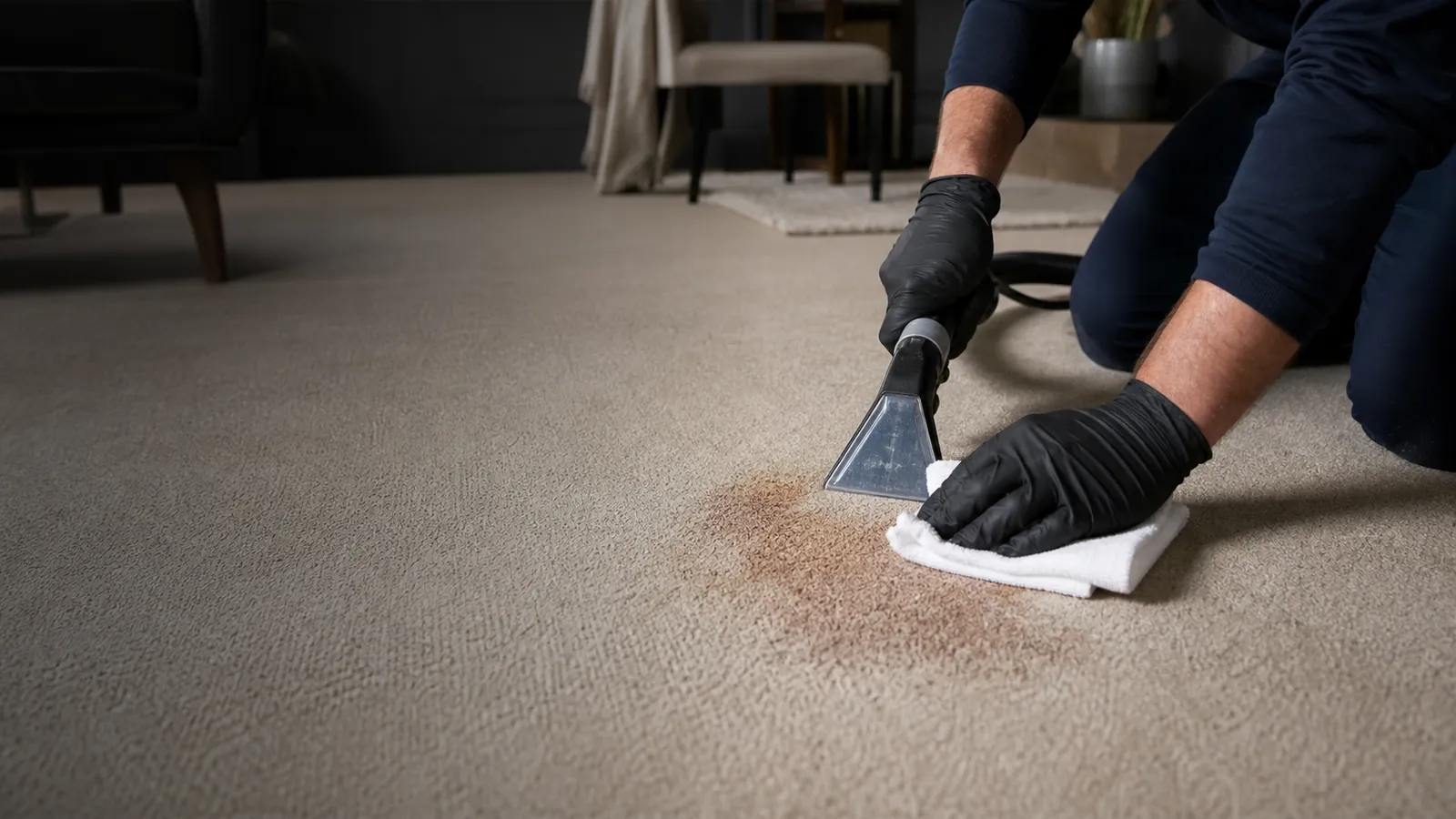
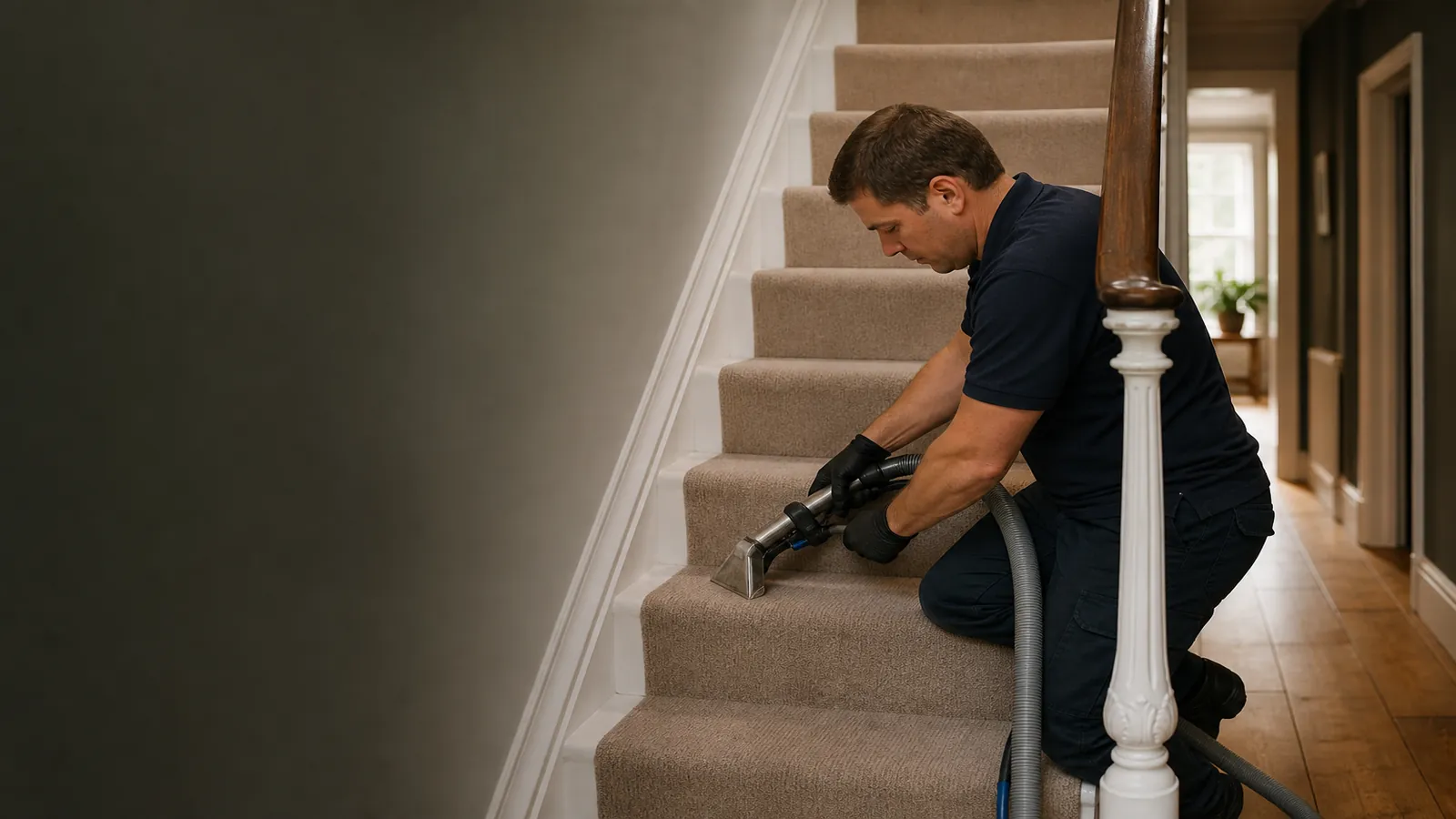
A staircase is not a small flat room
Carpeted stairs concentrate use in narrow bands. The front of a tread may be abraded, the inner turn can hold compacted grit, and dust gathers where vacuum heads fail to reach the skirting. An Epsom quotation should therefore list the number of steps and landings rather than hiding them inside an approximate room total. Their geometry changes both the labour and the safe working order.
Inspection begins with stability. Loose nosings, lifted edges, weak joins and exposed fixings are noted before equipment comes onto the flight. Cleaning may improve soiling around those details, but it cannot make a damaged installation secure. Identifying the boundary early keeps a textile service from being mistaken for carpet fitting or repair.
Dry extraction is especially valuable on stairs because grit settles into corners and is repeatedly pressed into the pile. The operative works methodically across treads, risers where carpeted, side edges and the landing transition. Wet preparation follows only after removable particles have been addressed, reducing the load that later rinse passes must carry.
Access is planned with occupants in mind. A treated flight may need temporary restrictions while work progresses and while the pile dries. The customer should mention any essential route through the property before booking. We can then discuss sequence and handover honestly, without promising continuous use when that would conflict with safe equipment handling.
Stair cleaning is still part of a wider carpet condition assessment. A dark nosing may combine soil and worn fibre; a light band could be pile reversal rather than an untreated strip. We review the finished work from above and below, explain lasting abrasion, and avoid soaking one section merely to chase a contrast caused by use.
SERVICE SCOPE / READ BEFORE BOOKING
A carpet clean with an explicit handover plan
Included in this brief
- Discussion of room priorities, furnishings and intended use after the visit
- Pre-clean survey and detailed removal of loose dry matter
- Compatible treatment with controlled rinse and moisture recovery
- Condition-specific ventilation, access and aftercare guidance
Outside this cleaning brief
- A fixed drying promise made without inspecting the textile and room
- Moving occupants’ fragile or powered equipment without prior agreement
- Restoration of worn pile, faded dye or structural carpet faults

PRICING / CLEAR STARTING POINTS
Material, scope and condition belong in the quotation
The price discussion uses room dimensions, steps, furnishings, carpet information, contamination and access rather than an Epsom label. Published guidance remains on the prices page. Photographs and manufacturer details can support the enquiry, although final method decisions follow the textile inspected on site.
01
Single room
From £15 / room
Compact bedroom or study
02
Double room
From £15 / room
Standard double bedroom
03
Lounge
From £15 / room
Living room with clear equipment access
04
Stairs
Quotation
Standard flight, subject to construction
05
Hallway
Quotation
Reachable hall or landing
06
Whole property
Quotation
Measured rooms and fibre types
Prices are guide prices.
Final quotation depends on the property, condition and requirements.
SERVICE TEAMS / THE AGREED WORK
Four questions before fine-dust carpet work

Has the source genuinely stopped?
Cleaning before sanding or drilling is complete invites immediate resettlement. The customer confirms that dust-producing tasks and loose waste removal have finished before the carpet appointment begins.

Is the material safe to vacuum?
Ordinary inert decorating dust differs from sharp fragments or an unknown substance. Anything presenting a hazard must be identified and handled through an appropriate service rather than hidden in a carpet brief.

Where has air carried the particles?
Edges and doorway lines can contain concentrated deposits. Narrow-tool extraction addresses reachable boundaries, while the handover notes sources outside the textile that may continue releasing material.

What does protected pile reveal?
A sheltered patch helps compare colour and dust load. It does not promise that exposed fibre will match perfectly, because sunlight, traffic and abrasion may have changed it independently.
Fine-dust preparation can be intensive, but it remains carpet cleaning rather than site clearance. The distinction protects equipment, technicians and the customer’s expectation. Before arrival, the room should be checked for screws, splinters, broken blades and other small hazards that disappear visually into pale powder. These are removed safely by the responsible contractor or occupant, not pushed towards the carpet edge. The cleaner can then focus on textile recovery instead of discovering construction waste through damaged equipment. Dust on the carpet may also be only one part of the load. Window boards, radiator tops, shelves and the upper faces of doors can release particles after the floor has been treated. The booking brief should state whether those surrounding surfaces have been cleared and whether ventilation equipment has continued moving dust. This does not convert carpet cleaning into a builders’ clean; it reveals the risk of immediate resettlement. Once dry extraction is complete, the operative can use a clean pale cloth or another suitable observation to decide whether loose powder remains before introducing pre-treatment for the bonded soil underneath.
PROCESS / FOUR DECISIONS
A residue-conscious working sequence
01
Establish a trustworthy baseline
Condition, handle and pile response are reviewed before solutions are mixed. The technician records areas with a different feel, asks about earlier treatments and agrees which furniture will remain in place.
02
Lift particles before dissolving films
Detailed vacuuming addresses edges and the base of traffic lanes. Removing this dry load first lets later treatment concentrate on bonded contamination and avoids wasting rinse capacity on material that could have been extracted dry.
03
Use enough chemistry, then recover it
The pre-conditioner is chosen and dosed for the task. After appropriate dwell and agitation, extraction proceeds with attention to solution flow, overlap and extra recovery passes instead of leaving the carpet unnecessarily wet.
04
Check feel as well as appearance
The finished pile is inspected for consistency and obvious remaining residue concerns. Marks that are actually wear are identified, and the handover covers ventilation, restricted use and a sensible return to ordinary vacuuming.
VISIT / HANDOVER
Information to provide before the Epsom appointment


List the rooms and stairs, describe entry controls and disclose any time-limited access. Clear portable belongings and tell us which furniture must stay. If a broader household visit is needed, domestic cleaning should be requested in its own right rather than assumed within carpet extraction.
More heat is not automatically safer or cleaner
Temperature interacts with fibre, dye, chemistry and soil. The chosen range must serve the material and method. Strong heat used as a selling point cannot replace inspection, preparation or adequate solution recovery.
Dry passes are active work
An extraction stroke without additional solution helps recover retained moisture and residue. It may look less dramatic than spraying, but it is a meaningful part of the process and supports a more manageable handover.
Do not trap damp pile beneath dense items
Follow advice before returning furniture, storage boxes or protective sheets. Restricting airflow can prolong drying or create transfer concerns. Light objects should also wait until the cleaner confirms the appropriate arrangement.
Upholstery follows another moisture profile
Cushions, linings and frames alter how seating is treated and dried. If furniture needs attention, upholstery cleaning supplies the separate assessment rather than copying carpet settings.
MAP / COVERAGE CONTEXT
Plan the route into the Epsom property.
Coverage context for Epsom. This map does not represent a staffed local office.
EXPLORE / NEXT
Related services in Epsom
EXPLORE / NEXT
Nearby areas for carpet cleaning
Pile may reflect less light from that direction, though soil can contribute as well. The technician views and grooms the area before deciding whether additional treatment is justified.
Epsom questions about shading and carpet colour
Why does my carpet look dark from the doorway?
No. Cleaning removes recoverable contamination; it cannot replace dye altered by light. The surrounding carpet may become clearer, making the faded section easier to recognise.
Can cleaning reverse sunlight fading?
It can align pile temporarily and improve presentation. Permanent compression, pile reversal or fibre damage may reappear as the carpet is used and viewed from changing positions.
Will grooming make every patch look even?
Routine vacuuming and room care can help control new soil. See domestic cleaning for surrounding tasks, while keeping equipment appropriate for the particular carpet pile.
Can domestic cleaning maintain the appearance?
No. It describes service coverage and practical local context, not a staffed branch.
Map the Epsom footfall before requesting a slot
Send carpet dimensions, stairs, fibre, entrance and turning routes, specific spill records, furniture limits and exact access times. Explain how the floor must be used afterwards. These facts support an efficient sequence and transparent handover without turning a busy carpet into an excuse for excessive chemistry or a false drying guarantee.