
Grove Park / W4, SE12
Carpet Cleaning Grove Park: Care Planned from the Textile Outwards
- Busy routes separated from low-use perimeter carpet
- Access windows and occupants declared before booking
- Spot incidents logged instead of blended into general soil
- Return-to-use guidance based on the completed treatment
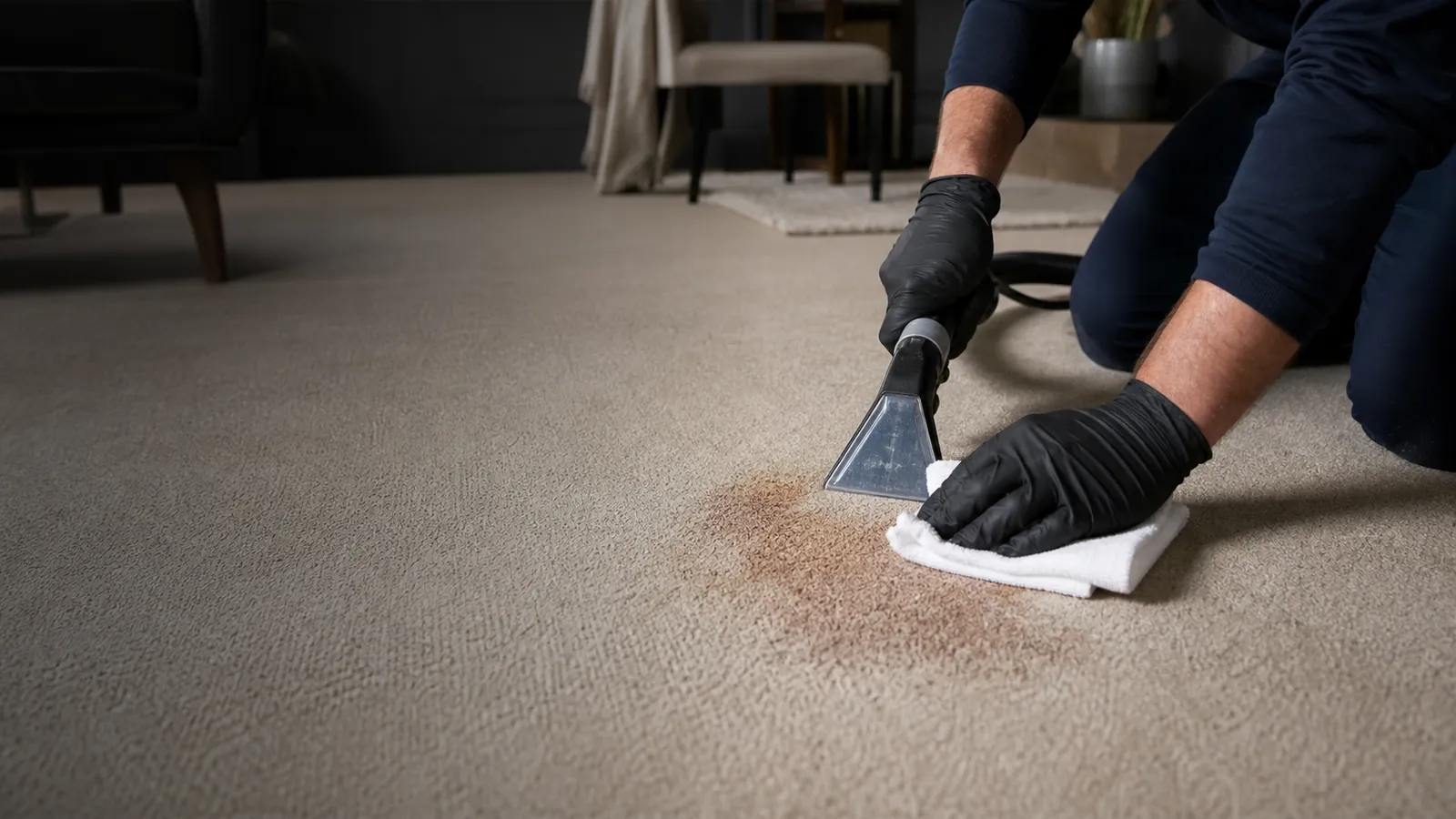
Drying begins with decisions made before extraction
Customers often ask when a carpet will be ready before describing the floor. A useful answer needs fibre, pile depth, backing, room temperature, ventilation and the intensity of treatment. Our Grove Park editorial angle is therefore return-to-use planning: understand when each room is needed, then design a responsible sequence without inventing a universal drying guarantee.
The plan may prioritise one bedroom, divide a larger area into workable zones or leave a route available where the property allows it. These are choices made from the customer’s actual layout, not claims about Grove Park buildings. Furniture position and safe equipment access remain part of the discussion because they determine which sections can be completed without creating new obstacles.
Moisture control does not mean under-cleaning. Thorough vacuuming reduces the dry load, suitable pre-treatment loosens bonded matter, and measured agitation helps chemistry work before the rinse. Extraction then uses enough solution to carry released soil away while repeated recovery strokes remove what the pile no longer needs to hold.
Ventilation is considered sensibly. Opening windows may help where safe and appropriate; heating, airflow and seasonal conditions also matter. We do not prescribe one action remotely or tell occupants to compromise security. The technician reviews the available options and explains how to support drying after the equipment has been removed.
If a property-wide service is being coordinated, end of tenancy cleaning should be ordered so other work does not cross damp carpet. Separate scopes keep responsibility clear. The final handover states which sections were treated, what lasting marks remain and how use can resume without undoing the clean.
PROCESS / FOUR DECISIONS
Create a baseline that future care can use
01
Record today’s pattern
The operative maps traffic, protected pile, spots and existing damage. Previous intervals and products provide context but do not dictate the method chosen for the current textile.
02
Remove dry and bonded loads in order
Vacuum extraction reduces grit; compatible pre-treatment and agitation release films. Extraction rinses the pile and uses recovery strokes to avoid leaving a sticky maintenance problem behind.
03
Define the honest clean baseline
After grooming, the cleaner marks any fading, shading, dents or wear that remains. The customer can distinguish these stable features from new soil during later observation.
04
Agree what to watch, not a sales date
Aftercare covers equipment suitability, higher-use zones, spill blotting and drying. A future booking is suggested only when condition evidence supports it, not as an automatic conclusion.
VISIT / HANDOVER
Clear the floor-level fragility


Remove papers, books, chargers, portable devices and delicate objects. Describe loaded furniture and do not dismantle it without a safe plan. If broader housekeeping is required, domestic cleaning has its own specification and should be sequenced so dust is not returned to treated carpet.
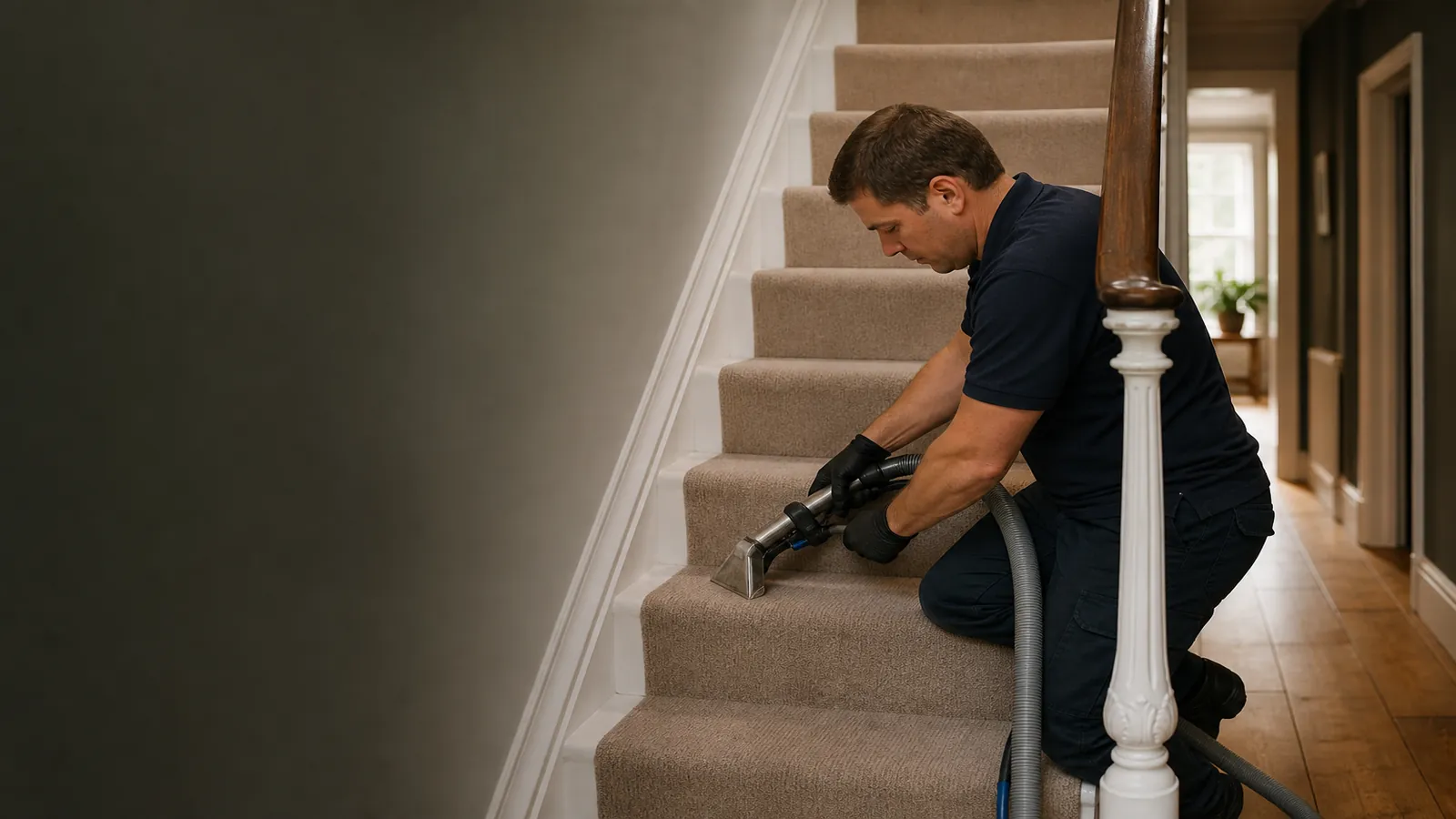
Risers may or may not be carpeted
Photographs help show whether carpet wraps the complete step, covers the tread only or runs as a central runner. This affects measured area and tool access. The quotation should describe what exists instead of assuming a standard staircase construction.
Edges need restraint
Applying extra solution along a dirty boundary can drive moisture towards gaps, adhesive or timber without solving abrasion. Dry work, controlled application and effective recovery are preferable to saturating a line that remains dark because its pile is worn.
Coordinate a moving schedule carefully
When end of tenancy cleaning is also booked, decide which team needs the stairs and when. Carrying equipment repeatedly over treated treads undermines the drying plan and can reintroduce debris.
A runner is not automatically fitted carpet
Loose, removable or specialist stair runners can have different backing and edge details. Declare them during enquiry. The technician must establish whether the item fits the proposed on-site method rather than treating its position as proof.
SERVICE TEAMS / THE AGREED WORK
Four mark histories and four different conversations

A recently blotted liquid
We ask what the liquid was and whether anything besides a clean towel touched it. Prompt, restrained handling may preserve options; rubbing or adding mixed products can spread colour and complicate later treatment.

An old patch with a light centre
A pale centre can suggest colour loss or previous chemical action rather than retained dark soil. Testing explores what remains removable, while the customer is warned that missing dye cannot be rinsed back into the fibre.

A mark that repeatedly reappears
Possible explanations include residue attracting dirt, material rising from deeper layers, or continuing contamination. The cleaner considers the pattern but does not claim a cause until the available evidence supports it.

Several products used in succession
The names and order of products are valuable details. We avoid adding another strong agent blindly, carry out a limited compatibility check and prioritise textile stability over an impressive but risky spot reaction.
The examples do not promise a particular diagnosis in Grove Park. They show why the account supplied by the customer and the response observed on site are part of professional stain work.
PRICING / CLEAR STARTING POINTS
The soil pattern contributes to a clear quotation
Rooms, stairs, measured area, carpet type, furnishings, access and notable contamination are described before work is priced. Consult current price guidance, then provide the Grove Park job details. A traffic lane can require attention without being turned into an unsupported local characteristic.
01
Single room
From £15 / room
Compact bedroom or study
02
Double room
From £15 / room
Standard double bedroom
03
Lounge
From £15 / room
Living room with clear equipment access
04
Stairs
Quotation
Standard flight, subject to construction
05
Hallway
Quotation
Reachable hall or landing
06
Whole property
Quotation
Measured rooms and fibre types
Prices are guide prices.
Final quotation depends on the property, condition and requirements.
SERVICE SCOPE / READ BEFORE BOOKING
A detail-conscious Grove Park carpet service
Included in this brief
- Pre-clean record of marks, wear, joins, borders and handling constraints
- Fibre-aware dry preparation and discreet compatibility checks where needed
- Measured whole-area treatment with separately controlled spot work
- Post-clean comparison against the recorded condition and drying guidance
Outside this cleaning brief
- Restoration, re-dyeing, re-tufting and repair of decorative details
- Movement of artwork, antiques or fragile items without a safe agreement
- A guarantee that revealed fading or old chemical damage will disappear
MAP / COVERAGE CONTEXT
Plan the route into the Grove Park property.
Coverage context for Grove Park. This map does not represent a staffed local office.
EXPLORE / NEXT
Related services in Grove Park
EXPLORE / NEXT
Nearby areas for carpet cleaning
That is usually counterproductive and may be unsafe. Dust-producing work and loose waste should finish first, leaving a stable area that can be assessed and cleaned properly.
Grove Park questions about fine dust in carpets
Can you clean the carpet while decorators are still working?
Moisture can combine fine particles into paste and move them deeper. Purposeful dry extraction reduces the load before any solution is used for bonded contamination.
Why not shampoo the dust straight away?
Not necessarily. Filtration soil can be strongly bonded, and edges may show wear or gaps. Targeted treatment is attempted within safe limits without saturating the boundary.
Will every line along the wall disappear?
Routine carpet cleaning is not a hazardous-material service. If the substance is unknown or potentially harmful, it must be identified and managed by a suitably competent provider first.
Do you remove hazardous building dust?
No. It describes service coverage and practical local context, not a staffed branch.
Plan an Grove Park clean with the next month in mind
Tell us how the rooms are used, when they were last treated, which products have touched any marks and whether the pile currently feels sticky or stiff. Add measurements, stair details and access information. We can then discuss a service designed to remove recoverable soil cleanly and leave a manageable maintenance baseline. Note any area that re-soils unusually quickly, as its position and treatment history may reveal a different maintenance concern from general footfall.