
Gunnersbury /
Carpet Cleaning Gunnersbury: Remove Renovation Dust Before Adding Moisture
- Building-work history included in the carpet survey
- Repeated dry extraction prioritised for fine particulate matter
- Paint, adhesive and damage assessed as separate limitations
- Carpet cleaning scheduled after dusty work is genuinely complete
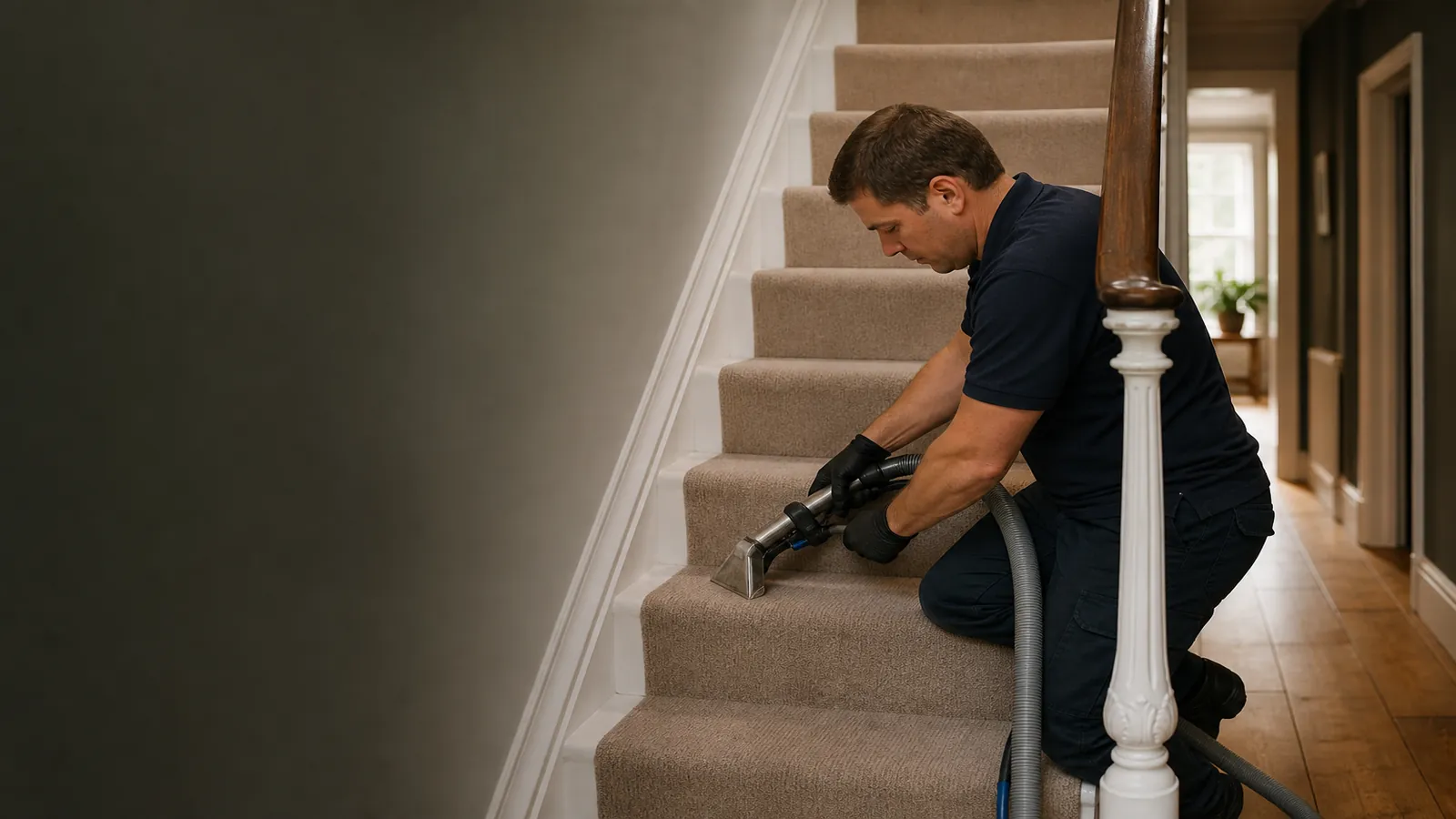

Fine dust changes the preparation, not the laws of the textile
Decorating and minor building work can leave carpet looking uniformly pale or gritty even when dust sheets were used. Fine particles travel along edges, settle beneath movable items and return from adjoining rooms. Introducing moisture too early can turn that dry load into a more difficult residue. For a Gunnersbury carpet-cleaning enquiry after works, the first priority is to establish what happened, whether dust-producing tasks have ended and which areas were exposed.
The preparation stage may need several deliberate vacuuming directions rather than one quick pass. Edges, transitions and traffic routes deserve attention, and filters or bags must function properly. This is not theatrical repetition: the aim is to remove as much loose material as practical before the carpet receives any suitable pre-treatment. A wet method should not be expected to compensate for incomplete dry extraction.
Building projects also create marks that are not ordinary soil. Paint, plaster compounds, adhesive, sealant, rust, cuts and compressed pile require individual assessment. Some deposits may support cautious local work; others risk fibre or colour damage if scraped or dissolved aggressively. Physical damage remains a repair issue. The customer should describe materials used instead of calling every leftover mark dust.
Where the wider property needs an end of tenancy cleaning, construction debris and unfinished work should be resolved before the final textile appointment. Trades returning after carpet cleaning can undo the result immediately. A realistic schedule leaves time for dust to settle, hard surfaces to be cleaned and the carpet to dry before inspection.
The finished carpet is reviewed for remaining wear and project-related limitations. Cleaning can improve clarity and remove suitable embedded matter, but it cannot promise to reverse bleach, paint dyeing, torn fibres or permanent pile distortion. A precise handover is preferable to repeated chemistry used only because a renovation deadline is close.
PROCESS / FOUR DECISIONS
A five-minute history can prevent an hour of wrong treatment
01
Record what is known
The customer describes the spill, timing, earlier cleaning attempts and any change in colour, texture or smell. Unknown details are labelled as unknown rather than filled with assumptions.
02
Examine the mark in its room
The technician compares the affected area with surrounding pile, checks the wider traffic pattern and considers fibre and dye behaviour. General wear is separated from the local concern.
03
Start with the least disruptive sound option
Dry preparation comes first. A suitable spot procedure is tested and applied carefully, with response assessed before repetition or escalation. The rest of the room receives the method agreed for its overall condition.
04
Review the outcome without rewriting the history
Remaining staining, texture change or colour loss is shown to the customer. The handover explains what improved, what appears permanent and how to manage drying or a future spill.
VISIT / HANDOVER
Pause the experiments before the appointment


Blot a fresh spill with a clean, colourfast cloth; do not scrub or soak the backing. Avoid layering vinegar, detergent, disinfectant, bleach, bicarbonate or another proprietary spray without knowing how they interact. Keep the container or photograph the label of anything already used. If the mark is dry and stable, further home treatment immediately before the visit can remove useful evidence and make professional assessment less predictable.
Sticky residue can look like a returning stain
A detergent-rich patch may feel clean at first and darken again as it attracts airborne or foot-borne soil. The later appearance does not necessarily mean the original spill has risen from nowhere. Residue history helps the technician decide whether careful rinsing and recovery are relevant.
Colour loss is not pale dirt
Bleach, acne products, strong cleaners and sunlight can alter dye. Cleaning removes matter; it does not manufacture the missing colour. A pale patch is therefore assessed cautiously, and further chemistry is avoided if it could enlarge the damage.
Odour needs a source boundary
A smell may sit in surface residue, deeper carpet layers, underlay, furniture or another part of the room. Routine carpet cleaning can address suitable accessible contamination, but it cannot certify inaccessible layers as resolved. The scope should describe where the concern is noticed and what caused it if known.
Fresh household routines still matter
After professional work, regular vacuuming and prompt blotting reduce the chance of small incidents becoming embedded problems. Customers using domestic cleaning can keep textile aftercare distinct from ordinary surface products and avoid accidental overspray near the floor.
SERVICE TEAMS / THE AGREED WORK
Four variables that change drying

Carpet construction
Dense pile and absorbent materials can retain moisture differently from a thinner fitted carpet. Backing and installation also influence what the technician can observe and how cautiously solution should be applied. Appearance alone is not a reliable drying calculator.

The amount of treatment required
A lightly soiled room may need less intervention than a heavily used route with several suitable spot procedures. The answer is not to flood the difficult area. Application, agitation and recovery are balanced so the carpet receives enough work without unnecessary liquid.

Air movement and indoor climate
Safe ventilation can help moisture leave the textile. Outdoor conditions, room temperature and humidity affect that exchange. The customer decides which windows or systems can be used securely, while the cleaner explains what would support the drying process.

What happens after departure
Repeated walking, closed rooms and premature furniture replacement can slow or spoil the finish. The handover identifies a temporary route and advises when normal use should resume. Clean socks or overshoes are not a licence for avoidable traffic on damp pile.
If carpet work follows domestic cleaning, complete dusty room tasks first where practical. This prevents fresh debris settling on a damp textile and leaves the carpet stage with a clearer drying route.
PRICING / CLEAR STARTING POINTS
The number of rooms is only the beginning
A useful quotation records the carpeted rooms, approximate sizes, stairs and landings, but it should also identify access and use constraints. Cleaning several empty rooms on one level differs from working around occupied spaces that must return to service in a strict order. Condition, carpet construction, spot priorities and furniture still matter, and a long equipment route may affect the appointment plan. General information on cleaning prices can help customers frame an enquiry. The confirmed quote should state what is included instead of implying that every possible spot treatment or furniture move is unlimited. Drying care should not appear as a paid theatrical extra; it is part of competent method selection and handover. If a special schedule requires a revised room sequence, discuss it when booking so enough time is allowed for preparation rather than trying to accelerate the carpet with excess heat or rushed technique.
01
Single room
From £15 / room
Compact bedroom or study
02
Double room
From £15 / room
Standard double bedroom
03
Lounge
From £15 / room
Living room with clear equipment access
04
Stairs
Quotation
Standard flight, subject to construction
05
Hallway
Quotation
Reachable hall or landing
06
Whole property
Quotation
Measured rooms and fibre types
Prices are guide prices.
Final quotation depends on the property, condition and requirements.
SCOPE / CONFIRM BEFORE BOOKING
What a drying-aware appointment provides
Included in this brief
- Use-plan discussion: identification of essential rooms and routes so the cleaning order works with the household.
- Carpet assessment: checks of condition and material that influence both the cleaning technique and likely drying behaviour.
- Measured application and recovery: solution used for a purpose, with avoidable saturation and needless repeated passes avoided.
- Room-specific handover: guidance on airflow, foot traffic, furniture replacement and any area that deserves extra patience.
Outside this cleaning brief
- An exact guaranteed drying time is not offered because indoor conditions and carpet construction cannot be reduced to one number.
- The cleaner cannot leave windows unsecured or heating and ventilation running contrary to the occupier’s safety requirements.
- Damage caused by walking on damp carpet with dirty footwear or replacing unsuitable furniture too early falls outside the cleaning scope.

PREPARATION / BEFORE THE VISIT
Prepare the Gunnersbury address without pre-cleaning it.
- Confirm the entrance and any requirement involving street-specific parking controls.
- List the rooms or items covered by carpet cleaning.
- Point out sensitive finishes, pets, alarms and anything that must not be moved.
- Agree the key return, completion contact and any building time restriction.
MAP / COVERAGE CONTEXT
Route planning for carpet cleaning in Gunnersbury.
Coverage context for Gunnersbury. This map does not represent a staffed local office.
RELATED SERVICES / SAME AREA
Related services in Gunnersbury
NEARBY AREAS / SAME SERVICE
Carpet Cleaning near Gunnersbury
Usually it is better to stop once the spill has been blotted and the area is stable. Additional products may set colour, leave residue or react with something already present. Tell the cleaner what has been used.
Stain and spill questions for Gunnersbury carpets
Should I try another product before you arrive?
The remaining appearance may be permanent dye change, worn pile, fibre distortion or residue that cannot be pursued safely. The technician should explain the most likely limitation after assessment.
Why can a cleaned mark still be visible?
A photograph helps show size and location but cannot reliably reveal fibre, chemistry, depth or previous treatment. It supports the quotation conversation rather than guaranteeing an outcome.
Can a photograph confirm whether the stain will come out?
A competent approach considers the surrounding carpet and controls application, feathering and recovery. Existing rings from earlier work are assessed first. No method can promise zero visual difference where dye or texture is already damaged.
Will spot treatment leave a ring?
No. The map describes service coverage; it does not identify a staffed local branch.
Share the evidence before asking for a promise
For carpet cleaning in Gunnersbury, send the full room list and describe the marks in plain terms: what happened, when, and what has already been tried. That history supports safer testing and a quotation that recognises the real priority. The service will pursue appropriate improvement while keeping colour, texture and the condition of the whole room in view.