
Hampton / TW12
Carpet Cleaning Hampton: Account for Every Product Already Used
- DIY sprays and earlier professional work included in the history
- Sticky residue separated from a returning original stain
- Colour and fibre tested before another chemical layer
- Rinsing considered only where the carpet supports it
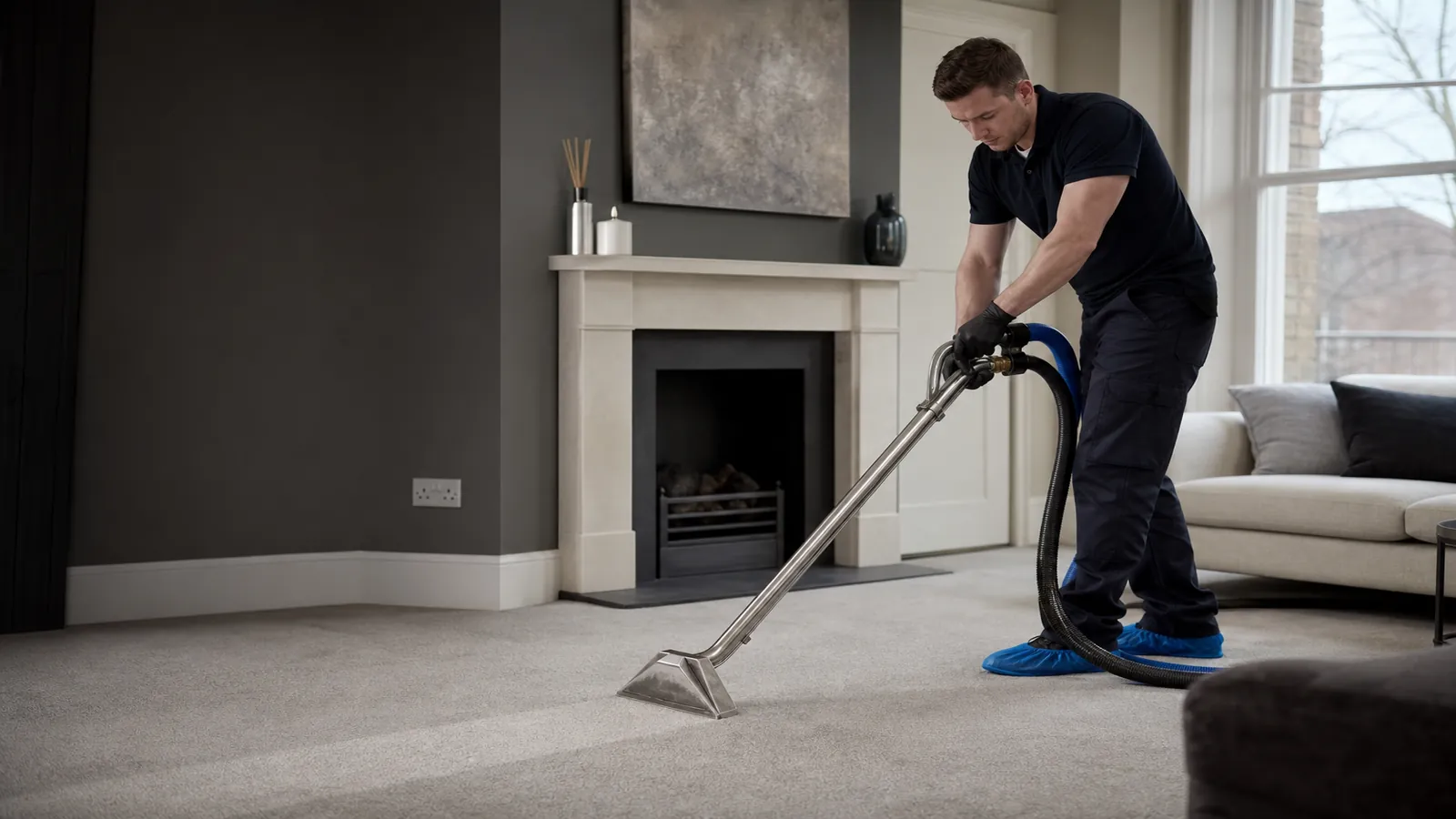
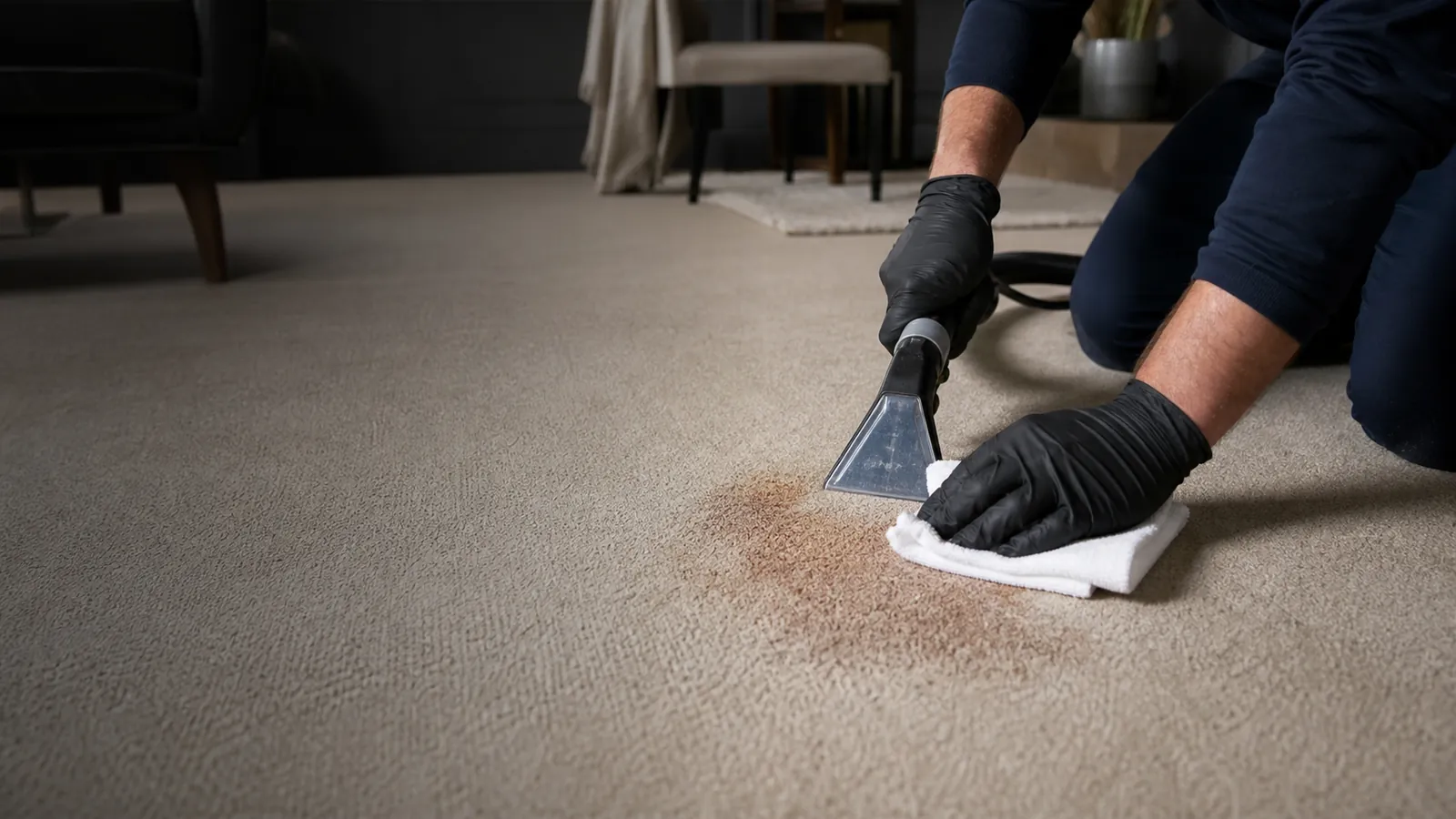
The carpet may be carrying the attempted solution as well as the problem
A mark that repeatedly darkens can contain more than the original spill. Detergent, soap, disinfectant, fragranced spray or an earlier spotter may remain in the pile and attract new soil. Several products can also change colour or make later chemistry less predictable. For a Hampton carpet-cleaning enquiry, product history is part of condition, even when the bottle appeared to have no effect.
Customers are not expected to know chemical names from memory. A photograph of the label, a receipt or a plain description is useful. Explain whether the area was soaked, scrubbed, heated or extracted and how it looked once dry. The technician uses that record to decide whether a test, controlled rinse, local treatment or deliberate stop is sensible.
Residue should not be diagnosed from stickiness alone. Fibre damage, oily contamination and soil attracted by wear can create overlapping symptoms. Full-room dry preparation removes loose debris and lets the affected area be compared with its surroundings. Applying another product before that step can hide rather than clarify the cause.
A regular domestic cleaning routine should keep general floor sprays and mop solution away from carpet boundaries. Overspray can build gradually near a threshold. Clear responsibilities help the carpet remain a textile surface rather than the accidental recipient of every room product.
The handover explains what the treatment achieved after drying and what uncertainty remains. If colour has been stripped or pile distorted by a previous attempt, cleaning cannot restore it. Recording that outcome helps prevent the next person repeating the same cycle with a stronger bottle.
PROCESS / FOUR DECISIONS
Secure the route before cleaning each component
01
Agree access and count the sections
The household identifies essential movement, and the technician confirms flights, landings and adjacent halls. A safe pause or alternative route is planned.
02
Check fitting and wear
Edges, nosing, seams and turns are examined. Unsafe or physically damaged points are recorded before any cleaning decision.
03
Prepare and work through the flight
Treads, risers and margins receive systematic dry attention, followed by suitable cleaning in a controlled progression.
04
Release the staircase after handover
Remaining wear is explained from both viewing directions. The customer follows drying and traffic guidance rather than reopening the route immediately.
VISIT / HANDOVER
Arrange the household around a temporary stair closure


Move small objects from landings, secure pets and collect anything needed from another floor before work begins. Point out loose edges or recent repairs. Do not ask children or other occupants to step over equipment. If no alternative route exists, discuss the likely working and drying restrictions when booking. Check that doors at the top and bottom can operate without dragging across the carpet, and tell the technician about any alarm sensor or stair gate that changes the route. Plan medication, refreshments and essential belongings on the correct floor for the temporary closure. Visitors should be given another time rather than arriving while hoses occupy the entrance or a turning landing is still damp.
Dark turns may remain after soil removal
Compressed and abraded pile reflects light differently. Cleaning can remove suitable dirt without rebuilding the worn fibre. Comparing the dry result from above and below gives a fairer view.
Edges deserve tools, not excess liquid
Dust near skirting and stair margins should be addressed through deliberate preparation. Flooding an edge does not replace tool access and may introduce avoidable moisture near fitting points.
A landing is a traffic junction
Foot movement changes direction and may carry debris between floors. Treating the landing as a named area allows enough preparation and prevents it being overlooked between two priced flights.
Rental stair evidence needs time
Where stairs are part of end of tenancy cleaning, schedule drying before inventory photographs. Damp pile and grooming can temporarily change shade.
SERVICE TEAMS / THE AGREED WORK
Four post-works findings with different answers

Loose plaster or sanding dust
Dry particles should be removed methodically before moisture. Several controlled passes may be appropriate, with equipment maintained so captured dust is not recirculated. Edges and adjoining routes remain part of the survey.

A paint droplet
Paint type, age, quantity and fibre influence whether local treatment is reasonable. Picking or aggressive solvent use can damage pile and colour. The technician tests cautiously and states when the risk outweighs likely improvement.

Adhesive or sealant residue
Sticky construction products vary widely and may have bonded with fibres. Product information is helpful. No universal spotter safely dissolves every adhesive, and permanent texture change may remain.

Pile crushed beneath protection
Boards, furniture and repeated trade traffic can compress or abrade carpet. Cleaning may improve soil-related appearance without rebuilding the texture. The limitation is documented rather than treated as a stain.
Once building dust is controlled, ongoing domestic cleaning can maintain hard surfaces and loose debris. Keep wet floor products away from carpet edges and use suitable vacuuming routinely.
PRICING / CLEAR STARTING POINTS
Describe the works as carefully as the room count
A post-works quote needs the number and size of carpeted areas, stairs and landings, plus the nature of the project and how the flooring was protected. Mention visible fine dust, paint spots, adhesive, furniture left in place and any room where work is unfinished. The cleaning prices page offers general context; the accepted quotation should define ordinary cleaning and any mark that requires inspection before inclusion. Photographs help show project residue but cannot establish fibre damage or how deeply particles have travelled. Preparation time is part of the workload and should not be hidden behind a cheap room figure. Equally, a cleaner should not sell speculative chemical treatment for every speck. Accurate history supports a proportionate plan and a date after the source of dust has stopped.
01
Single room
From £15 / room
Compact bedroom or study
02
Double room
From £15 / room
Standard double bedroom
03
Lounge
From £15 / room
Living room with clear equipment access
04
Stairs
Quotation
Standard flight, subject to construction
05
Hallway
Quotation
Reachable hall or landing
06
Whole property
Quotation
Measured rooms and fibre types
Prices are guide prices.
Final quotation depends on the property, condition and requirements.
SCOPE / CONFIRM BEFORE BOOKING
A post-works carpet clean with preparation at its centre
Included in this brief
- Project history: review of recent decorating, sanding, drilling or plaster work and the carpet protection used.
- Enhanced dry stage: systematic vacuuming of accessible pile, boundaries and routes before suitable wet treatment.
- Deposit triage: separate assessment of dust, paint, adhesive and unknown project marks rather than one blanket promise.
- Final condition review: explanation of what was removed and what represents staining, colour change or physical damage.
Outside this cleaning brief
- Removal of bulk rubble, sharp waste, nails, wet plaster or hazardous construction material is not carpet-cleaning preparation.
- The service does not guarantee removal of cured paint, adhesive, sealant or dye change caused by project chemicals.
- Cleaning should not proceed through active dust production or while trades still need to cross the carpet with tools and materials.

PREPARATION / BEFORE THE VISIT
Prepare the Hampton address without pre-cleaning it.
- Confirm the entrance and any requirement involving street-specific parking controls.
- List the rooms or items covered by carpet cleaning.
- Point out sensitive finishes, pets, alarms and anything that must not be moved.
- Agree the key return, completion contact and any building time restriction.
MAP / COVERAGE CONTEXT
Route planning for carpet cleaning in Hampton.
Coverage context for Hampton. This map does not represent a staffed local office.
RELATED SERVICES / SAME AREA
Related services in Hampton
NEARBY AREAS / SAME SERVICE
Carpet Cleaning near Hampton
Only if the accepted stair scope says so. Confirm treads, risers, turns and landings when requesting the quotation.
Stair-carpet questions for Hampton
Are risers included automatically?
Usually movement must pause while equipment and damp carpet create risks. Discuss essential access beforehand and follow the technician’s route instructions.
Can we use the stairs during cleaning?
No. Cleaning addresses suitable soil but cannot replace abraded pile or repair damaged fitting. The limitation should be shown before work.
Will worn stair edges look new?
They contain repeated detailed surfaces, constrained access and distinct safety considerations. Listing them separately creates a clearer workload than calling them part of a hall.
Why do stairs need separate pricing?
No. The map describes service coverage; it does not identify a staffed local branch.
List every flight before choosing the appointment
For carpet cleaning in Hampton, describe stair flights, turns, landings and adjoining rooms, plus any access that cannot pause. A stair-specific brief allows safe equipment planning, complete preparation and a realistic account of wear versus removable soil.