
Kensington / W8
Carpet Cleaning Kensington: Care Planned from the Textile Outwards
- Recent decorating or building residue disclosed in advance
- Dry containment and extraction given priority
- Edges and air-deposition lines assessed separately
- Wet treatment begins only after the loose load is reduced
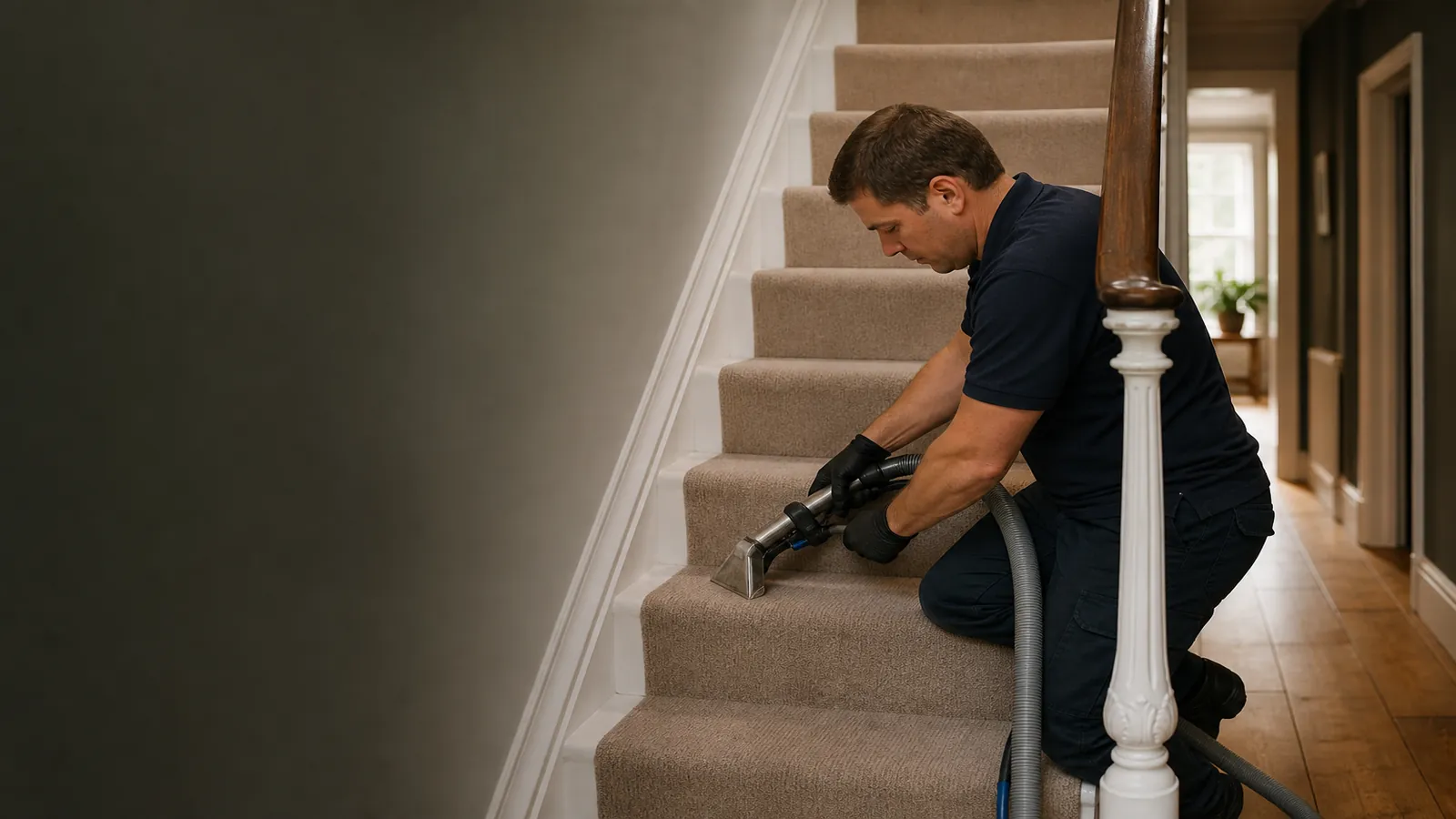
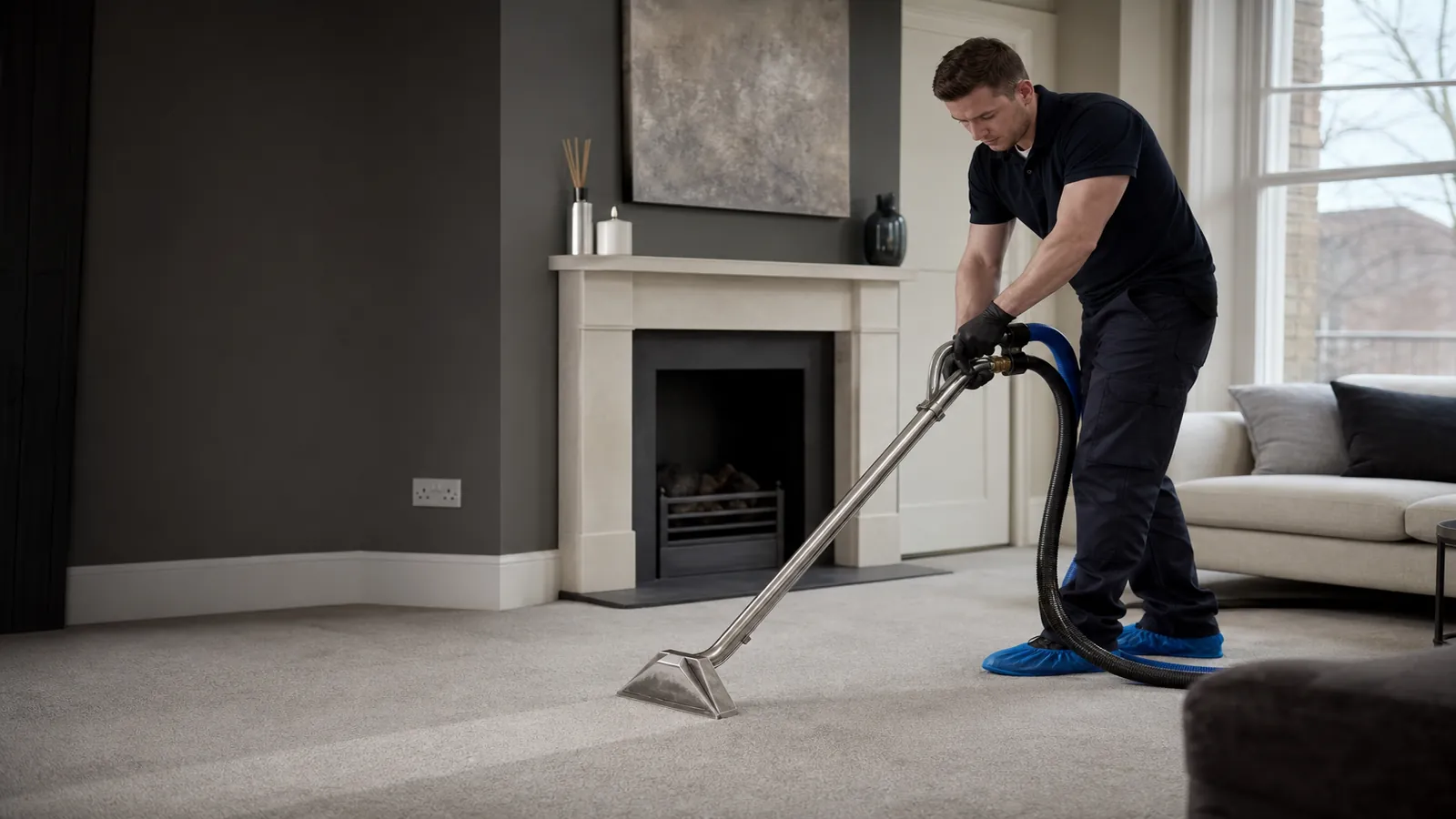
Carpet cleaning in Kensington with fibre and access details checked
Carpet cleaning in Kensington needs to account for mansion flats, mews houses and managed apartments. Fibre type, pile construction, previous treatments and the backing beneath the carpet determine which method is appropriate; visible colour alone is not enough to choose chemistry or moisture levels.
A useful inspection separates general soil from individual stains, flattened traffic lanes and permanent fibre damage. Entrance routes, family rooms, pets and rented bedrooms often need different pre-treatment. Professional carpet cleaning should therefore begin with testing, careful vacuuming and realistic expectations for older marks.
Locally, porter hours, service lifts and delicate interior finishes can affect how extraction equipment reaches the property. Confirm parking, floor level, water access and furniture movement before arrival. Ventilation and pile depth also influence drying, so rooms should not be put back into heavy use immediately after treatment.
Where sofas or dining chairs show related wear, coordinated upholstery care may be practical, but only after the fabric has been assessed separately. Tenants should allow enough drying time before checkout photographs or an inventory inspection.
Fibre check
Identify pile, backing and previous treatments.
Stain assessment
Separate removable soil from permanent damage.
Access plan
Confirm parking, stairs, lifts and water supply.
A single property can contain several safe operating ranges
Matching colour does not prove matching fibre. A fitted bedroom carpet, hall runner and stair covering can come from different manufacturers, use different backing and respond differently to moisture. The Kensington page is organised around mixed construction: inspect every textile change, then connect the work through a coherent room plan without forcing one machine setting across them all.
The customer provides labels and care records where available. On site, the operative looks at pile, joins, texture, backing clues and colour response. A discreet test on one room supplies evidence only for that material; it is not used as permission to repeat the same chemistry on a neighbouring carpet that merely looks similar.
Dry-soil removal remains relevant across constructions but equipment settings may differ. A delicate loop needs protection from unsuitable brushing, while a robust cut pile may tolerate another approach. The cleaner chooses agitation for the fibre rather than maximising it to make the process appear more powerful.
Wet treatment is divided at thresholds and changes in installation. Pre-conditioner, solution temperature, rinse flow and recovery are adjusted where evidence supports it. The room sequence avoids carrying an unsuitable product across a join and records any section deliberately treated with a more conservative method.
Results are reconciled without pretending the textiles share one history. One carpet may brighten markedly; another may retain fading or old pile distortion. The handover explains response, residual marks and drying by room. Consistency means every construction received appropriate care, not that every floor must finish with identical colour or handle.
SERVICE SCOPE / READ BEFORE BOOKING
A furnished-room carpet scope with no hidden assumptions
Included in this brief
- Agreement about movable items and inaccessible floor sections
- Inspection of open pile, furniture edges, marks and traffic routes
- Dry preparation followed by suitable pre-treatment and extraction
- Finishing, appropriate furniture protection and aftercare guidance
Outside this cleaning brief
- Dismantling beds, wardrobes, desks or connected equipment
- Liability-free movement of overloaded, fragile or unsafe objects
- Cleaning concealed carpet that cannot be reached during the booking
PRICING / CLEAR STARTING POINTS
Current scope is priced; future frequency is not sold in advance
Give room dimensions, stairs, fibre, furnishings, soil pattern, previous cleaning and access. Current published guidance is on the prices page. The Kensington quotation describes today’s work without locking the customer into a calendar unsupported by future condition.
01
Single room
From £15 / room
Compact bedroom or study
02
Double room
From £15 / room
Standard double bedroom
03
Lounge
From £15 / room
Living room with clear equipment access
04
Stairs
Quotation
Standard flight, subject to construction
05
Hallway
Quotation
Reachable hall or landing
06
Whole property
Quotation
Measured rooms and fibre types
Prices are guide prices.
Final quotation depends on the property, condition and requirements.
SERVICE TEAMS / THE AGREED WORK
Four timing questions worth resolving early

Which room is needed first?
Priority can influence the sequence when access permits. It does not remove inspection or safe dwell time, but it helps the team avoid finishing the most urgent space last without a reason.

Where will furniture stand?
An item cannot be moved onto freshly cleaned pile merely to expose another patch. Agreeing safe positions beforehand prevents a furnished room from becoming an improvised obstacle course.

What airflow is genuinely available?
The cleaner asks about ventilation options on site and gives proportionate advice. No particular window, balcony, fan or building system is presumed from the Kensington location name.

Will another team enter afterwards?
Decorators, movers and general cleaners can re-soil damp fibres. Their schedule should be shared so carpet treatment is not placed immediately before heavy traffic through the same rooms.
Return-to-use planning manages expectations and sequencing. It cannot override the physical time required for a specific pile and backing to release moisture safely.
PROCESS / FOUR DECISIONS
A conservative route to meaningful soil removal
01
Inspect before naming the method
The cleaner reviews labels where available, handle, pile, edges and visible backing clues. Existing defects are recorded and the customer’s account of spill products is added to the working picture.
02
Test the uncertain variables
A small, hidden area may be checked for colour or solution response. This is interpreted alongside construction; a successful spot test supports the plan but is not treated as proof that every mark will release.
03
Build cleaning action gradually
Vacuum extraction removes dry matter. Compatible pre-treatment is applied in a controlled quantity, agitation respects pile structure, and rinsing uses suitable flow with repeated recovery rather than unnecessary heat or saturation.
04
Assess the carpet after grooming
The technician looks across the pile from changing angles, checks treated spots and identifies any persistent fading, shading or wear. Drying instructions are then tailored to the actual moisture and room conditions.
VISIT / HANDOVER
Share any previous moisture problem

Mention earlier slow drying, rippling, loose seams or products used on spots. Clear light belongings and do not shampoo the floor immediately before arrival. Coordinate a broader schedule with end of tenancy cleaning so freshly rinsed pile is not crossed repeatedly.
Why colour is weak evidence
Brown may describe tea, tracked soil, oxidation or a reaction to an earlier cleaner; red may come from several unrelated dyes. Selecting a remover from colour alone is therefore unreliable. Context, fibre and a controlled response test provide a safer basis.
Odour and visible staining are not identical
A mark can fade while an odour source remains deeper, or an odour may have no obvious coloured boundary. Carpet cleaning addresses the agreed textile treatment, but it cannot promise remediation of concealed structural contamination that has not been inspected.
Blotting protects more options than rubbing
Pressure with an absorbent towel lifts liquid vertically. Rubbing drives it sideways, distorts pile and may transfer dye. Work from the edge towards the centre, change the towel surface as it loads and stop before adding improvised chemistry.
Beds affected by a separate incident
A mattress has absorbent internal layers and different drying constraints. When it is part of the incident, request mattress cleaning separately, state what happened and avoid presenting carpet extraction as a complete answer for both items.
MAP / COVERAGE CONTEXT
Plan the route into the Kensington property.
Coverage context for Kensington. This map does not represent a staffed local office.
EXPLORE / NEXT
Related services in Kensington
EXPLORE / NEXT
Nearby areas for carpet cleaning
Not necessarily. Remove small and fragile belongings, then describe larger items. The practical solution depends on safe lifting, available space and whether moving an object could damage it or the property.
Kensington access and carpet-care questions
Do I have to empty the entire room?
The operative will reassess what can be completed safely. A substantial undisclosed restriction may change reachable scope or timing; it is better to resolve such details before the appointment.
Can cleaning continue if access differs from the booking?
That cannot be guaranteed without knowing the textile and conditions. Share the deadline early. We can plan responsibly and advise after extraction, but material behaviour takes precedence over a marketing promise.
Will the carpet be dry before an evening event?
Furniture handling must be agreed. Movable chairs may be cleared, while desks with equipment or cabling require a safe plan. Carpet cleaning does not include dismantling a workstation.
Are office chairs and desks included?
No. It describes service coverage and practical local context, not a staffed branch.
Describe the Kensington traffic lane layer by layer
Send room dimensions, stairs, carpet information, photographs and the history of sticky patches or spills. Mention previous shampoos and nearby sources without trying to diagnose them. This evidence helps us allocate dry extraction, select proportionate pre-treatment and leave a finish judged by recovered soil rather than fragrance.