
Kidbrooke /
Carpet Cleaning Kidbrooke: Find the Source Before Treating the Patch
- Surface spills separated from leaks and hidden moisture
- Backing and underlay limitations explained before cleaning
- Routine textile care paused where the carpet is not safely dry
- Odour and staining discussed without pretending every source is accessible

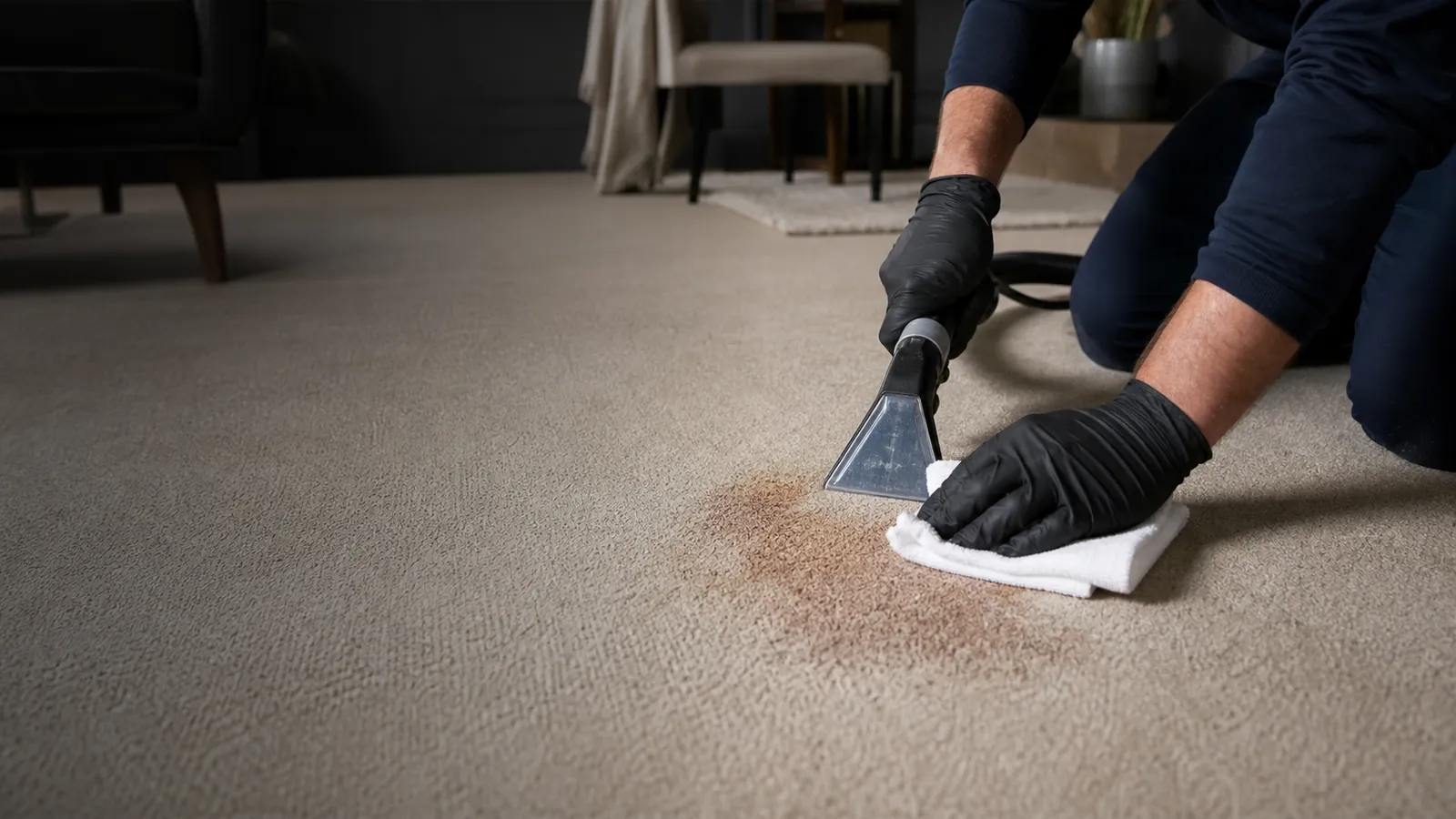
A dark or musty area may need investigation before cleaning
A carpet mark associated with moisture is not automatically a routine spill. A tipped drink, repeated wet mopping at a threshold, a plant pot, a plumbing leak and moisture rising from beneath the carpet create different risks. The visible surface may be only one part of the problem. For a Kidbrooke enquiry, the first useful question is whether the source is known, stopped and dry enough for ordinary carpet work to proceed.
Professional carpet cleaning introduces controlled moisture for a defined purpose; it is not a remedy for an active leak or saturated underlay. If the carpet feels persistently damp, smells musty, shows spreading discolouration or sits beside recent water damage, disclose that history when booking. The company can decide whether an inspection is appropriate or whether the source needs attention from a different specialist first.
Where the issue is a contained surface spill, the normal carpet process can begin with fibre and colour checks, thorough vacuuming, local assessment and a suitable room method. Where contamination appears to extend into backing or underlay, the cleaner explains what is and is not reachable. Masking an odour with fragrance would not prove that hidden material has been resolved.
A larger property reset may include domestic cleaning, but ordinary room care should not spread hard-floor water or spray onto carpet edges. If another cleaner discovers dampness, pause work in that area and identify the cause. Coordinated services are useful only when they share relevant observations rather than cleaning over them.
The objective is a safe boundary. Dry, suitable carpet receives a proportionate textile service. Active moisture, structural causes and inaccessible contamination are documented as outside that boundary. The customer receives a clearer route forward instead of paying for repeated surface treatment while the underlying source remains unchanged.
SERVICE TEAMS / THE AGREED WORK
Four parts of the staircase to read separately

The centre of the tread
This area receives direct traffic and can hold embedded grit. Dry extraction is essential. Remaining darkness may combine soil with pile compression, so outcome is judged after both condition and wear are considered.

The front edge and nosing
Fibres bend around a vulnerable contour and may show abrasion. The technician works deliberately without treating frayed or missing pile as a stain that requires stronger chemistry.

The riser
Risers carry less direct foot pressure but can collect dust and scuffs. They still belong in the explicit scope. Their orientation affects tool choice and how moisture is controlled.

The turn or landing
Pivoting feet create a distinctive wear pattern. A landing also changes the equipment route. It is prepared and reviewed as an area in its own right rather than a gap between flights.
If upstairs bedroom textiles also need attention, mattress cleaning should be sequenced so equipment does not repeatedly cross a completed staircase.
A photograph can support consistent observation
Take the dry carpet from a repeatable position and similar lighting. The image is not a laboratory measurement, but it can show gradual change in traffic routes. Avoid comparing a damp post-clean photograph with a dry image from another season.
Vacuum frequency follows traffic
Entrance lanes and favourite seating routes may need attention more often than quiet edges. Use equipment suitable for the carpet and empty or maintain it as directed. Slow, overlapping passes are usually more useful than rapid daily gestures.
Renovation dust changes the plan
Fine building residue should be addressed carefully before ordinary maintenance resumes. Describe recent work when booking. The presence of dust does not justify saturating the carpet; effective dry preparation becomes especially important.
Maintenance and moving are separate triggers
A planned end of tenancy cleaning may set a deadline, while routine carpet care is normally flexible. Where both apply, schedule enough drying time and keep the textile scope explicit.
PRICING / CLEAR STARTING POINTS
Count the flight and describe the turns
A staircase quotation should state the number of flights, approximate tread count if requested, turns, half-landings and adjoining carpeted halls. Mention visible damage, severe wear, marks and access that cannot pause. General guidance is available on the cleaning prices page; the confirmed scope should make clear whether risers and landings are included. Stair work involves repeated detailed surfaces and controlled equipment placement, so pricing it as an incidental strip of floor is misleading. Photographs can help show layout, yet inspection still decides whether fitting and fibre support the expected method. Any repair concern belongs in a different conversation before aggressive work is attempted.
01
Single room
From £15 / room
Compact bedroom or study
02
Double room
From £15 / room
Standard double bedroom
03
Lounge
From £15 / room
Living room with clear equipment access
04
Stairs
Quotation
Standard flight, subject to construction
05
Hallway
Quotation
Reachable hall or landing
06
Whole property
Quotation
Measured rooms and fibre types
Prices are guide prices.
Final quotation depends on the property, condition and requirements.
PROCESS / FOUR DECISIONS
Use the previous baseline to inform, not dictate
01
Review what changed
The customer describes use since the last clean, current concerns and previous products. Permanent features noted earlier are separated from new condition changes.
02
Reassess the textile
The cleaner checks fibre behaviour, fitting, colour and wear afresh. A method is not repeated merely because it was once suitable.
03
Complete the justified work
Dry preparation, appropriate spot attention and room cleaning proceed in a controlled sequence. Areas outside the agreed maintenance scope are not added without discussion.
04
Create the next reference point
After drying guidance, the customer records the settled result and any acknowledged limitations. Future timing can then follow observation instead of memory.
VISIT / HANDOVER
Bring useful history, not a demand to repeat everything


Locate any previous care notes if available and list new spills, products and changes in use. Vacuum normally rather than hiding the condition with last-minute wet products. Clear small items and decide which rooms genuinely need inclusion. If a permanent mark was identified previously, point it out so the technician can check for change without repeatedly pursuing it.
SCOPE / CONFIRM BEFORE BOOKING
A defined stair-and-landing service
Included in this brief
- Flight inventory: count and description of stair sections, turns and landings included in the quotation.
- Safety-led inspection: observation of fitting, edges, damage and wear before equipment is positioned.
- Detailed preparation: dry extraction across treads, risers and reachable margins prior to suitable treatment.
- Route handover: explanation of remaining wear, drying progress and temporary household access.
Outside this cleaning brief
- Cleaning cannot repair loose installation, damaged nosing, missing fibre or an unsafe stair covering.
- A staircase is not assumed to be included with an upstairs hall unless the accepted quote names it.
- Continuous household access through hoses, equipment or damp treads cannot be guaranteed during the working window.

PREPARATION / BEFORE THE VISIT
Prepare the Kidbrooke address without pre-cleaning it.
- Confirm the entrance and any requirement involving street-specific parking controls.
- List the rooms or items covered by carpet cleaning.
- Point out sensitive finishes, pets, alarms and anything that must not be moved.
- Agree the key return, completion contact and any building time restriction.
MAP / COVERAGE CONTEXT
Route planning for carpet cleaning in Kidbrooke.
Coverage context for Kidbrooke. This map does not represent a staffed local office.
RELATED SERVICES / SAME AREA
Related services in Kidbrooke
NEARBY AREAS / SAME SERVICE
Carpet Cleaning near Kidbrooke
It depends on carpet guidance, traffic, household use, condition and priorities. Observe the floor and maintain it routinely rather than relying on one universal interval.
Maintenance questions for Kidbrooke carpet care
How often should professional cleaning be booked?
Suitability, technique and moisture matter more than a slogan about frequency. Unnecessary or poorly controlled work can be unhelpful; justified professional care should follow inspection.
Does frequent cleaning damage carpet?
Yes, request the rooms that need work and list stairs separately. Each included carpet is assessed, and quiet areas do not have to be added merely for symmetry.
Can I book only the high-use rooms?
Keep notes on permanent limitations, drying, products used if provided, and a dry reference image. Monitor traffic routes and new incidents rather than expecting the carpet to remain unchanged.
What should I record after the visit?
No. The map describes service coverage; it does not identify a staffed local branch.
Build the booking from what the carpet shows now
For carpet cleaning in Kidbrooke, list the areas that have changed, the use behind that change and any previous products or professional work. The appointment can then create a reliable new baseline, with no artificial recurring interval and no pressure to include rooms that do not need attention.