
Kingston / London
Professional Conservatory & Garden Cleaning for Kingston
Light-filled extension and garden cleaning shaped around the real Kingston premises


Build the Kingston visit from use, condition and access
a useful plan for Kingston starts at the doorway before anyone reaches for a fixed checklist. We ask how the glazed extension is used, which glass sections can be reached safely, where the garden begins and what must remain passable. That conversation reveals whether the identified is brighter window sections, technician glazing frames, a presentable paved seating working area or a coordinated improvement across all three. It also prevents a request for “everything outside” from becoming an unclear promise about planting, repairs or waste removal.
Clients often combine this work with another sensible household objective. A glazed extension may need attention before guests arrive, after a long winter, or alongside preparation for a move. The garden request may concern only the patio and connecting path rather than the whole plot. In Kingston, we keep each service boundary explicit: domestic cleaning or end of tenancy cleaning can be discussed, but neither is assumed inside this booking.
a useful plan for Kingston starts at the doorway ahead of any standardised checklist. We ask how the sunroom is used, which window sections can be reached safely, where the garden begins and what must remain passable. That conversation reveals whether the identified is brighter glasswork, service lead panel surrounds, a presentable paved seating zone or a coordinated improvement across all three. It also prevents a request for “everything outside” from becoming an unclear promise about planting, repairs or waste removal.
Occupiers often combine this work with another realistic household objective. A garden room may need attention before guests arrive, after a long winter, or alongside preparation for a move. The garden request may concern only the patio and connecting path rather than the whole plot. In Kingston, we keep each service boundary explicit: domestic cleaning or end of tenancy cleaning can be discussed, but neither is assumed inside this booking.
a useful plan for Kingston starts at the doorway instead of relying on a standard list. We ask how the glazed extension is used, which glass panels can be reached safely, where the garden begins and what must remain passable. That conversation reveals whether the focus is brighter glass, professional frame elements, a presentable paved seating space or a coordinated improvement across all three. It also prevents a request for “everything outside” from becoming an unclear promise about planting, repairs or waste removal.
SCOPE / CONFIRM BEFORE BOOKING
What the Kingston working map can include
Included in this brief
- Reachable light-filled extension window sections, frames and tracks named in the brief
- The defined interior room floor edge and transition through the garden door
- Specified patio, path, step or other stable hard-section sections
- Dry preparation, material checks and a closing review of cleaned zones
Outside this cleaning brief
- Unsafe heights, unstable structures and blocked glasswork
- Pruning, repairs, landscaping or removal of unlisted waste
- Communal, neighbouring or privately controlled sections without authority

PRICING / CLEAR STARTING POINTS
Price the accessible zones rather than a postcode label
A Kingston estimate should reflect glazing dimensions, safely managed reach, frame detail, protection inside the room, paved area, steps, movable possessions and the movement line to drainage. Consult the cleaning prices guide for general context, then compare quotations against the same written section list.
01
Small conservatory
Quotation
Reachable internal glazing and frames
02
Medium conservatory
Quotation
Additional panels and agreed garden features
03
Conservatory and patio
Quotation
Combined scope with drainage planning
04
High or complex glazing
Quotation
Safe reach and equipment assessed first
Prices are guide prices.
Final quotation depends on the property, condition and requirements.
SERVICE TEAMS / THE AGREED WORK
Match the crew arrangement to the dominant Kingston constraint

Glazing-focused technician
This option suits a Kingston home where the glazed room is the main concern. The technician maps reachable roof and side panels, opening sections, structural edges, tracks and the indoor interior floor edge.

Hard-treated zone specialist
Choose this profile when patio slabs, steps and the access path back to the house carry most of the visible build-up. Loose debris is collected first, vulnerable beds and unstable joints are noted, and runoff is considered before a treated zone process is selected.

Combined-zone crew
A two-zone crew is useful when the glazed room and paved exterior matter equally. One shared plan coordinates tools, available water and movement, while each section retains its own material checks.

Occupied-home team
This arrangement fits an occupied Kingston building where door sets, pets, work calls or family routines restrict movement. The team completes manageable sections and keeps a listed working route available.
The profile describes an approach. Tools, timing and reach follow conditions confirmed at the Kingston address.
PROCESS / FOUR DECISIONS
A sequence that keeps glass, hard surface and the return working route distinct
01
Complete each material zone
An opening inspection comes first with the resident or key holder. At the Kingston site, the technician confirms materials, priority named portions, stable access, available water, drainage and movable objects. Existing wear and uncertain finishes are noted before products or equipment are used, so the sensible plan reflects what is actually present.
02
Close with a shared inspection
The team then completes the dry setup. Cobwebs, leaves, grit and other loose matter are removed where accessible, because adding moisture too early can spread them into tracks, joints and flooring edges. Nearby belongings are protected and the working movement line is made clear. This groundwork gives later glass and hard surface passes a cleaner, more predictable starting point.
03
Protect the return movement line
The glass extension is divided into sections that can be addressed without carrying loosened deposits back over finished individual panes. Glass and structural edges are considered separately, with attention to opening parts, seals, sills and doorway junctions. Solution choice is guided by the identified finish, and high named portions are attempted only where the specified access process remains stable.
04
Record aftercare and limits
Garden hard treated zones are addressed according to their construction and existing condition. The crew works from a sensible point towards drainage and the exit, controlling cleaning water near entry doors, beds and neighbouring boundaries. Selected marks receive a measured assessment, but stronger treatment is not used merely to chase permanent discolouration or damage.
PREPARATION / BEFORE THE VISIT
Prepare the Kingston address without pre-cleaning it.
- Confirm the entrance and any requirement involving stairs between living and sleeping areas.
- List the rooms or items covered by conservatory and garden cleaning.
- Point out sensitive finishes, pets, alarms and anything that must not be moved.
- Agree the key return, completion contact and any building time restriction.
VISIT / HANDOVER
Prepare the route, movable contents and key parts
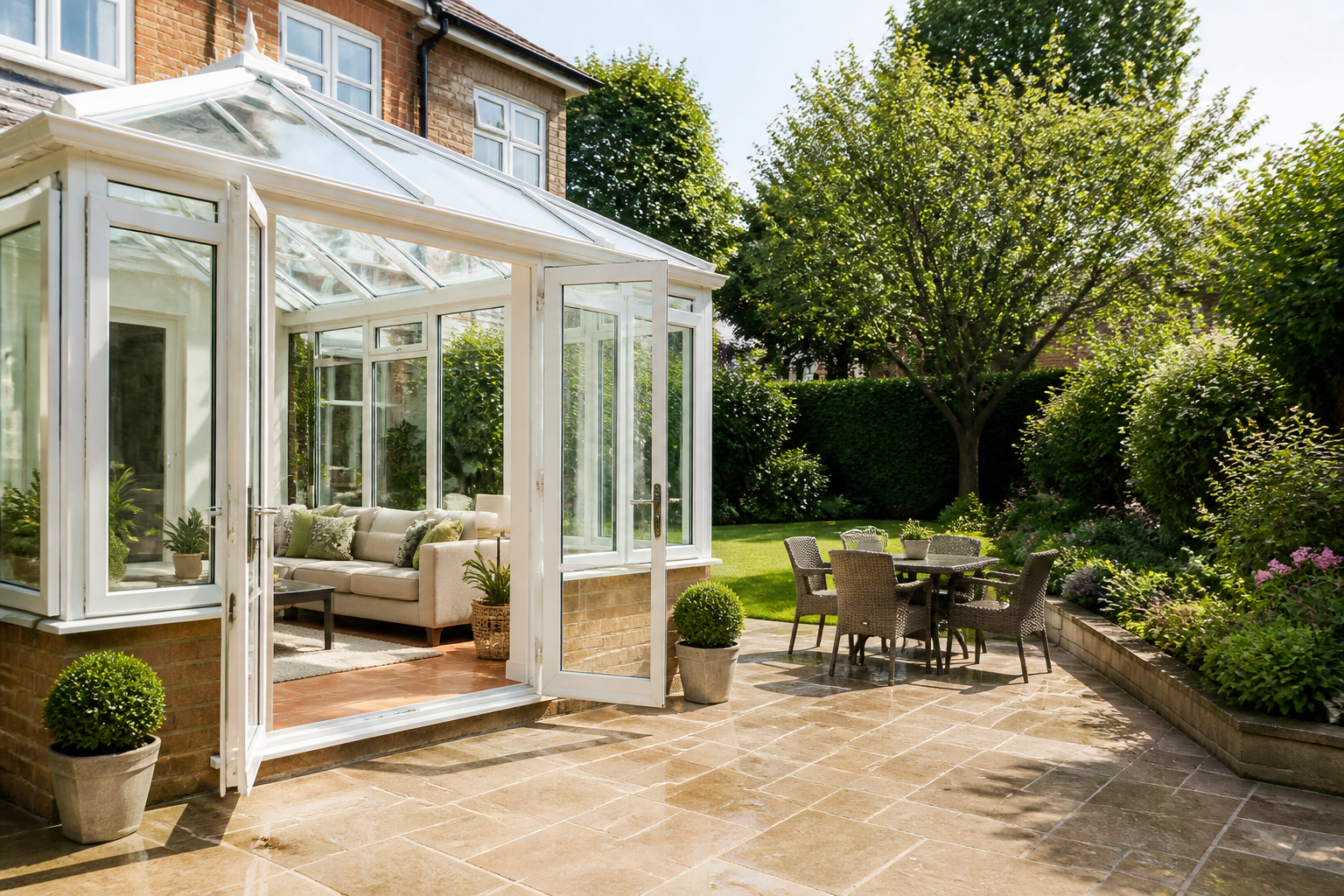

Send wide photographs, identify internal or side access and remove portable belongings before the planned session. Mention fragile planting, loose joints, damaged seals and heavy objects so the service lead can arrive with a realistic Kingston work plan.
Risk-aware decisions for roof glazing
Roof panels deserve an access decision before an appearance promise. Their pitch, reach height and surrounding space determine whether a stable cleaning method is available. Where risk-aware reach is limited at a Kingston address, the crew completes the agreed accessible glass and records the remainder. Broader façade glass can be considered through window cleaning under a separate work list.
Surrounds and tracks need restraint
Glazing frames, seals and tracks are not minor extras to be treated indiscriminately. Painted timber, aluminium and uPVC can show different wear, and drainage channels may contain compacted debris. The service lead uses material-safe cleaning tools and avoids forcing unstable parts. Failed seals, corrosion, warped openings and flaking coatings are reported as maintenance issues rather than disguised with aggressive chemistry.
Define the paved garden precisely
A patio cost outline needs more than a rough garden size. The relevant facts include the actual paved area, steps, joints, furniture, access and runoff. If hard-surface type washing is the main requirement in Kingston, the dedicated patio cleaning page helps define that service without suggesting that lawns, beds and every garden feature are included.
Keep clearance separate from cleaning
Loose leaves and unwanted possessions are different categories. Routine debris associated with the written cleaning zone can be prepared as described in the quotation. Bags, broken furniture, accumulated pots or substantial green waste require a separate conversation. Enquirers can review garden clearance when removal, rather than material cleaning, is the central need.
MAP / COVERAGE CONTEXT
Route context for conservatory & garden cleaning in Kingston.
Coverage context for Kingston. This map does not represent a staffed local office.
RELATED SERVICES / SAME AREA
Related cleaning services in Kingston
NEARBY AREAS / LOCAL ROUTES
Nearby cleaning coverage around Kingston
Clear small belongings, cables and fragile decorations from the specified way through. Move light garden objects where considered, then tell us about heavy furniture, large planters, locked gates, pets and internal access. The technician will confirm what can remain before starting at the Kingston household.
Questions about conservatory and garden cleaning in Kingston
What should be moved before the Kingston scheduled clean?
No. Cleaning addresses residue that can be removed safely from the identified finish. Scratches, failed seals, sun bleaching, loose pointing, corrosion and worn coatings require maintenance or repair. The inspection separates those conditions from dirt before expectations are listed.
Can cleaning remove every mark and colour change?
Not necessarily. Portable objects should be cleared and enough working space must be available around the listed treated zones. Furniture that remains may limit access, so its position and protection are discussed beforehand rather than moved without permission.
Must the glazed room be completely empty?
Drying varies with ventilation, temperature, shade, humidity, paved finish porosity and weather. Glass, glazing frames, base surfaces and outdoor slabs will not all dry together. The technician provides guidance after reviewing the signed-off working areas instead of giving one universal appointment length in advance.
When can the finished areas be used again?
No. The map describes service coverage; it does not identify a staffed local branch.
Describe the two Kingston zones before requesting a proposal
List the reachable glasswork and frame sections, the exact patio or path working area, access arrangements, movable objects and the soiling that concern you. A clear description supports a useful service estimate and an attendance that stays within appropriate, listed boundaries.