
Stratford / E15
Plan Conservatory & Garden Cleaning in Stratford
Stratford conservatory and garden cleaning organised as a working-day programme

Build the appointment around how the property must function that day
Cleaning is easier to judge when the household knows which spaces will be usable at each stage. The Stratford plan begins with arrival arrangements, the authorised entrance and any fixed period when a doorway must stay clear. This creates a working timetable without promising an exact finish time before materials, access and weather have been assessed.
The conservatory may serve as a dining room, home office or the only route outside. Those uses affect preparation. Chairs and portable items are moved by the customer, electrical equipment stays away from moisture, and one clearly marked route is retained where safe. Surfaces are released after inspection rather than all being treated as unavailable for the entire visit.
Glass, frames and sills are separated from faults that cleaning cannot correct. Scratches, haze inside sealed units, loose trim and deteriorated sealant are photographed and left as condition notes. The method covers stable, safely reachable faces only, allowing the team to concentrate on removable residue without presenting maintenance work as part of the booking.
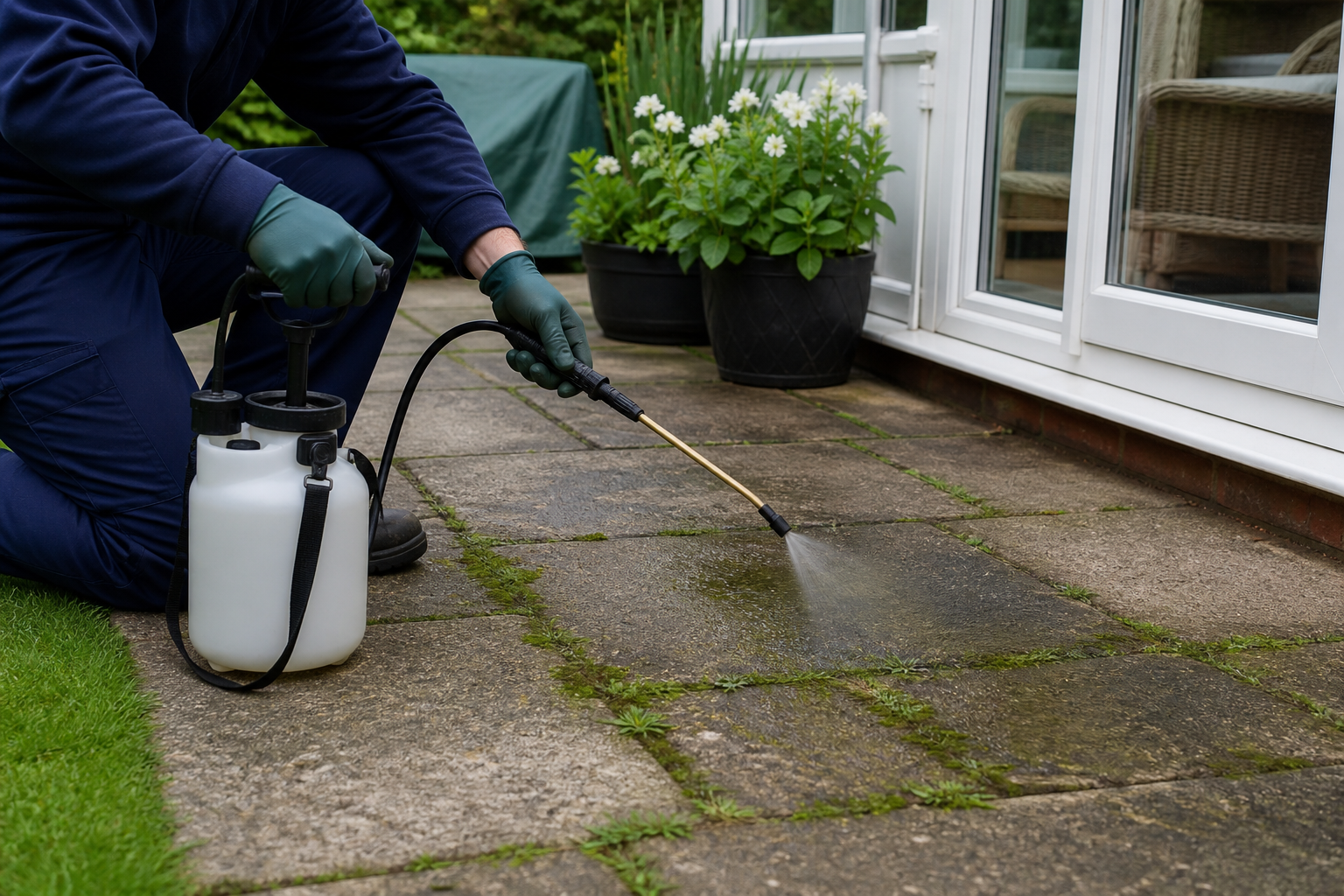
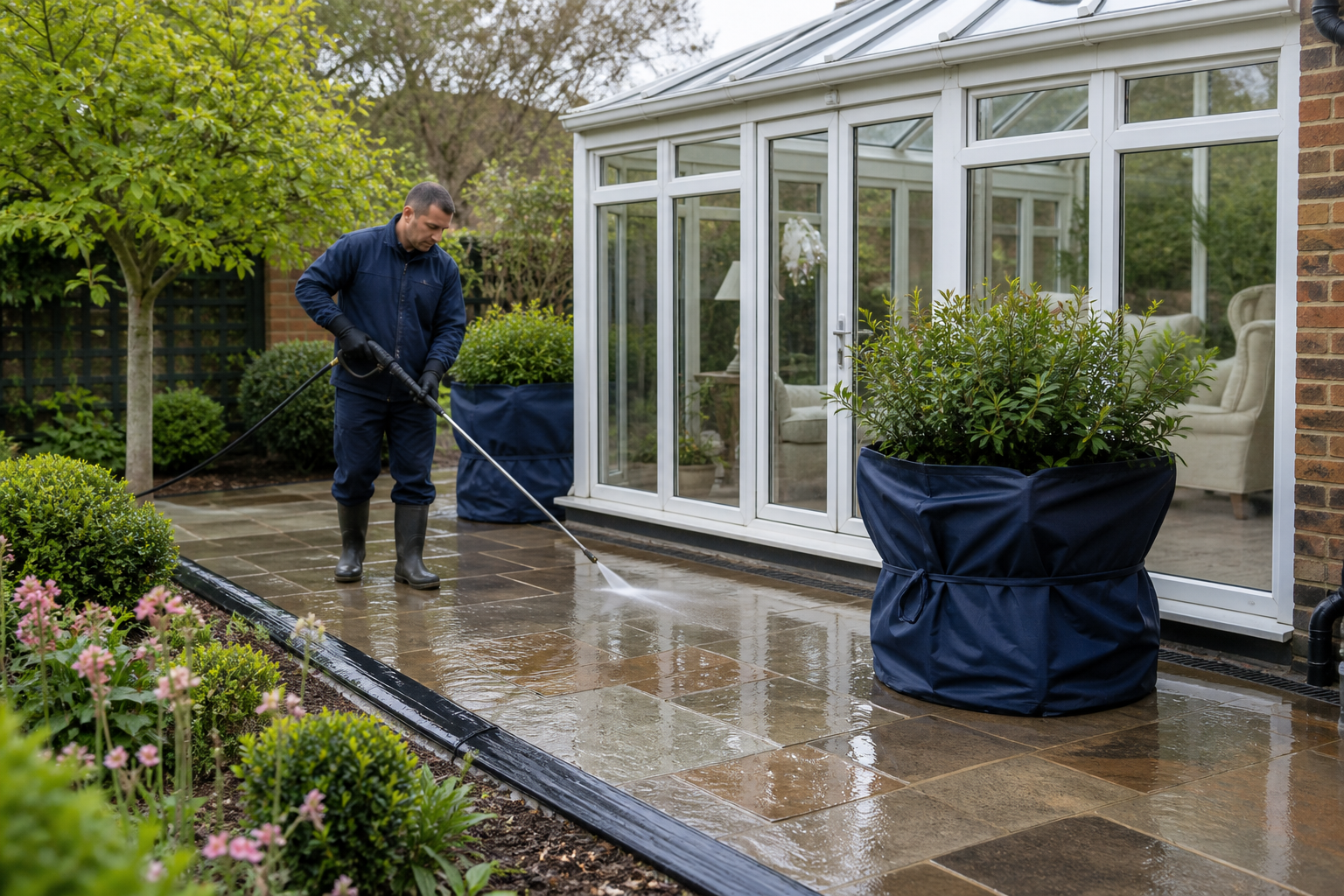
The outdoor element names a patio, path or entrance strip with a known material and boundary. Nearby beds, loose gravel and planted containers are protected from the work line. Where the hard surface is the main priority, the customer can review the dedicated patio cleaning information; that remains distinct from the glazed-room schedule.
Close-down follows the same programme in reverse. Equipment leaves along the authorised route, thresholds are checked for transferred debris, and the customer is shown which areas still need drying time. A short photographic handover records completed faces, the outdoor boundary and any permanent mark that remained visible.
SCOPE / CONFIRM BEFORE BOOKING
Clean the surfaces whose condition supports the appointment
Included in this brief
- A comparison with previous photographs or condition notes
- Selected conservatory faces and stable outdoor areas
- Appropriate preparation and method for current deposits
- A new baseline with permanent defects carried forward
Outside this cleaning brief
- Automatic whole-property treatment at every interval
- Repeated attempts on known fading, damage or sealed-unit failure
- Claims that maintenance prevents all organic or weather return
PRICING / CLEAR STARTING POINTS
Build the quotation from evidence
A maintenance quote can include fewer areas than the previous visit. Current measurements, access and condition decide the scope. The cleaning prices page does not turn a historical invoice into an automatic repeat order.
01
Small conservatory
Quotation
Reachable internal glazing and frames
02
Medium conservatory
Quotation
Additional panels and agreed garden features
03
Conservatory and patio
Quotation
Combined scope with drainage planning
04
High or complex glazing
Quotation
Safe reach and equipment assessed first
Prices are guide prices.
Final quotation depends on the property, condition and requirements.
SERVICE TEAMS / THE AGREED WORK
Assign roles for this architecture

Condition-log lead
Compares notes without assuming every old method should repeat.

Selected-surface team
Completes only the areas justified in the current brief.

Defect recorder
Carries forward permanent limitations and recent repairs.

Aftercare adviser
Explains observation, sweeping and safe spill response.
The team follows the recorded surfaces, materials and constraints rather than a generic area routine. The Stratford site record links the opening question “Solve the carrying route before defining the outdoor area” with the measured boundary “Clean the surfaces whose condition supports the appointment”. Before arrival, photographs should show the transition between those ideas, not just a close-up mark. The crew then uses the wildlife sequence to decide where equipment can stand and which material deserves a small test. The team positions and supervises them; occupants should not step over equipment to maintain normal movement. Another point comes from the same mark can be a known defect: Carrying it forward prevents repeated treatment of fading, scratches or failed seals. These observations remain cleaning evidence rather than authority for repairs, horticulture, waste or unlisted space. A wildlife boundary can reduce the measured scope or change timing. Quotation follows the stable separated areas, access and method, not a charge for disturbing the habitat. General cleaning prices apply only to work that remains appropriate. At the final walkthrough, the customer receives the indoor faces, outdoor hard areas, drying notes and permanent exclusions in one repeatable list.
PROCESS / FOUR DECISIONS
A four-stage delivery sequence
01
Ask about activity
Record nests, insects, recent sightings and planted boundaries.
02
Inspect without disturbance
Confirm whether safe separated work exists.
03
Complete isolated zones
Keep tools, runoff and noise away from the protected section.
04
Close with a habitat note
Show the customer what was excluded and why.
PREPARATION / BEFORE THE VISIT
Prepare the Stratford address without pre-cleaning it.
- Confirm the entrance and any requirement involving busy high-street approaches.
- List the rooms or items covered by conservatory and garden cleaning.
- Point out sensitive finishes, pets, alarms and anything that must not be moved.
- Agree the key return, completion contact and any building time restriction.
VISIT / HANDOVER
Prepare the agreed route


Tell the company about known nests or wildlife, keep pets away and do not remove habitat immediately before arrival. Clear ordinary belongings only where doing so causes no disturbance. A second Stratford review keeps three practical points visible. First, a small patio can have a long setup: Carrying distance and turns consume real working time. The quotation should show that constraint instead of hiding it in a surface rate. The adjacent concern is shaded routes may need earlier attention, where safety and organic build-up can justify a targeted visit before the rest of the garden. Before equipment moves, the team follows the instruction “Compare the baseline” and review dry photographs, use and changes since the last visit. The wildlife architecture adds another observation: The customer reports known nests and recent activity. Work can continue on separated stable areas when the route and method avoid disturbance. If that separation is not credible, the affected section is postponed or excluded. This matters to the quotation because access time depends on gates, steps, turns, carrying distance and water position, not only square metres. the cleaning prices page is a starting reference; a useful quote pairs route photographs with the exact conservatory and garden surfaces requested. The customer should also retain the answer to a common question—Will you remove a bird nest? No. Active nests and wildlife require lawful, appropriate handling outside cleaning.—and make the relevant access or material evidence available before arrival. Finally, Send the previous baseline and current photographs, then identify what has genuinely changed. A maintenance-led quote can focus resources without manufacturing a need across every surface. Bringing these points together inside the existing preparation block makes the Stratford page auditable without adding another visual section or implying a service beyond the authorised hard surfaces.
Cobweb removal has limits
An active spider or other habitat may change what is appropriate; the team does not promise a biologically empty garden.
Eaves beside roof glazing
Safe reach and wildlife checks both apply. Neither concern is overridden to complete a panel count.
Organic return is natural
Leaves, pollen and growth recur. Cleaning is a condition visit, not permanent prevention.
Planting creates a physical boundary
The owner arranges pruning if appropriate; cleaning staff do not cut living material for access.
MAP / COVERAGE CONTEXT
Route context for conservatory & garden cleaning in Stratford.
Coverage context for Stratford. This map does not represent a staffed local office.
RELATED SERVICES / SAME AREA
Related cleaning services in Stratford
NEARBY AREAS / LOCAL ROUTES
Nearby cleaning coverage around Stratford
No. Active nests and wildlife require lawful, appropriate handling outside cleaning.
Questions to resolve before booking
Will you remove a bird nest?
Often, if it is genuinely separated and causes no disturbance.
Can interior work continue?
No. This is not pest treatment or a habitat guarantee.
Do products prevent insects returning?
Only through suitable garden care and without disturbing wildlife.
Should I clear plants first?
No. The map describes service coverage; it does not identify a staffed local branch.
Request a defined conservatory and garden plan
Report wildlife activity with photographs taken from a respectful distance. The booking can then define an interior or garden route that protects active habitat and still addresses suitable stable surfaces.