
Totteridge / N20
Conservatory & Garden Cleaning in Totteridge
Totteridge conservatory and garden cleaning guided by a seasonal care plan

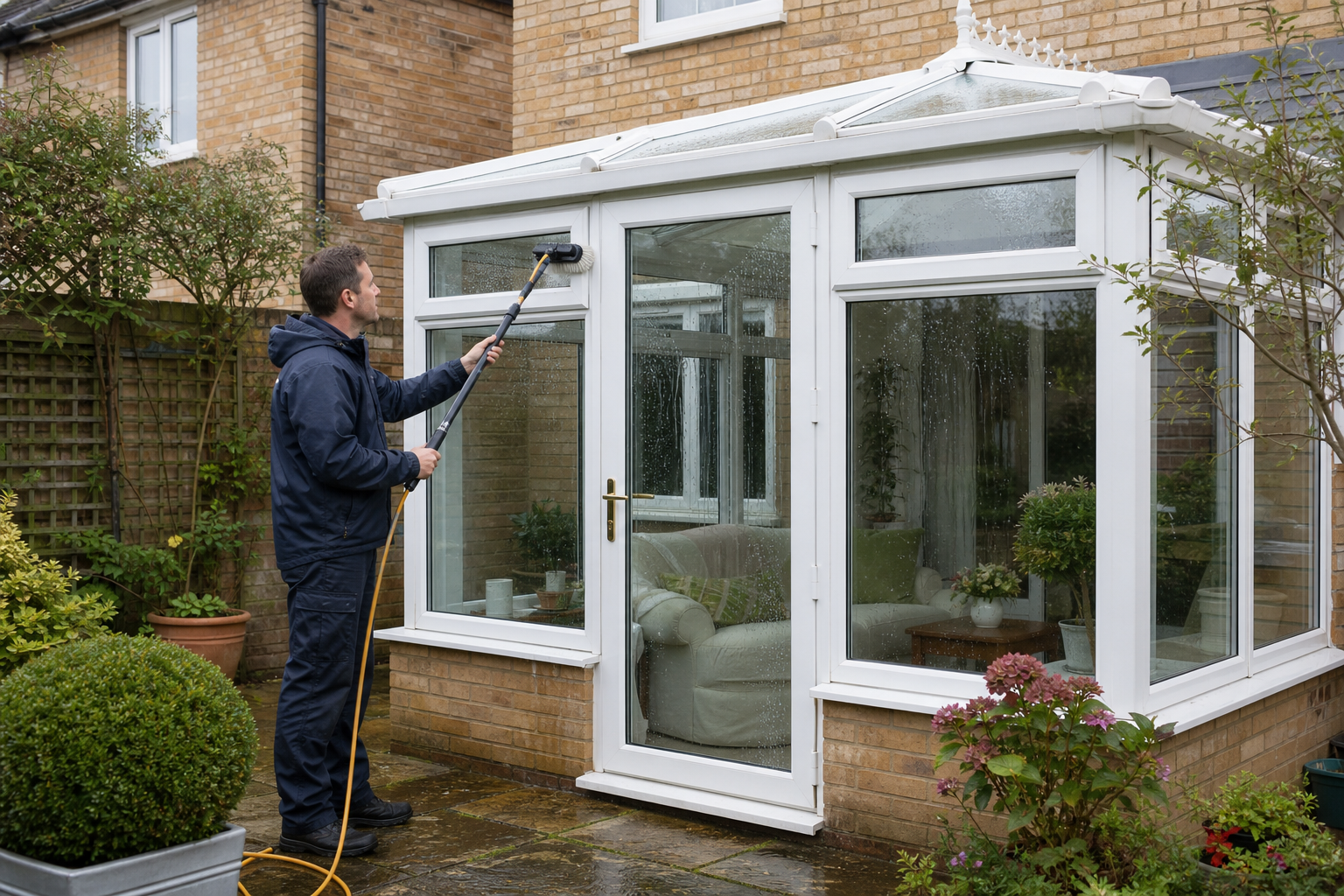
Use the present clean to make future upkeep easier to plan
Seasonal debris tells only part of the story. Pollen, leaf fragments and ordinary atmospheric film may sit beside long-standing mineral marks, faded material or seal failure. The Totteridge survey separates these conditions before work begins, so removable deposits and permanent change are not described as though they need the same response.
The glazed room is checked for how it is normally ventilated and used. Opening panels are operated only when sound, blinds remain within their normal controls, and fragile contents are removed in advance. Stable reachable glass, frames and sills form the working list; roofs and defective fittings remain outside it.
Outdoor priorities follow the season and the named hard surface. Fallen organic matter is lifted before wet work, drainage routes remain visible, and planted ground is kept outside the cleaning boundary. A shaded path may require a different order from an exposed terrace even when both appear in the same photographs.
The record can also identify when another service deserves its own booking. Accumulated movable garden material belongs with garden clearance, while household panes beyond the conservatory can be considered through window cleaning. Neither is quietly added to the present quotation.
At handover, the customer receives observations that support the next sensible interval rather than a rigid maintenance promise. Exposure, nearby trees, ventilation and daily use all affect how quickly deposits return. Photographs of the completed surfaces provide a useful reference for deciding when attention is genuinely needed again.
SCOPE / CONFIRM BEFORE BOOKING
Define the photographed sightlines and the complete surfaces around them
Included in this brief
- Reachable glazing and frames within principal room views
- Released floor and threshold used in photographs
- A measured outdoor hard-surface composition
- Condition notes and drying guidance before staging
Outside this cleaning brief
- Photography, staging and movement of unsafe furniture
- Retouching or concealment of scratches, misting and damage
- Guaranteed buyer, agent or inventory acceptance

PRICING / CLEAR STARTING POINTS
Build the quotation from evidence
The estimate names glazed faces, frame detail, floor, threshold and the selected outdoor composition. Viewpoints help prioritise inspection but do not reduce the quote to a camera crop. The cleaning prices guide remains secondary to the itemised surface list.
01
Small conservatory
Quotation
Reachable internal glazing and frames
02
Medium conservatory
Quotation
Additional panels and agreed garden features
03
Conservatory and patio
Quotation
Combined scope with drainage planning
04
High or complex glazing
Quotation
Safe reach and equipment assessed first
Prices are guide prices.
Final quotation depends on the property, condition and requirements.
SERVICE TEAMS / THE AGREED WORK
Assign roles for this architecture

Sightline surveyor
Marks normal room and camera viewpoints before setup.

Glazing presentation pair
Completes reachable faces and reviews reflections from the room.

Outdoor composition team
Works across the measured hard surface without styling objects.

Condition-note lead
Keeps permanent defects separate from the cleaning evidence.
The team follows the recorded surfaces, materials and constraints rather than a generic area routine. The Totteridge site record links the opening question “One garden room can contain many finishes” with the measured boundary “Define the photographed sightlines and the complete surfaces around them”. Before arrival, photographs should show the transition between those ideas, not just a close-up mark. The crew then uses the wildlife sequence to decide where equipment can stand and which material deserves a small test. Appearance alone does not establish coating durability. Items need explicit inclusion and condition review. Another point comes from misted units remain visible: Cleaning accessible faces cannot remove moisture trapped inside glazing. These observations remain cleaning evidence rather than authority for repairs, horticulture, waste or unlisted space. A wildlife boundary can reduce the measured scope or change timing. Quotation follows the stable separated areas, access and method, not a charge for disturbing the habitat. General cleaning prices apply only to work that remains appropriate. At the final walkthrough, the customer receives the indoor faces, outdoor hard areas, drying notes and permanent exclusions in one repeatable list.
PROCESS / FOUR DECISIONS
A four-stage delivery sequence
01
Ask about activity
Record nests, insects, recent sightings and planted boundaries.
02
Inspect without disturbance
Confirm whether safe separated work exists.
03
Complete isolated zones
Keep tools, runoff and noise away from the protected section.
04
Close with a habitat note
Show the customer what was excluded and why.
PREPARATION / BEFORE THE VISIT
Prepare the Totteridge address without pre-cleaning it.
- Confirm the entrance and any requirement involving multi-storey family layouts.
- List the rooms or items covered by conservatory and garden cleaning.
- Point out sensitive finishes, pets, alarms and anything that must not be moved.
- Agree the key return, completion contact and any building time restriction.
VISIT / HANDOVER
Prepare the agreed route
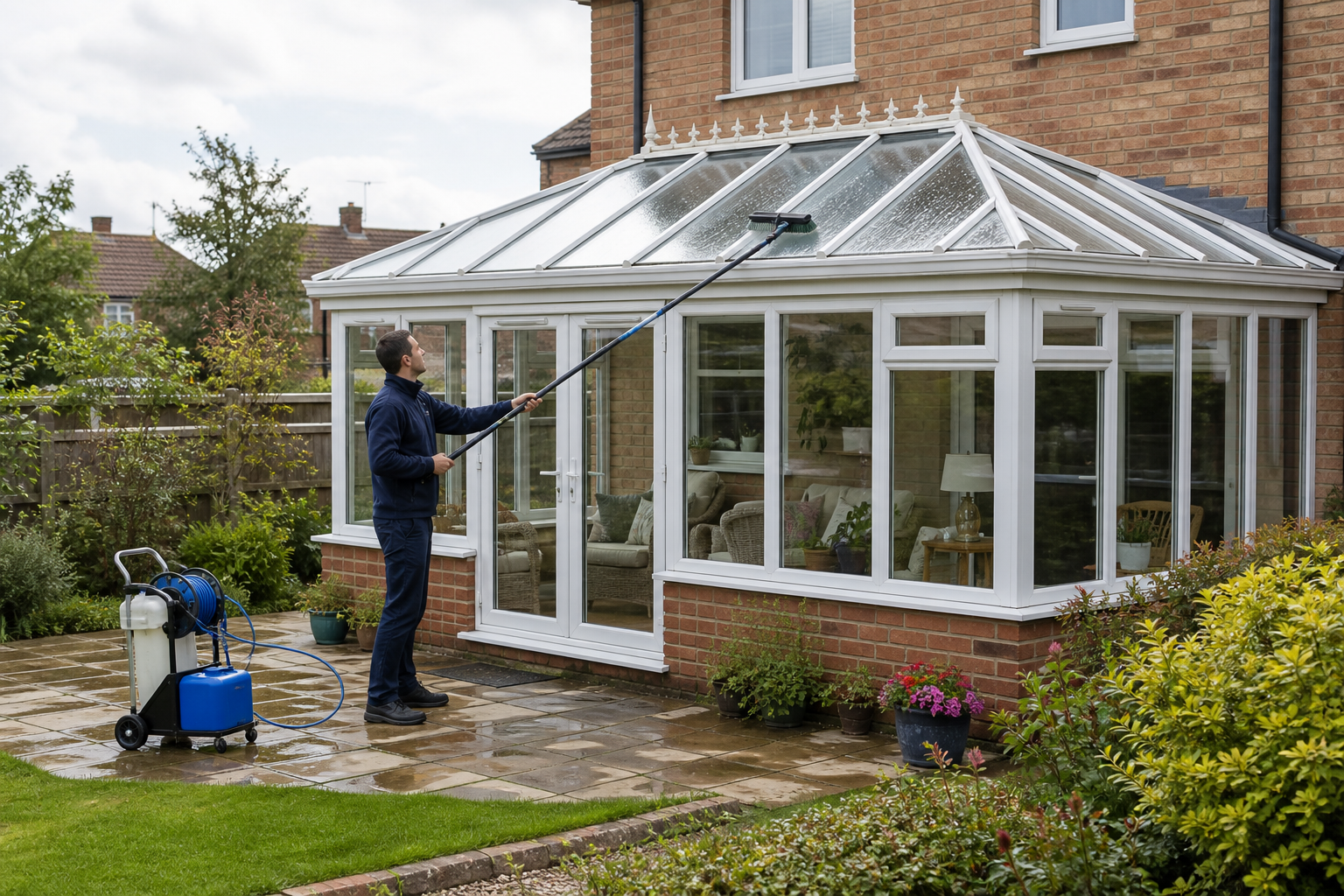
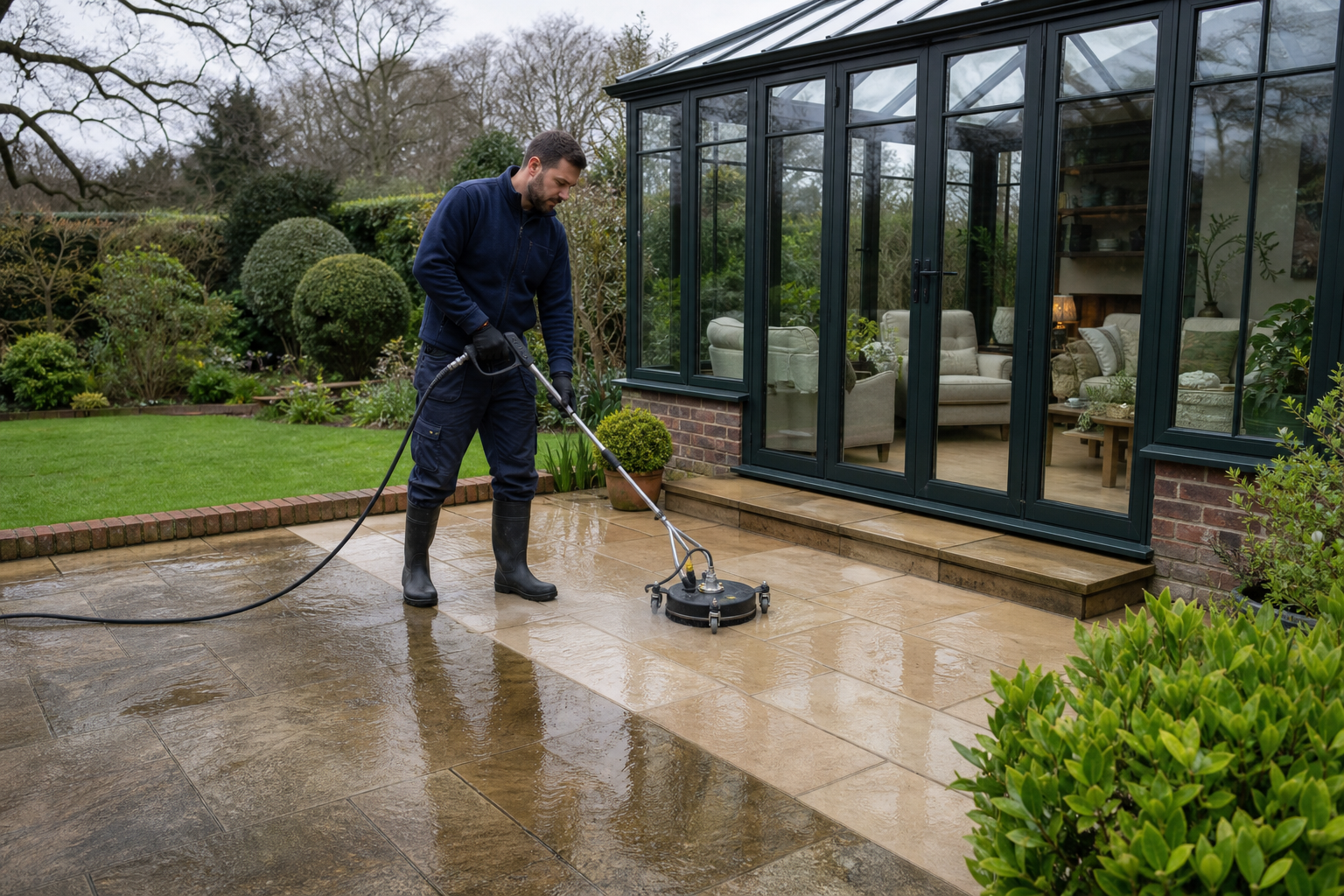
Tell the company about known nests or wildlife, keep pets away and do not remove habitat immediately before arrival. Clear ordinary belongings only where doing so causes no disturbance. A second Totteridge review keeps three practical points visible. First, painted timber frames: Loose or weathered coating can lift under unsuitable work. Cleaning is not repainting. The adjacent concern is wet paving photographs mislead, where water darkens porous material, so condition should be judged after suitable drying. Before equipment moves, the team follows the instruction “Choose viewpoints before moving items” and record photographs and the complete surfaces behind each crop. The wildlife architecture adds another observation: The customer reports known nests and recent activity. Work can continue on separated stable areas when the route and method avoid disturbance. If that separation is not credible, the affected section is postponed or excluded. This matters to the quotation because the estimate groups surfaces by material, density, access and condition. several small finishes can require more setup than one open area. the cleaning prices guide helps only after photographs and labels show what the combined request actually contains. The customer should also retain the answer to a common question—Will you remove a bird nest? No. Active nests and wildlife require lawful, appropriate handling outside cleaning.—and make the relevant access or material evidence available before arrival. Finally, Send the planned viewpoints, surface list, staging timetable and known defects. A presentation-led clean can support honest photographs without turning cleaning into retouching or repair. Bringing these points together inside the existing preparation block makes the Totteridge page auditable without adding another visual section or implying a service beyond the authorised hard surfaces.
Cobweb removal has limits
An active spider or other habitat may change what is appropriate; the team does not promise a biologically empty garden.
Eaves beside roof glazing
Safe reach and wildlife checks both apply. Neither concern is overridden to complete a panel count.
Organic return is natural
Leaves, pollen and growth recur. Cleaning is a condition visit, not permanent prevention.
Planting creates a physical boundary
The owner arranges pruning if appropriate; cleaning staff do not cut living material for access.
MAP / COVERAGE CONTEXT
Route context for conservatory & garden cleaning in Totteridge.
Coverage context for Totteridge. This map does not represent a staffed local office.
RELATED SERVICES / SAME AREA
Related cleaning services in Totteridge
NEARBY AREAS / LOCAL ROUTES
Nearby cleaning coverage around Totteridge
No. Active nests and wildlife require lawful, appropriate handling outside cleaning.
Questions to resolve before booking
Will you remove a bird nest?
Often, if it is genuinely separated and causes no disturbance.
Can interior work continue?
No. This is not pest treatment or a habitat guarantee.
Do products prevent insects returning?
Only through suitable garden care and without disturbing wildlife.
Should I clear plants first?
No. The map describes service coverage; it does not identify a staffed local branch.
Request a defined conservatory and garden plan
Report wildlife activity with photographs taken from a respectful distance. The booking can then define an interior or garden route that protects active habitat and still addresses suitable stable surfaces.