
Tufnell Park / N7 · N19
Plan Conservatory & Garden Cleaning in Tufnell Park
A wildlife-aware boundary for garden and conservatory cleaning
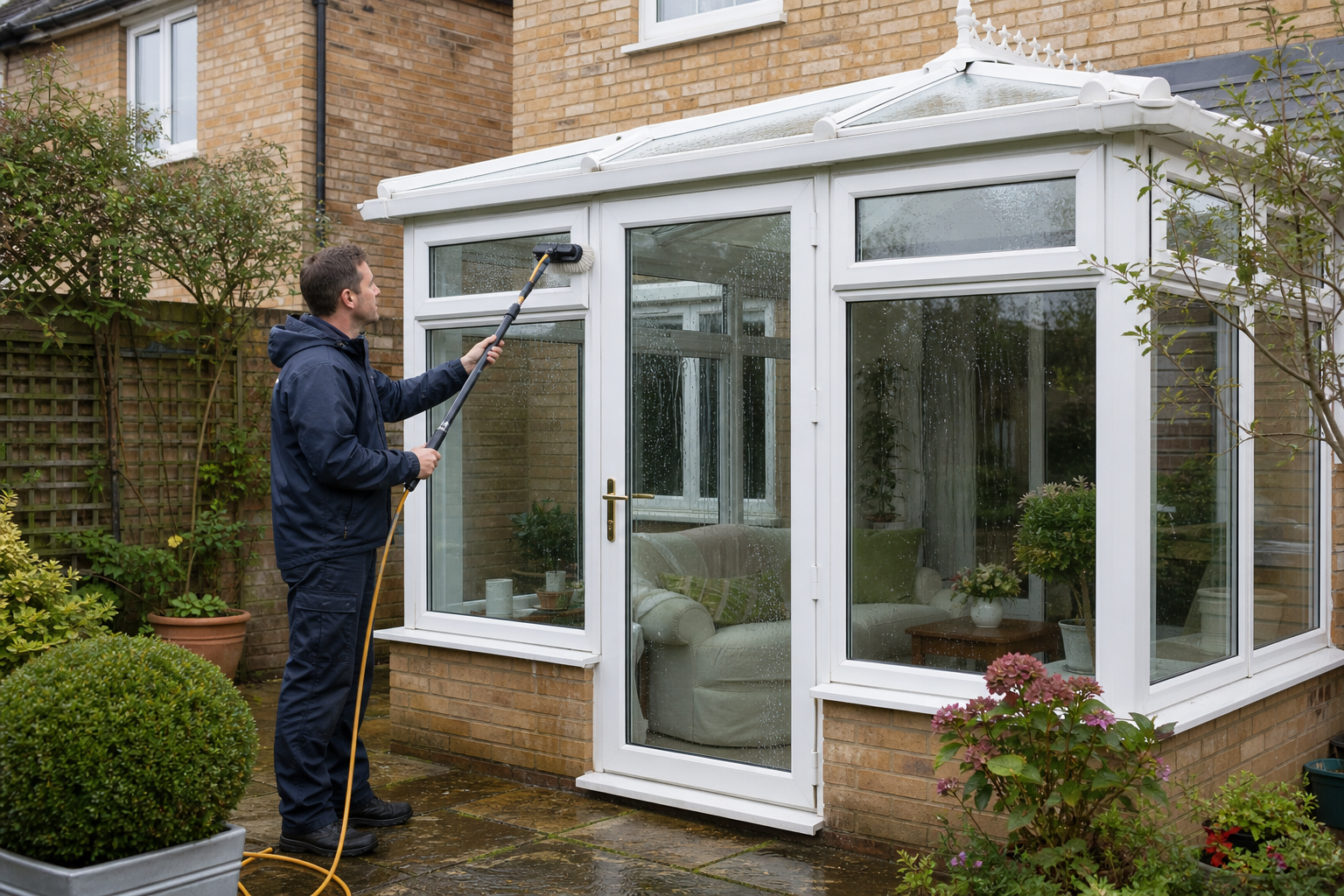

Inspect for living boundaries before clearing seasonal debris
Garden structures can shelter nesting birds, insects and other wildlife near eaves, frames, pots or furniture. The team looks before removing cobwebs, leaves or organic build-up. An active habitat is not an obstacle to be sprayed away.
The customer reports known nests and recent activity. Work can continue on separated stable areas when the route and method avoid disturbance. If that separation is not credible, the affected section is postponed or excluded.
Conservatory interiors remain a distinct zone. An insect inside the room does not turn cleaning into pest control, while exterior residue near a nest does not justify entering the habitat. Products and water are kept within the authorised hard-surface boundary.
Routine planting care is not part of cleaning. If dense cuttings or abandoned garden material prevent inspection, garden clearance or appropriate specialist advice may be needed first.
The handover records the protected boundary and any safely completed surfaces around it. No claim is made that wildlife will not return to a garden after cleaning.
SCOPE / CONFIRM BEFORE BOOKING
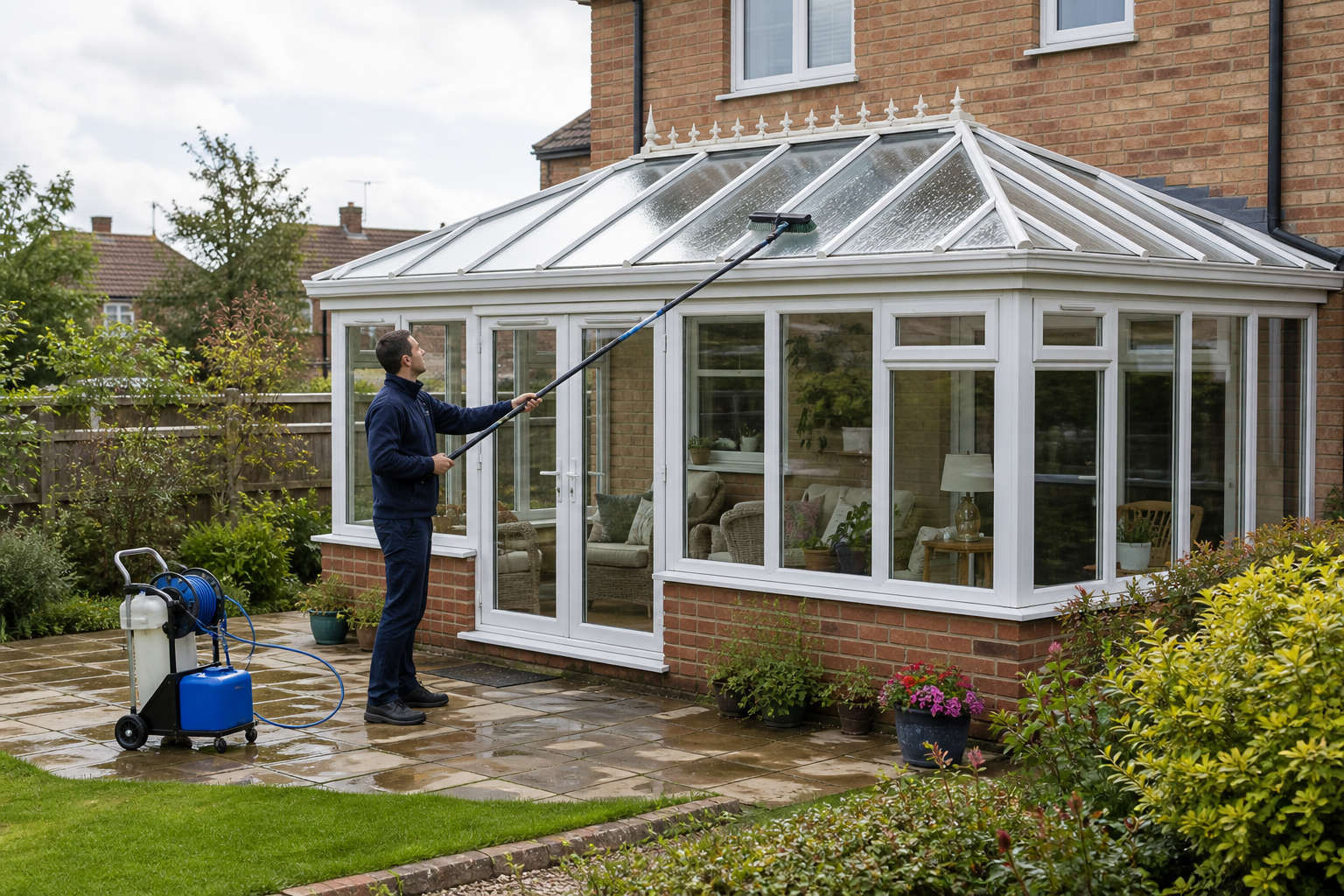
Map shade, panel heat and the view used to judge the finish
Included in this brief
- Safely reachable glazed faces checked for working temperature
- Stable frames, ledges and sills within the shaded sequence
- A named sunlit patio or path area where material permits
- A final view-line and drying review from normal room positions
Outside this cleaning brief
- Walking on roof glazing or cooling hot panes abruptly
- Repair of heat-damaged seals, misted units or warped frames
- Guarantees that fading and long-term weathering will disappear
PRICING / CLEAR STARTING POINTS
Build the quotation from evidence
A heat-aware estimate records glass faces, frame density, safe reach, blinds, shade and the timed outdoor area. The cleaning prices guide cannot predict how many sections can be worked before direct sun changes conditions. The final quotation names the surfaces and allows a practical change of order.
01
Small conservatory
Quotation
Reachable internal glazing and frames
02
Medium conservatory
Quotation
Additional panels and agreed garden features
03
Conservatory and patio
Quotation
Combined scope with drainage planning
04
High or complex glazing
Quotation
Safe reach and equipment assessed first
Prices are guide prices.
Final quotation depends on the property, condition and requirements.
SERVICE TEAMS / THE AGREED WORK
Assign roles for this architecture

Temperature lead
Checks pane and paving heat before application.

Glazing detailer
Works in shaded bays and reviews glare from several angles.

Outdoor timing operative
Keeps product and rinse stages proportionate on sunlit hard surfaces.

Handover observer
Confirms settled view lines and ventilation guidance.
The team follows the recorded surfaces, materials and constraints rather than a generic area routine. The Tufnell Park site record links the opening question “Inspect for living boundaries before clearing seasonal debris” with the measured boundary “Map shade, panel heat and the view used to judge the finish”. Before arrival, photographs should show the transition between those ideas, not just a close-up mark. The crew then uses the wildlife sequence to decide where equipment can stand and which material deserves a small test. Leaves, pollen and growth recur. Cleaning is a condition visit, not permanent prevention. Another point comes from thermal stress is not a cleaning target: Very hot glass should not receive abrupt cold treatment. The team adjusts timing rather than risking a pane to meet a fixed order. These observations remain cleaning evidence rather than authority for repairs, horticulture, waste or unlisted space. A wildlife boundary can reduce the measured scope or change timing. Quotation follows the stable separated areas, access and method, not a charge for disturbing the habitat. General cleaning prices apply only to work that remains appropriate. At the final walkthrough, the customer receives the indoor faces, outdoor hard areas, drying notes and permanent exclusions in one repeatable list.
PROCESS / FOUR DECISIONS
A four-stage delivery sequence
01
Ask about activity
Record nests, insects, recent sightings and planted boundaries.
02
Inspect without disturbance
Confirm whether safe separated work exists.
03
Complete isolated zones
Keep tools, runoff and noise away from the protected section.
04
Close with a habitat note
Show the customer what was excluded and why.
PREPARATION / BEFORE THE VISIT
Prepare the Tufnell Park address without pre-cleaning it.
- Confirm the entrance and any requirement involving controlled parking zones.
- List the rooms or items covered by conservatory and garden cleaning.
- Point out sensitive finishes, pets, alarms and anything that must not be moved.
- Agree the key return, completion contact and any building time restriction.
VISIT / HANDOVER
Prepare the agreed route
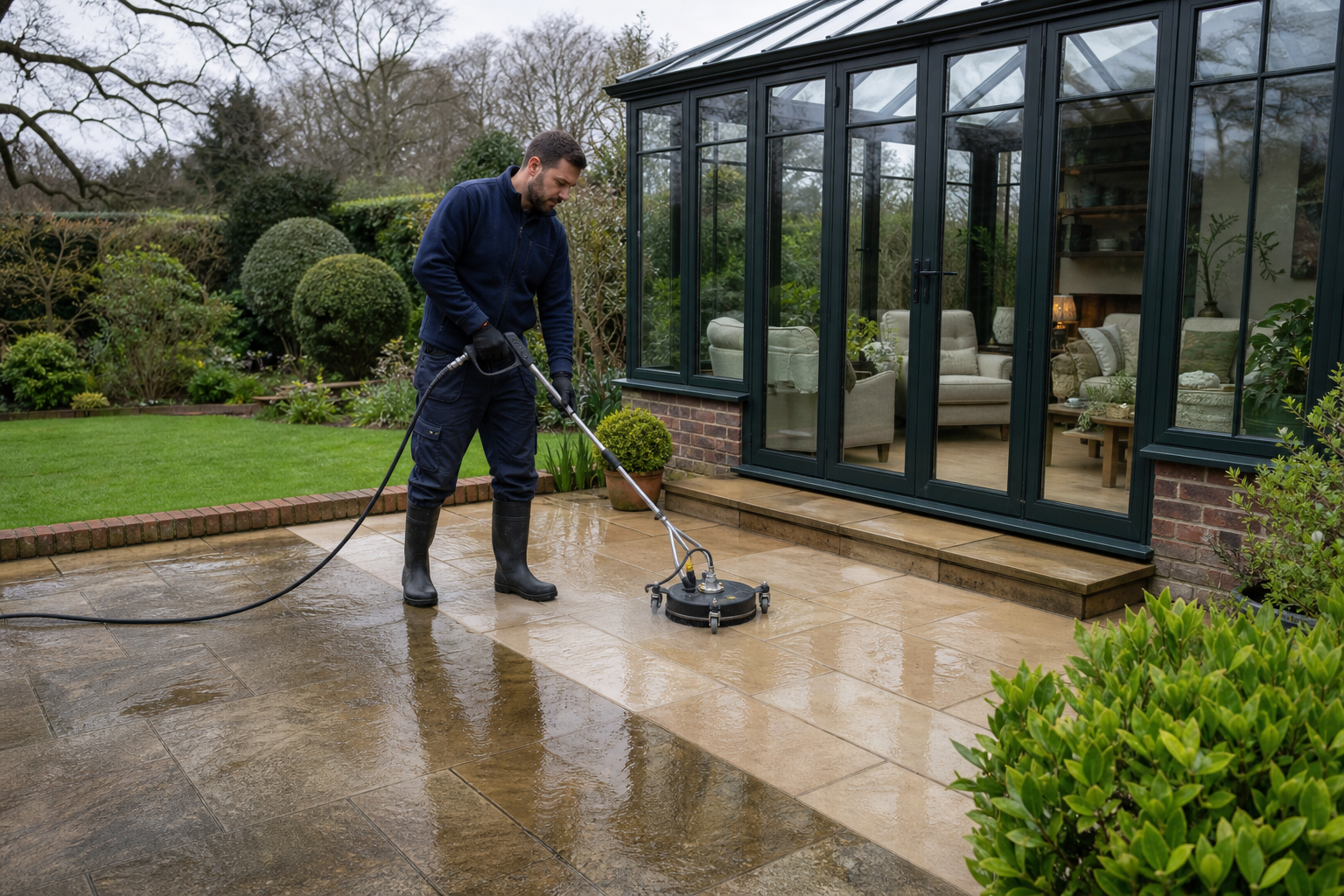

Tell the company about known nests or wildlife, keep pets away and do not remove habitat immediately before arrival. Clear ordinary belongings only where doing so causes no disturbance. A second Tufnell Park review keeps three practical points visible. First, cobweb removal has limits: An active spider or other habitat may change what is appropriate; the team does not promise a biologically empty garden. The adjacent concern is glare hides and reveals residue, where inspection from more than one position distinguishes a missed area from reflection, scratches or marks inside a sealed unit. Before equipment moves, the team follows the instruction “Read light and heat” and record sun direction, blinds, room view and outdoor shade. The wildlife architecture adds another observation: The customer reports known nests and recent activity. Work can continue on separated stable areas when the route and method avoid disturbance. If that separation is not credible, the affected section is postponed or excluded. This matters to the quotation because a wildlife boundary can reduce the measured scope or change timing. quotation follows the stable separated areas, access and method, not a charge for disturbing the habitat. general cleaning prices apply only to work that remains appropriate. The customer should also retain the answer to a common question—Will you remove a bird nest? No. Active nests and wildlife require lawful, appropriate handling outside cleaning.—and make the relevant access or material evidence available before arrival. Finally, Send photographs at the time glare is most noticeable, plus shade, blind, access and patio notes. A temperature-aware plan can protect glass and produce a fairer visual review. Bringing these points together inside the existing preparation block makes the Tufnell Park page auditable without adding another visual section or implying a service beyond the authorised hard surfaces.
Cobweb removal has limits
An active spider or other habitat may change what is appropriate; the team does not promise a biologically empty garden.
Eaves beside roof glazing
Safe reach and wildlife checks both apply. Neither concern is overridden to complete a panel count.
Organic return is natural
Leaves, pollen and growth recur. Cleaning is a condition visit, not permanent prevention.
Planting creates a physical boundary
The owner arranges pruning if appropriate; cleaning staff do not cut living material for access.
MAP / COVERAGE CONTEXT
Route context for conservatory & garden cleaning in Tufnell Park.
Coverage context for Tufnell Park. This map does not represent a staffed local office.
RELATED SERVICES / SAME AREA
Related cleaning services in Tufnell Park
NEARBY AREAS / LOCAL ROUTES
Nearby cleaning coverage around Tufnell Park
No. Active nests and wildlife require lawful, appropriate handling outside cleaning.
Questions to resolve before booking
Will you remove a bird nest?
Often, if it is genuinely separated and causes no disturbance.
Can interior work continue?
No. This is not pest treatment or a habitat guarantee.
Do products prevent insects returning?
Only through suitable garden care and without disturbing wildlife.
Should I clear plants first?
No. The map describes service coverage; it does not identify a staffed local branch.
Request a defined conservatory and garden plan
Report wildlife activity with photographs taken from a respectful distance. The booking can then define an interior or garden route that protects active habitat and still addresses suitable stable surfaces.