
Wimbledon / SW19 · SW20
Wimbledon Conservatory & Garden Cleaning
A maintenance log for conservatory and garden surfaces


Use a condition record to decide what needs attention next
Conservatories and garden routes change at different speeds. Pollen may affect glass before paving looks dull, while a shaded threshold can become slippery ahead of a sunny patio. One repeating date for every surface is rarely the most useful plan.
A simple log notes photographs, weather, room use, previous products and defects. It distinguishes fresh debris from misted glazing, fading, failed joints or old transfer marks. Those permanent points remain on the record instead of becoming a reason for aggressive repeat work.
Routine sweeping, dry dust removal and careful spill response support the interval. Frequent fragranced or high-pressure DIY treatment can create residue or damage that complicates the next professional assessment.
Customers may combine everyday domestic cleaning with occasional hard-surface work, but the records and products should remain separate.
After each visit, the dry result becomes the next baseline. Timing then follows observed change, safety and manufacturer guidance rather than a sales subscription.
SCOPE / CONFIRM BEFORE BOOKING
Measure the entrance-to-garden route as well as the surfaces
Included in this brief
- The authorised carrying path and stable threshold
- Reachable conservatory faces along the agreed equipment route
- A measured patio or path beyond the gate
- Closing checks for tracked debris, gates and household access
Outside this cleaning brief
- Forced entry, unauthorised shortcuts and removal of fixed obstacles
- Bulk waste movement or trimming vegetation to create width
- Cleaning neighbouring passages or shared areas without authority

PRICING / CLEAR STARTING POINTS
Build the quotation from evidence
Access time depends on gates, steps, turns, carrying distance and water position, not only square metres. The cleaning prices page is a starting reference; a useful quote pairs route photographs with the exact conservatory and garden surfaces requested.
01
Small conservatory
Quotation
Reachable internal glazing and frames
02
Medium conservatory
Quotation
Additional panels and agreed garden features
03
Conservatory and patio
Quotation
Combined scope with drainage planning
04
High or complex glazing
Quotation
Safe reach and equipment assessed first
Prices are guide prices.
Final quotation depends on the property, condition and requirements.
SERVICE TEAMS / THE AGREED WORK
Assign roles for this architecture

Access surveyor
Checks widths, turns, locks and steps before unloading.

Floor-protection operative
Keeps the indoor route separate from outdoor release work.

Garden-surface cleaner
Works only after equipment and water reach the area safely.

Close-down lead
Removes equipment and restores doors, gates and routes.
The team follows the recorded surfaces, materials and constraints rather than a generic area routine. The Wimbledon site record links the opening question “Use a condition record to decide what needs attention next” with the measured boundary “Measure the entrance-to-garden route as well as the surfaces”. Before arrival, photographs should show the transition between those ideas, not just a close-up mark. The crew then uses the wildlife sequence to decide where equipment can stand and which material deserves a small test. Dry surfaces and similar viewpoints provide better evidence than wet images in different light. Another point comes from a small patio can have a long setup: Carrying distance and turns consume real working time. The quotation should show that constraint instead of hiding it in a surface rate. These observations remain cleaning evidence rather than authority for repairs, horticulture, waste or unlisted space. A wildlife boundary can reduce the measured scope or change timing. Quotation follows the stable separated areas, access and method, not a charge for disturbing the habitat. General cleaning prices apply only to work that remains appropriate. At the final walkthrough, the customer receives the indoor faces, outdoor hard areas, drying notes and permanent exclusions in one repeatable list.
PROCESS / FOUR DECISIONS
A four-stage delivery sequence
01
Ask about activity
Record nests, insects, recent sightings and planted boundaries.
02
Inspect without disturbance
Confirm whether safe separated work exists.
03
Complete isolated zones
Keep tools, runoff and noise away from the protected section.
04
Close with a habitat note
Show the customer what was excluded and why.
PREPARATION / BEFORE THE VISIT
Prepare the Wimbledon address without pre-cleaning it.
- Confirm the entrance and any requirement involving side or rear entrances.
- List the rooms or items covered by conservatory and garden cleaning.
- Point out sensitive finishes, pets, alarms and anything that must not be moved.
- Agree the key return, completion contact and any building time restriction.
VISIT / HANDOVER
Prepare the agreed route
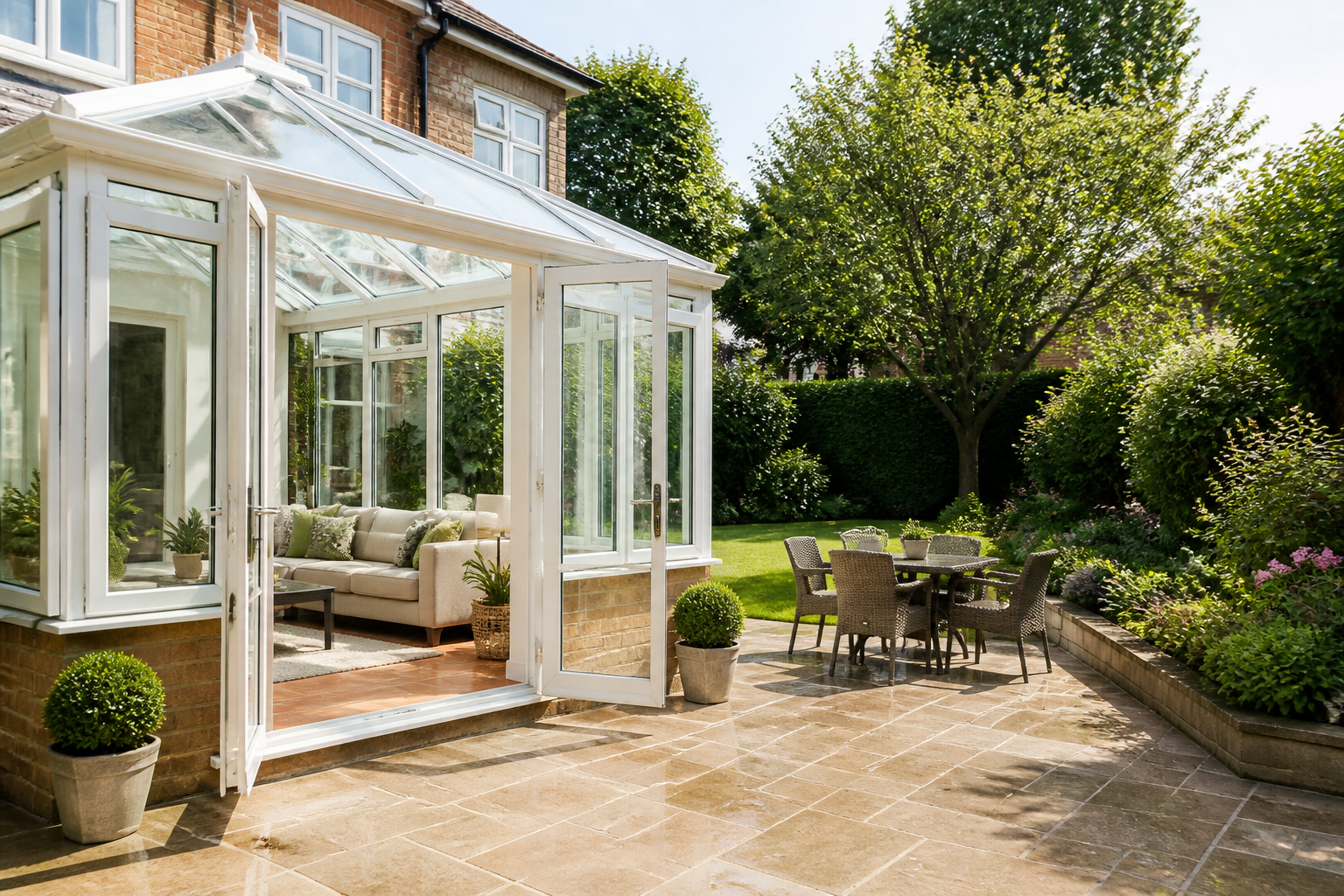

Tell the company about known nests or wildlife, keep pets away and do not remove habitat immediately before arrival. Clear ordinary belongings only where doing so causes no disturbance. A second Wimbledon review keeps three practical points visible. First, the same mark can be a known defect: Carrying it forward prevents repeated treatment of fading, scratches or failed seals. The adjacent concern is shared side passages need authority, where a private customer cannot authorise cleaning or storage in a communal route by assumption. Before equipment moves, the team follows the instruction “Photograph every turn” and record entrance, gate, steps, threshold and final work area. The wildlife architecture adds another observation: The customer reports known nests and recent activity. Work can continue on separated stable areas when the route and method avoid disturbance. If that separation is not credible, the affected section is postponed or excluded. This matters to the quotation because a maintenance quote can include fewer areas than the previous visit. current measurements, access and condition decide the scope. the cleaning prices page does not turn a historical invoice into an automatic repeat order. The customer should also retain the answer to a common question—Will you remove a bird nest? No. Active nests and wildlife require lawful, appropriate handling outside cleaning.—and make the relevant access or material evidence available before arrival. Finally, Send a continuous photo sequence from arrival point to garden surface, including measurements, gates, steps and water. The quote can then reflect the real route rather than an imaginary open access. Bringing these points together inside the existing preparation block makes the Wimbledon page auditable without adding another visual section or implying a service beyond the authorised hard surfaces.
Cobweb removal has limits
An active spider or other habitat may change what is appropriate; the team does not promise a biologically empty garden.
Eaves beside roof glazing
Safe reach and wildlife checks both apply. Neither concern is overridden to complete a panel count.
Organic return is natural
Leaves, pollen and growth recur. Cleaning is a condition visit, not permanent prevention.
Planting creates a physical boundary
The owner arranges pruning if appropriate; cleaning staff do not cut living material for access.
MAP / COVERAGE CONTEXT
Route context for conservatory & garden cleaning in Wimbledon.
Coverage context for Wimbledon. This map does not represent a staffed local office.
RELATED SERVICES / SAME AREA
Related cleaning services in Wimbledon
NEARBY AREAS / LOCAL ROUTES
Nearby cleaning coverage around Wimbledon
No. Active nests and wildlife require lawful, appropriate handling outside cleaning.
Questions to resolve before booking
Will you remove a bird nest?
Often, if it is genuinely separated and causes no disturbance.
Can interior work continue?
No. This is not pest treatment or a habitat guarantee.
Do products prevent insects returning?
Only through suitable garden care and without disturbing wildlife.
Should I clear plants first?
No. The map describes service coverage; it does not identify a staffed local branch.
Request a defined conservatory and garden plan
Report wildlife activity with photographs taken from a respectful distance. The booking can then define an interior or garden route that protects active habitat and still addresses suitable stable surfaces.