
Claygate / London
Conservatory & Garden Cleaning in Claygate
A considered roof glass and frame detailing service in Claygate
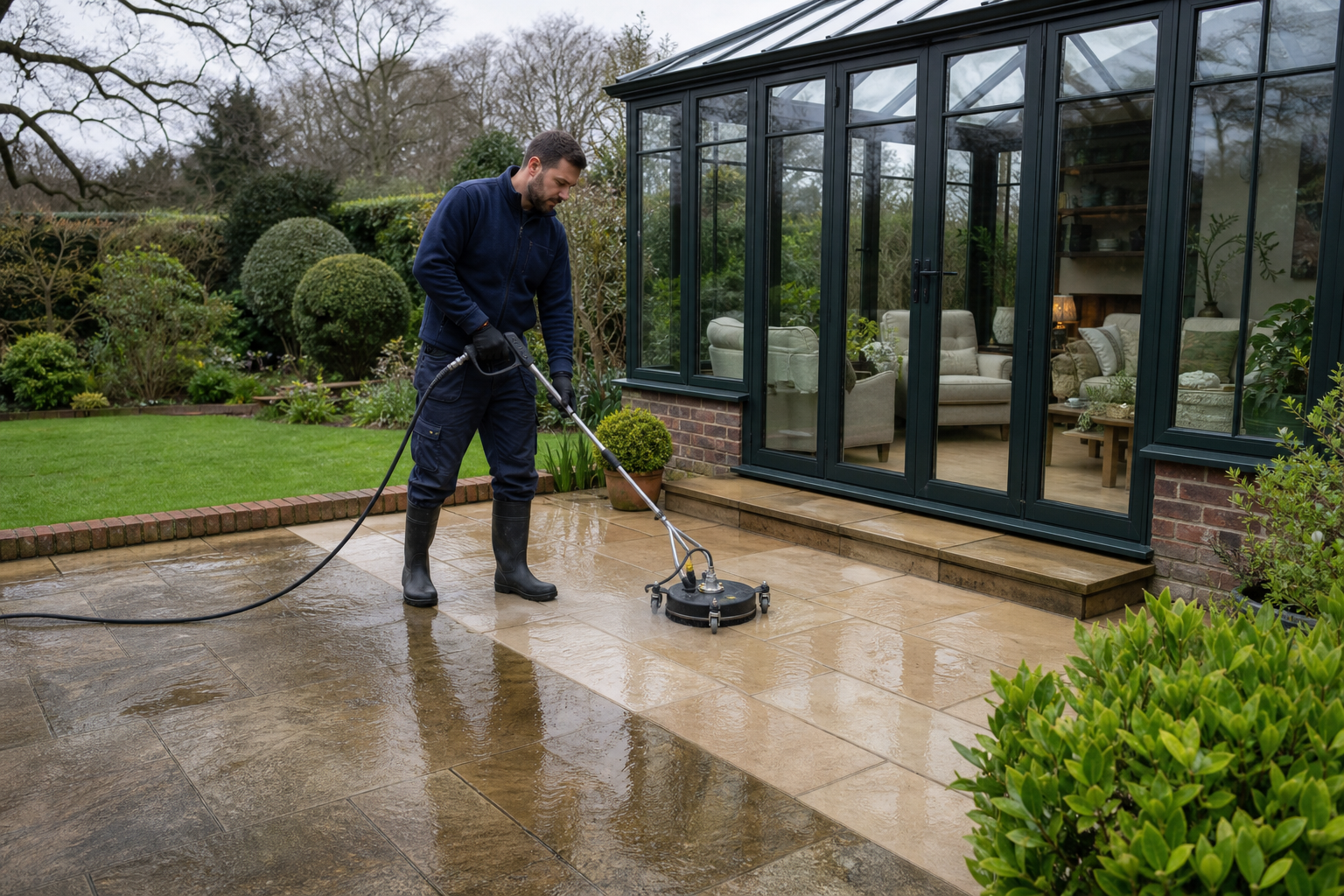
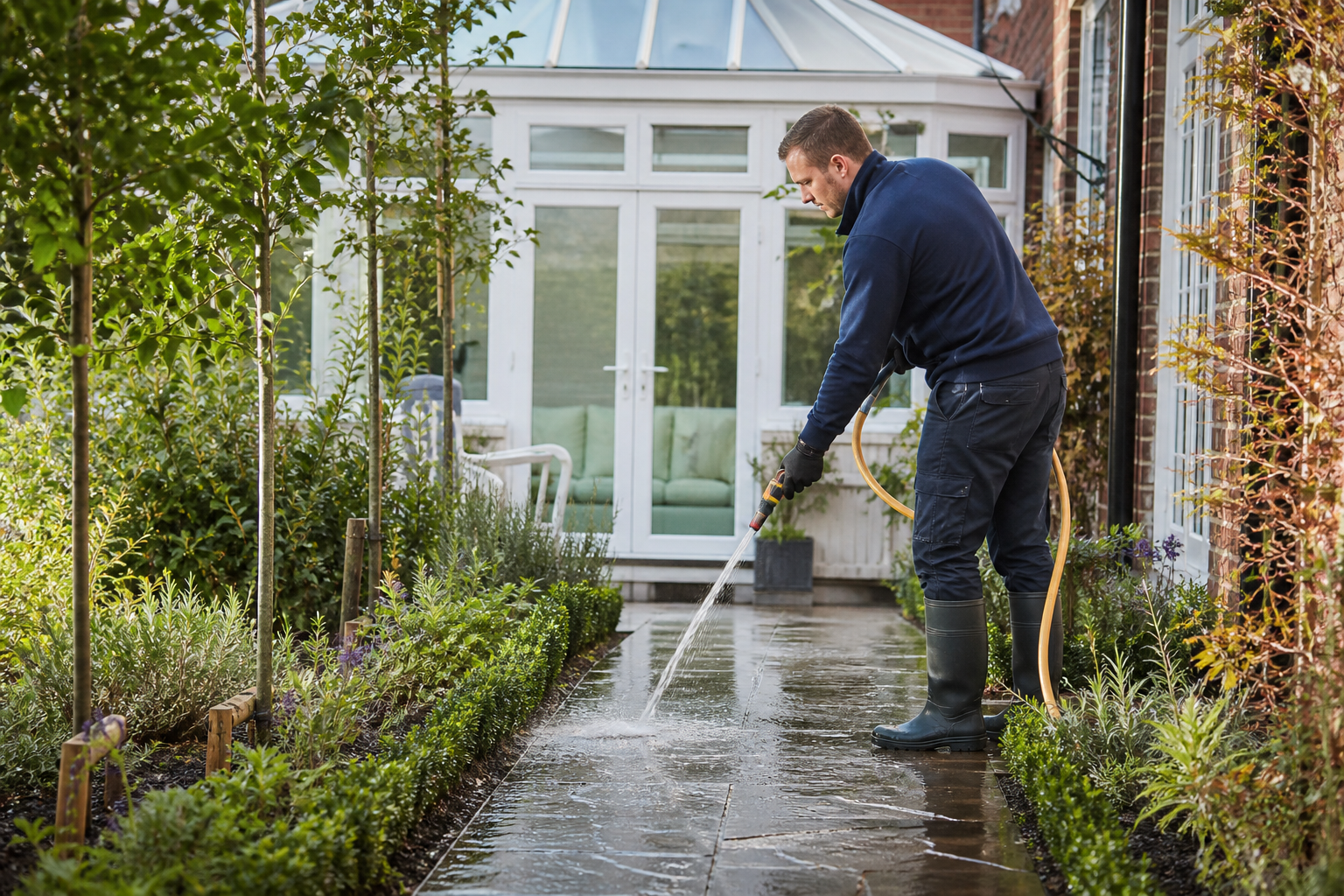
Plan roof glass and frame detailing around materials and access
Roof glazing is best surveyed from inside the room before any promise is made about the outer face. Panel angle, frame condition, furniture and safe reach determine which sections belong in the visit. We identify the roof lights and high ledges that can be approached without leaning on glass or improvising an unsafe platform.
Frame channels collect fine debris that a broad wash can miss. The sequence starts with loose cobwebs and dust, then moves to suitable damp detailing around stable junctions. Perished seals and misting between panes are recorded as component faults; extra rubbing cannot repair them.
Sunlight changes both comfort and technique beneath a glazed roof. On a hot day, solution may dry too quickly and leave marks, while glare can conceal residue from one angle. The crew adjusts the order and reviews panels from more than one viewing position.
Seasonal condition may include pollen, rain marks and loose cobwebs. These are described as separate cleaning problems rather than one layer of “garden dirt”. The method is adapted to the deposit and material, with weather and drying conditions reviewed on the day.
Customers needing related support can compare window cleaning or domestic cleaning. Each linked service keeps its own scope. The conservatory-and-garden visit remains focused on the authorised, safely reachable surfaces listed in the quotation.
SCOPE / CONFIRM BEFORE BOOKING
Define the stable surfaces before seasonal garden-surface care
Included in this brief
- Reachable stable areas connected with shaded paths, planters, reachable garden furniture and conservatory edges
- Dry removal of loose debris before suitable wet work
- Surface-aware cleaning of weathered paving, pots, exterior sills and reachable hard garden features
- A closing review of access, drying and remaining limitations
Outside this cleaning brief
- horticultural treatment, pest control and restoration of weathered materials
- Work through delicate planting, active wildlife and surfaces made slippery by organic build-up before those conditions are resolved
- Unlisted neighbouring, communal or structurally unsafe areas
PRICING / CLEAR STARTING POINTS
Quotations measure surface groups, access and condition
The seasonal estimate lists path or patio sections, reachable furniture, pots to remain, shaded growth, access and water arrangements. Green appearance is not priced as a guaranteed biological diagnosis. The figure covers an agreed cleaning attempt on stable hard surfaces, with planting and weather limits written into the brief.
01
Small conservatory
Quotation
Reachable internal glazing and frames
02
Medium conservatory
Quotation
Additional panels and agreed garden features
03
Conservatory and patio
Quotation
Combined scope with drainage planning
04
High or complex glazing
Quotation
Safe reach and equipment assessed first
Prices are guide prices.
Final quotation depends on the property, condition and requirements.
SERVICE TEAMS / THE AGREED WORK
Choose a crew pattern suited to seasonal garden-surface care

Plant-aware ground team
Builds a route around beds and pots without treating living material as a washable fixture.

Seasonal-debris operative
Removes leaves, pollen and cobwebs before choosing any suitable damp process.

Hard-feature detailer
Works on stable benches, planters or exterior sills specifically named in the quotation.

Weather decision lead
Checks wind, temperature and rainfall against safe application and drying.
The assigned team follows the recorded surface and access plan rather than a postcode assumption. It also checks how fallen leaves, pollen, cobwebs and organic surface film affects the order of the agreed work.
PROCESS / FOUR DECISIONS
A four-stage route through seasonal garden-surface care
01
Read the garden before setup
Planting, wildlife, shade, drainage and the authorised hard surfaces are identified.
02
Remove bulk seasonal matter
Leaves and loose debris are gathered from the cleaning zone without turning the visit into waste clearance.
03
Treat stable features selectively
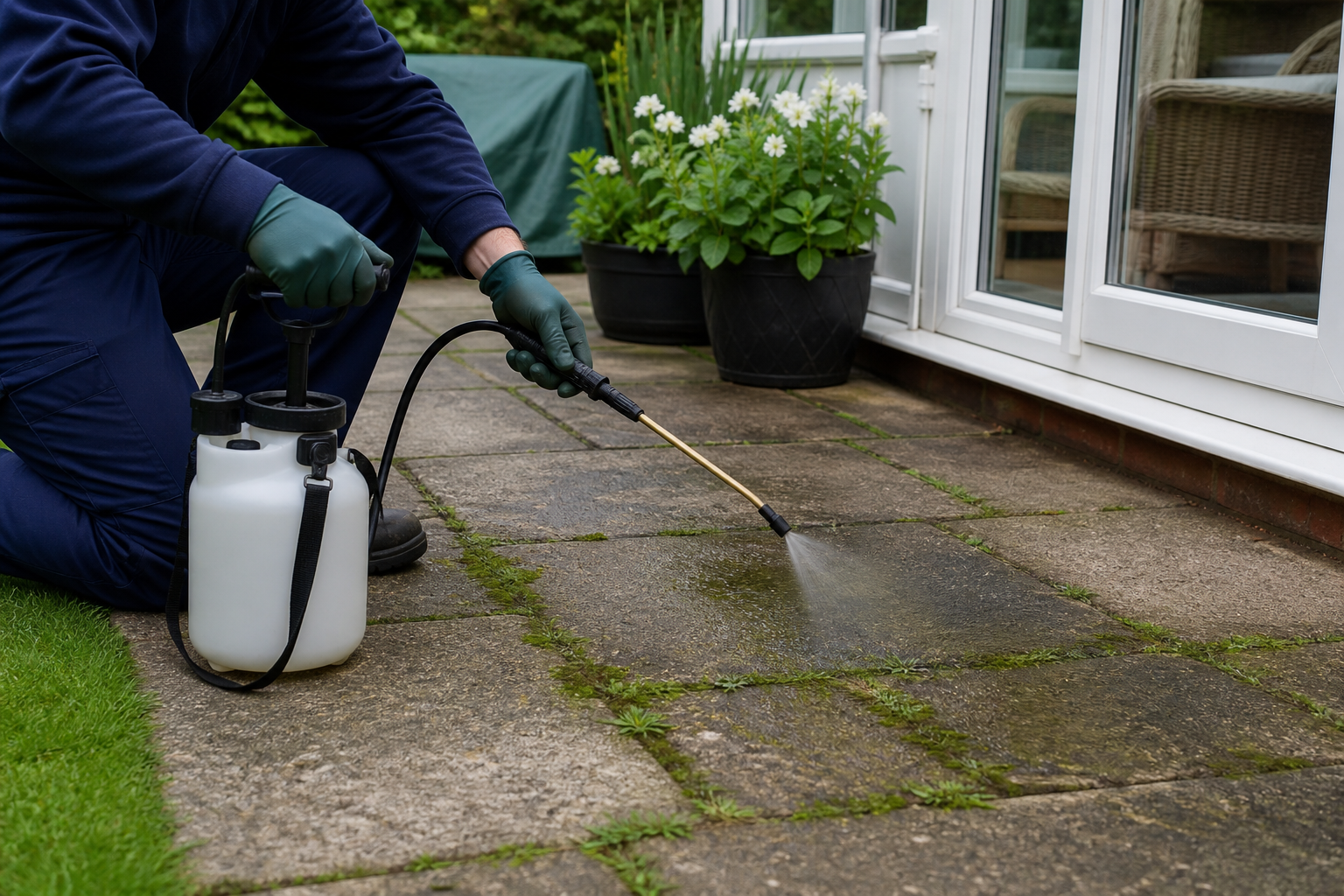
Tools and solution are matched to each hard material while overspray near planting is restrained.
04
Leave a safe dry route
The garden is reviewed for slippery patches, pooled water and items that should remain out of position.
PREPARATION / BEFORE THE VISIT
Prepare the Claygate address without pre-cleaning it.
- Confirm the entrance and any requirement involving side or rear entrances.
- List the rooms or items covered by conservatory and garden cleaning.
- Point out sensitive finishes, pets, alarms and anything that must not be moved.
- Agree the key return, completion contact and any building time restriction.
VISIT / HANDOVER
Prepare through a plant-safe access lane agreed before equipment is placed before arrival
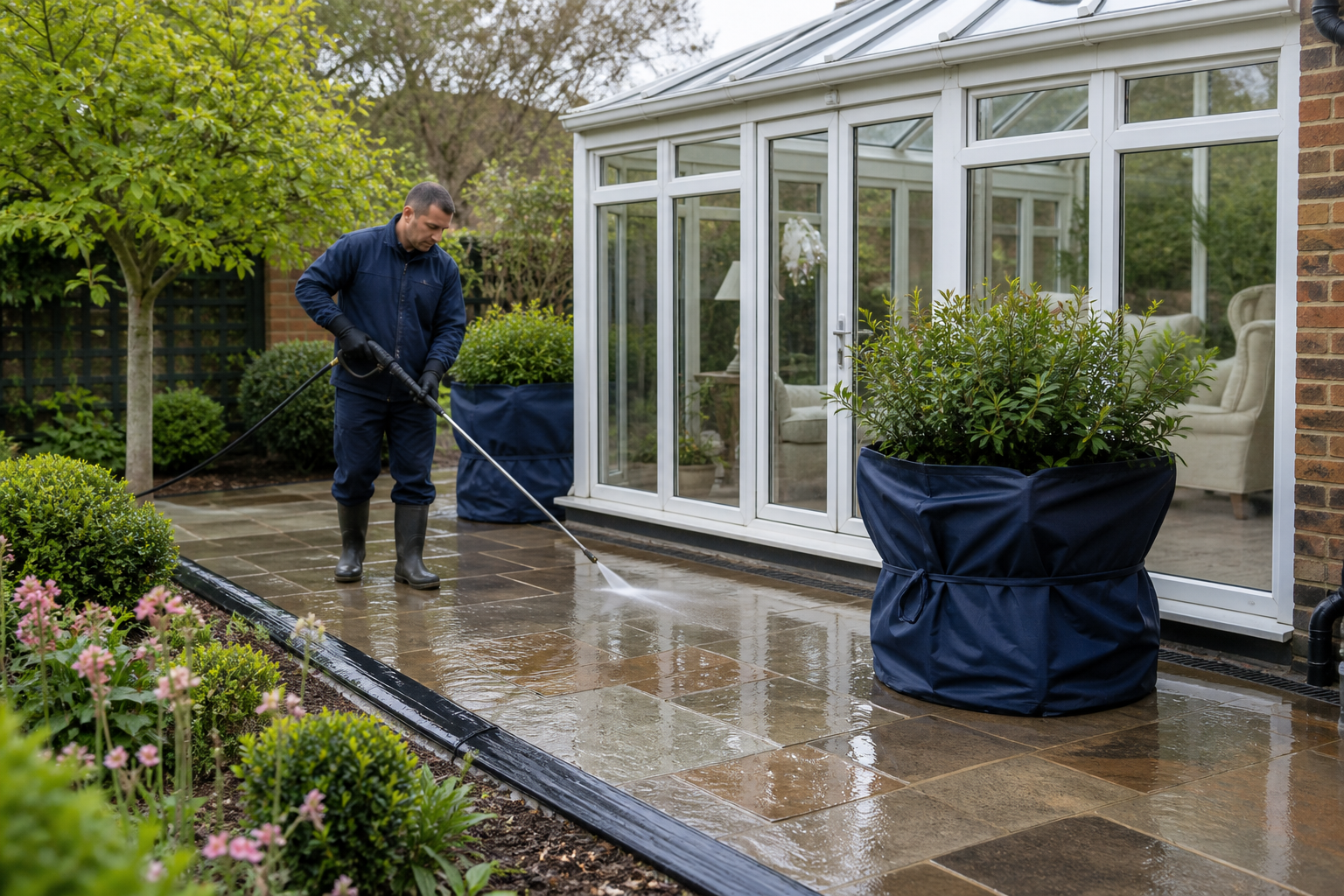

Identify delicate planting, wildlife activity, water points and slippery areas. Move light pots only if safe and leave heavy containers in place for discussion. Do not apply weedkiller or another garden chemical immediately before the visit. This Claygate plan connects an indoor priority—roof panels, frames, seals and high internal ledges—with the external condition around shaded paths, planters, reachable garden furniture and conservatory edges. They are not treated simultaneously by default. The crew releases loose debris first, protects delicate planting, active wildlife and surfaces made slippery by organic build-up and selects a method for weathered paving, pots, exterior sills and reachable hard garden features only after condition checks. Water, tools and foot traffic follow through a plant-safe access lane agreed before equipment is placed, keeping the return path away from completed detail. Before departure, the team points out failed seals, scratched glazing and panes that cannot be reached safely and confirms which pots, furniture or access items can return. That sequence keeps the combined visit coherent without promising repair, gardening or unmeasured clearance.
Organic film in shade
Shaded hard surfaces can stay damp and become slippery. Suitable cleaning may improve them, but weathering and porosity affect the final colour and speed of return.
Wildlife and nesting boundaries
The team does not disturb an active nest or protected area to complete a checklist. The affected section is excluded and the customer receives a clear note.
Plants and movable objects
The occupier identifies delicate pots and clears light belongings. The team does not dose planting with cleaning solution or move heavy containers across unstable paving.
Weather and drying
Rain, strong sun, wind and temperature can change safe working and drying. The booking allows a method adjustment rather than promising identical results in unsuitable conditions.
MAP / COVERAGE CONTEXT
Route context for conservatory & garden cleaning in Claygate.
Coverage context for Claygate. This map does not represent a staffed local office.
RELATED SERVICES / SAME AREA
Related cleaning services in Claygate
NEARBY AREAS / LOCAL ROUTES
Nearby cleaning coverage around Claygate
No. Pruning is not assumed. The owner should arrange safe access or accept a plant-defined boundary.
Questions about seasonal garden-surface care
Will you cut back plants to reach the path?
The team assesses safety, runoff and product performance. Postponement or reduced scope may be the responsible outcome.
Can work continue in heavy rain?
No guarantee applies across unknown growth, staining and weathered material. Suitable cleaning can improve stable surfaces without reversing age or damage.
Can every green or dark mark be removed?
Clear small furniture, toys, tools, fragile pots and personal items. Discuss heavy objects rather than dragging them across glazing routes or paving.
What should be moved beforehand?
No. The map describes service coverage; it does not identify a staffed local branch.
Request a surface-led plan
Send photographs and measurements for shaded paths, planters, reachable garden furniture and conservatory edges, plus access, planting, water and condition notes. A clear brief lets the team price stable reachable areas, choose a suitable sequence and leave horticultural treatment, pest control and restoration of weathered materials outside the cleaning promise.