
Covent Garden / WC2E
Carpet Cleaning Covent Garden: A Practical Plan Built Around Condition
Carpet Cleaning Covent Garden: A Practical Plan Built Around Condition

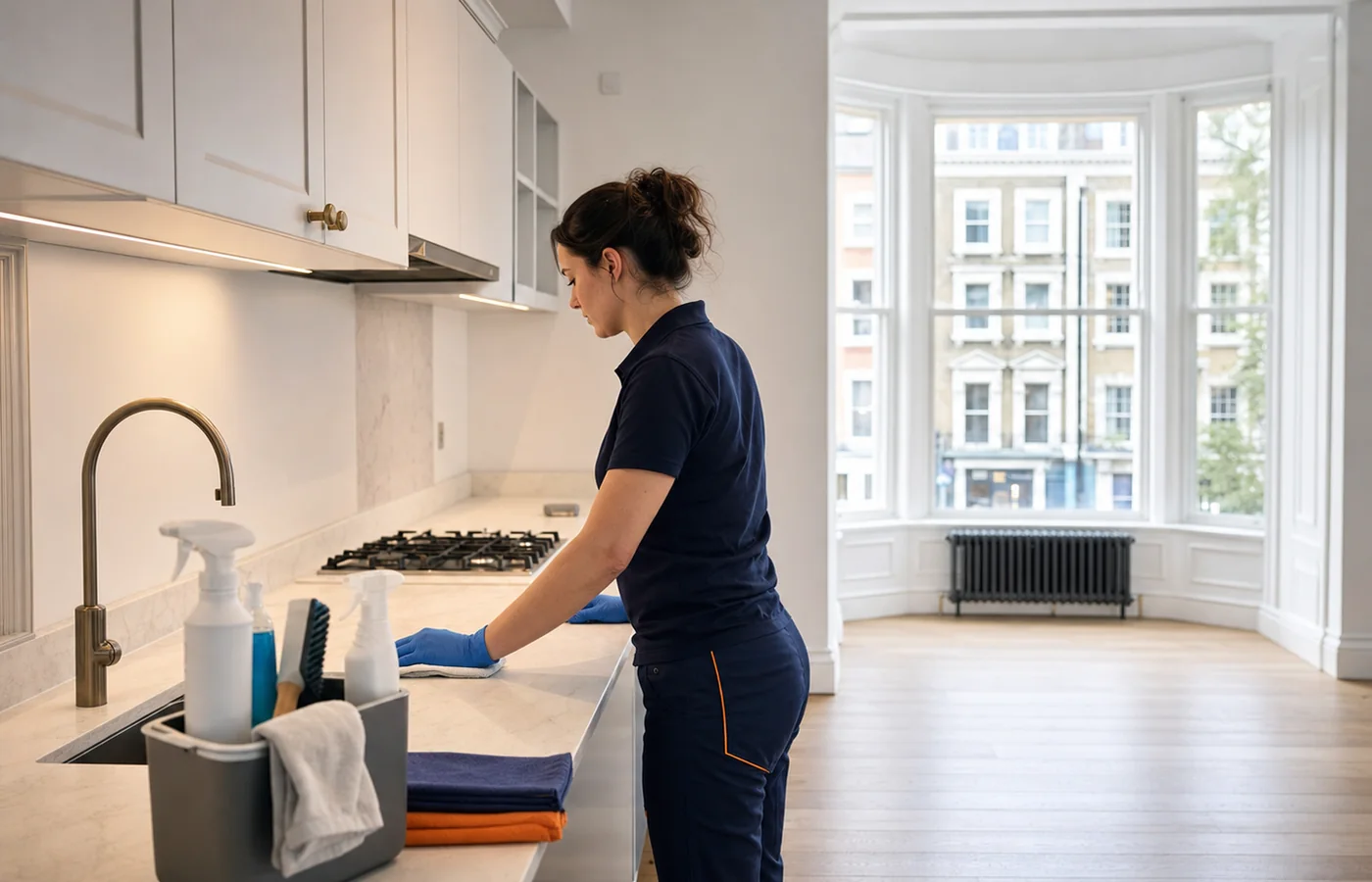
Carpet cleaning in Covent Garden with fibre and access details checked
Carpet cleaning in Covent Garden needs to account for apartments above commercial premises and managed blocks. Fibre type, pile construction, previous treatments and the backing beneath the carpet determine which method is appropriate; visible colour alone is not enough to choose chemistry or moisture levels.
A useful inspection separates general soil from individual stains, flattened traffic lanes and permanent fibre damage. Entrance routes, family rooms, pets and rented bedrooms often need different pre-treatment. Professional carpet cleaning should therefore begin with testing, careful vacuuming and realistic expectations for older marks.
Locally, restricted vehicle access, porter arrangements and lifts can affect how extraction equipment reaches the property. Confirm parking, floor level, water access and furniture movement before arrival. Ventilation and pile depth also influence drying, so rooms should not be put back into heavy use immediately after treatment.
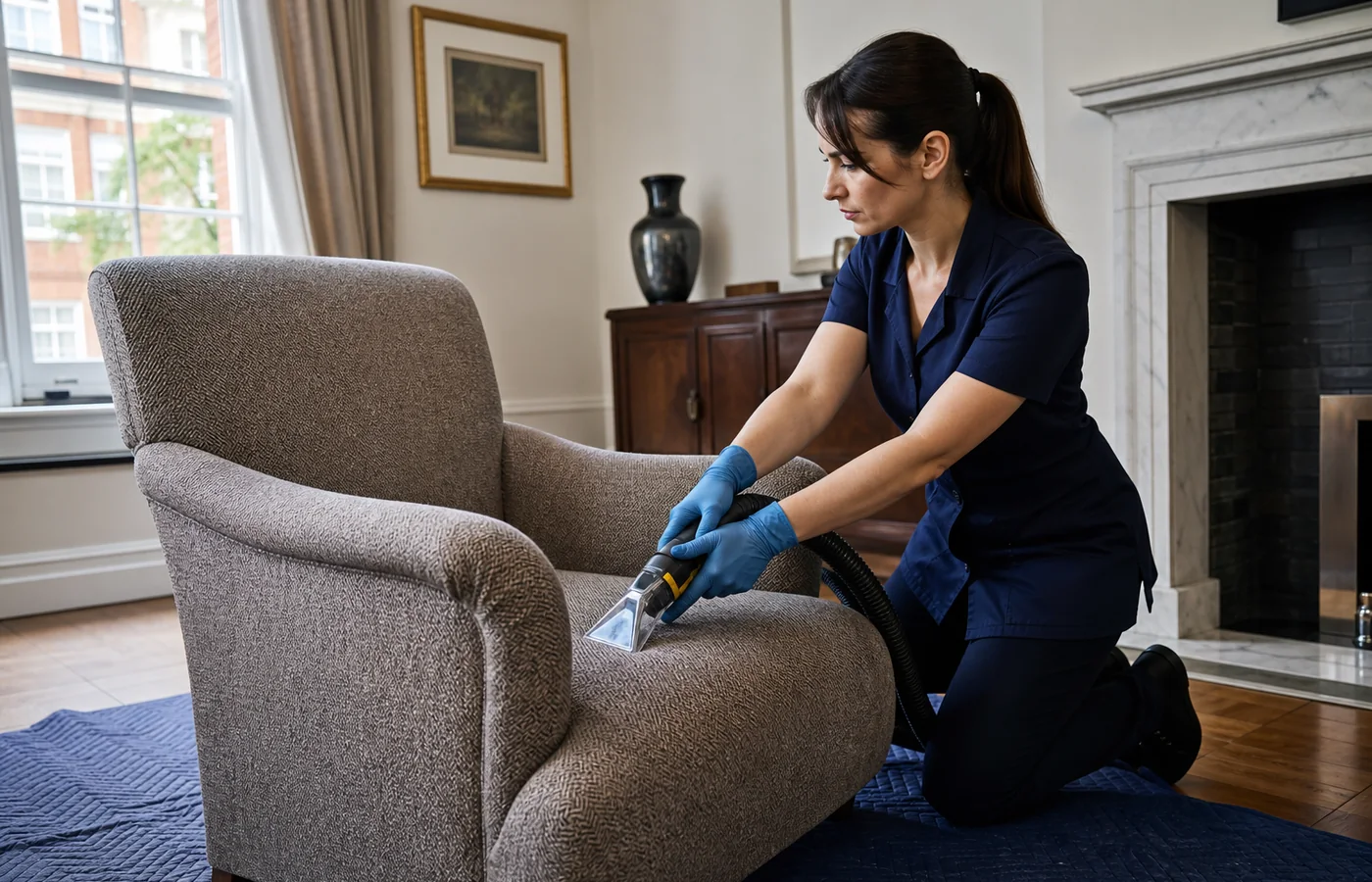
Where sofas or dining chairs show related wear, coordinated upholstery care may be practical, but only after the fabric has been assessed separately. Tenants should allow enough drying time before checkout photographs or an inventory inspection.
Fibre check
Identify pile, backing and previous treatments.
Stain assessment
Separate removable soil from permanent damage.
Access plan
Confirm parking, stairs, lifts and water supply.
The right time to clean is visible in the carpet’s condition
Annual, seasonal and six-month rules sound convenient, but they ignore how a room is used, how often it is vacuumed and what happens between appointments. The Covent Garden page takes an evidence-based maintenance view: establish a clean baseline, observe how the floor changes, and book future treatment when ordinary care no longer manages recoverable soil evenly.
The first appointment records traffic lanes, protected pile, individual spills, edge dust and existing wear. This condition map matters because a dark corridor can return before a lightly used bedroom needs another full clean. The customer gains a reference for prioritising areas without treating the entire property to satisfy an arbitrary date.
Professional cleaning begins with dry extraction, targeted preparation and a rinse method suited to the textile. The baseline must be technically useful, not created by fragrance or optical grooming alone. Residue is recovered, permanent fading is noted and the customer understands which marks should not be used later as evidence of fresh dirt.
Between visits, suitable vacuuming and calm spill response supply new information. Entrances may require more frequent passes; delicate pile may limit brush settings; a recurring sticky patch may indicate residue or renewed contamination. Observations are more valuable than layering products whenever the carpet changes colour.
The next interval follows those observations. A high-use route can be scoped independently if blending allows, while rooms still responding well to routine maintenance need not be overtreated. This approach avoids both neglect and unnecessary wet cleaning, keeping the decision attached to the Covent Garden carpet actually in use.
PROCESS / FOUR DECISIONS
Use the condition record throughout the appointment
01
Document before changing the view
The technician walks the agreed areas with the customer where possible, notes prominent defects and confirms handling limits. Fibre and colour checks are made discreetly when the evidence calls for them.
02
Prepare without disturbing details
Vacuum tools are selected for accessible pile and edges. Loose matter is removed methodically, while unstable trim or delicate sections are approached within the boundary recorded at the start.
03
Treat the field and spots separately
General pre-conditioning remains even and material-compatible. Marks receive precise applications rather than blanket strength; extraction balances adequate rinsing with recovery and protects decorative transitions.
04
Reconcile the result with the register
The cleaner revisits noted areas, photographs or explains any lasting change and gives aftercare suited to the conditions. A revealed patch is discussed from evidence rather than attributed casually.
VISIT / HANDOVER
Clear the floor-level fragility


Remove papers, books, chargers, portable devices and delicate objects. Describe loaded furniture and do not dismantle it without a safe plan. If broader housekeeping is required, domestic cleaning has its own specification and should be sequenced so dust is not returned to treated carpet.
Why a burn test is not casual on-site theatre
Material identification should use available labels, professional observation and suitable low-risk checks. A destructive test is not performed merely to create certainty for a sales explanation. Where composition remains uncertain, the method is chosen conservatively and adjusted from observed response.
Temperature is one variable, not the service
Warm solution can support some cleaning systems, but more heat is not a universal measure of quality. Fibre, dye, backing and the contaminant all influence the safe range. Preparation and recovery may matter more than pursuing a dramatic machine setting.
Colour change can sit beneath soil
Removing grey residue sometimes reveals fading or a previous chemical mark that was already present. This does not mean the cleaning created missing dye. Pre-condition notes and photographs help distinguish a revealed defect from a new event.
Routine care between professional visits
Use vacuum equipment appropriate for the pile and avoid repeated passes with a brush setting that distorts delicate fibres. Blot fresh spills, do not scrub them sideways, and seek advice before layering several products onto an uncertain material.
SERVICE TEAMS / THE AGREED WORK
Four boundaries within a mixed-textile floor plan

A loop pile beside cut pile
Tool choice and agitation are reconsidered at the doorway. The operator does not drag a brushing decision across the threshold simply because both carpets share a colour.

A wool-rich stair covering
Dye, pH, moisture and edge stability are checked for the stairs themselves. The synthetic hall method is not copied automatically onto a different construction under concentrated footfall.

A replacement patch within an older room
Newer fibre may differ in shade, twist and soil response. Its boundary is documented before cleaning so a permanent mismatch is not attributed to incomplete rinsing.

An unknown carpet without a label
Uncertainty narrows the working range. Conservative testing and observed response guide treatment; visual confidence is not substituted for material evidence.
Mixed construction does not necessarily make the appointment difficult; it makes the survey important. The cleaner labels room decisions clearly, changes tools or solution where required and prevents cross-contamination between methods. Customers should mention replacement sections and stair runners even when they appear visually continuous. That information can explain why one area dries differently or why a spot agent suitable elsewhere is not used across a particular boundary.
PRICING / CLEAR STARTING POINTS
A quotation built from the actual floor, not the postcode
The room count, dimensions, stairs, carpet construction, soil level, individual marks and access information all help define the work. Current published guidance is available on the cleaning prices page; no figure is invented simply because the enquiry carries an Covent Garden address.
01
Single room
From £15 / room
Compact bedroom or study
02
Double room
From £15 / room
Standard double bedroom
03
Lounge
From £15 / room
Living room with clear equipment access
04
Stairs
Quotation
Standard flight, subject to construction
05
Hallway
Quotation
Reachable hall or landing
06
Whole property
Quotation
Measured rooms and fibre types
Prices are guide prices.
Final quotation depends on the property, condition and requirements.
SERVICE SCOPE / READ BEFORE BOOKING
A carpet clean with an explicit handover plan
Included in this brief
- Discussion of room priorities, furnishings and intended use after the visit
- Pre-clean survey and detailed removal of loose dry matter
- Compatible treatment with controlled rinse and moisture recovery
- Condition-specific ventilation, access and aftercare guidance
Outside this cleaning brief
- A fixed drying promise made without inspecting the textile and room
- Moving occupants’ fragile or powered equipment without prior agreement
- Restoration of worn pile, faded dye or structural carpet faults
MAP / COVERAGE CONTEXT
Plan the route into the Covent Garden property.
Coverage context for Covent Garden. This map does not represent a staffed local office.
EXPLORE / NEXT
Related services in Covent Garden
EXPLORE / NEXT
Nearby areas for carpet cleaning
Method choice depends on carpet construction, condition and soil. Extraction can be highly effective, but no process should be assigned solely from a service-page label before inspection.
Covent Garden questions about moisture and extraction
Is hot-water extraction always the best option?
Some passes apply and recover solution; others focus on recovery. The pattern aims for even rinsing and sensible residual moisture, not repeated wetting without purpose.
Why make several passes over the same area?
Wet cleaning involves moisture entering the pile, and construction differs. The operative controls application and recovery, but an absolute remote guarantee about unseen backing would be misleading.
Can you guarantee that the backing will stay dry?
It should not be assumed. A bed’s layers and intended use demand a distinct plan. Review mattress cleaning and declare the item during enquiry.
Can mattress work use the same extraction setting?
No. It describes service coverage and practical local context, not a staffed branch.
Send the Covent Garden rooms as a condition map
List carpeted rooms, stairs and landings; mark the busiest routes, known spills, fibre changes and furniture restrictions. Include photographs from more than one direction. That information helps us price meaningful zones, choose a safe working order and explain why a clean can be consistent without pretending that every section will become visually identical.