
Biggin Hill /
Carpet Cleaning Biggin Hill: Let Use Decide the Maintenance Date
- Traffic and household changes observed between appointments
- Vacuuming treated as prevention rather than presentation
- Professional cleaning booked for evidence, not a rigid calendar
- Aftercare notes turned into a practical maintenance record
The right interval is different for every carpet
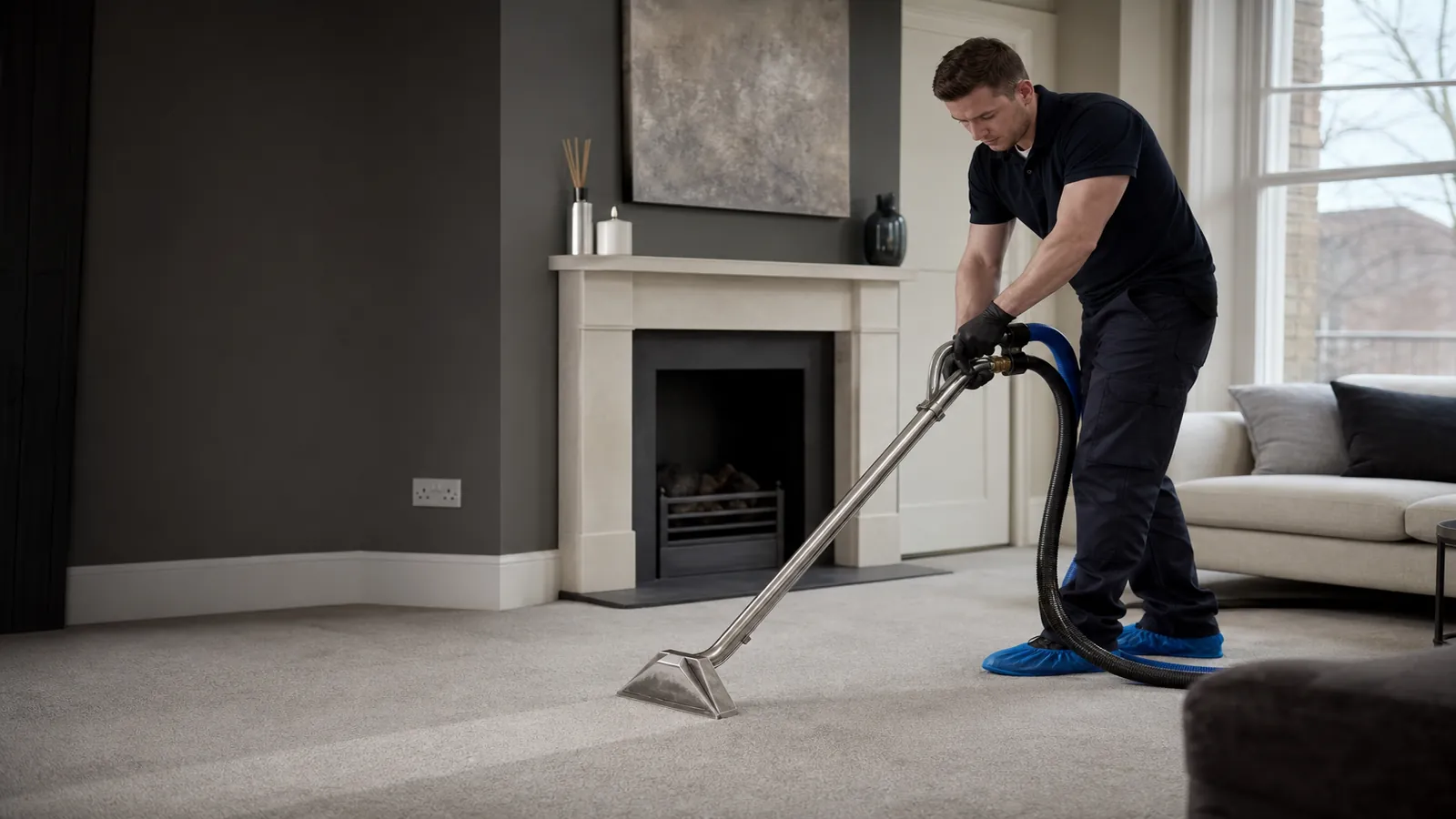
A universal instruction to clean every carpet after the same number of months ignores how differently rooms are used. An entrance route with outdoor footwear may change quickly, while a spare bedroom can remain quiet. Children, pets, entertaining, home working and building work all alter the rate at which debris and marks accumulate. For Biggin Hill carpet care, a short maintenance record is more useful than choosing a date solely because the calendar has turned.
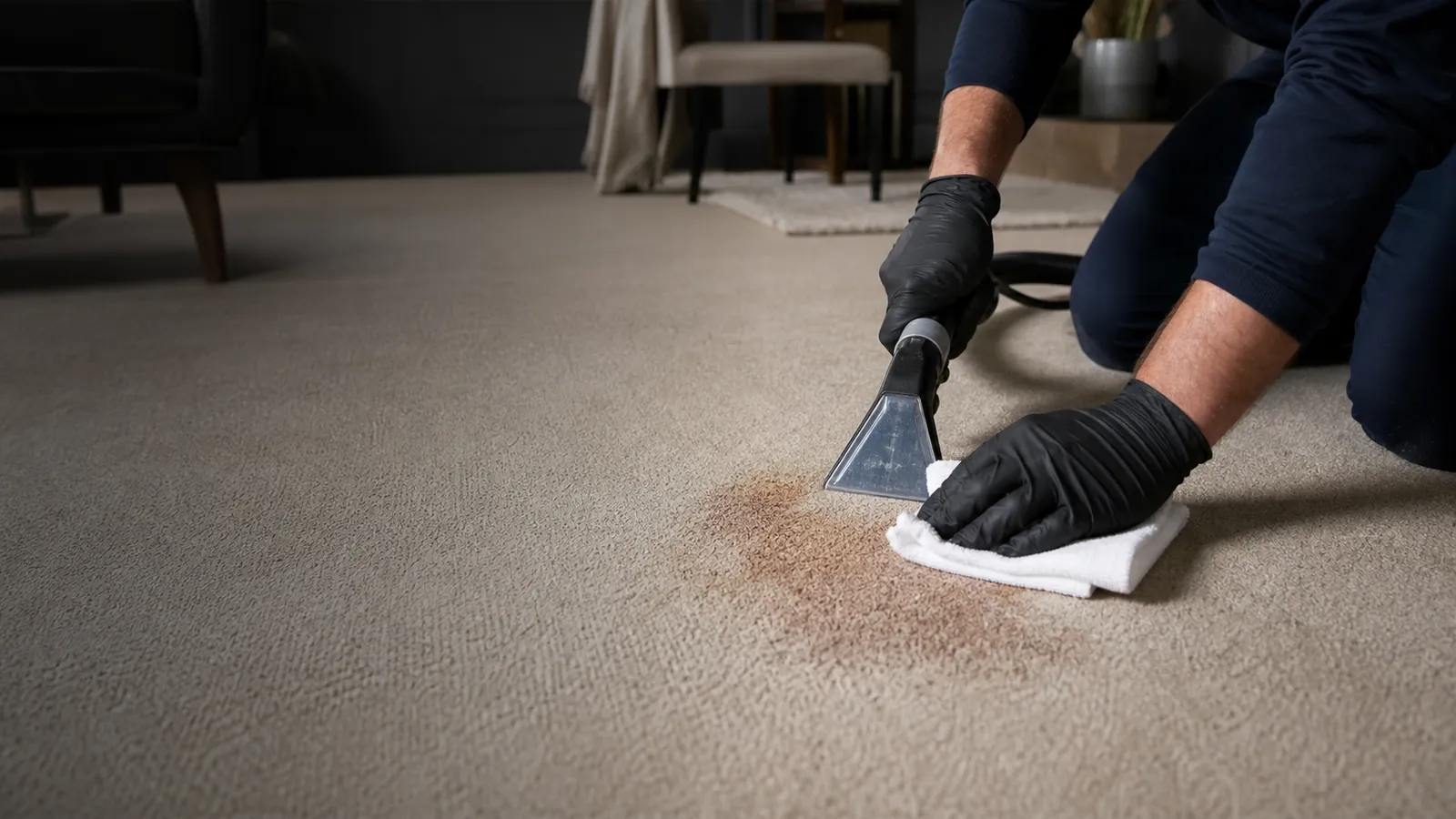
The record need not be technical. Note when traffic lanes begin to look dull after vacuuming, whether edges are collecting debris, how quickly a previously treated spot attracts dirt and whether a change in smell has a known source. These observations help distinguish a need for improved routine vacuuming from a broader professional clean. They also reveal whether one room should be booked without automatically including every carpet in the property.
Routine dry removal is the foundation. Grit can abrade fibres long before it forms an obvious dark layer. Vacuuming should follow household traffic and the equipment guidance appropriate to the carpet. Repeated fragranced sprays or improvised wet cleaning are not maintenance substitutes; residue can attract more soil and make later assessment harder.
Professional work can be aligned with domestic cleaning, seasonal room changes or an event, but the reason for the booking should remain clear. If a carpet is simply dusty after furniture movement, thorough preparation may dominate. If spills, residue and traffic lanes have built up, the scope needs inspection and suitable treatment. The technician should not manufacture a problem to justify a recurring plan.
After the appointment, the customer receives a new baseline. Photographing the dry result from the same doorway can help future comparison, provided lighting is considered. Record any permanent wear or fading so it is not repeatedly reported as fresh soil. Maintenance becomes a cycle of observation, everyday care and proportionate intervention rather than a sales subscription.
PROCESS / FOUR DECISIONS
Use the previous baseline to inform, not dictate
01
Review what changed
The customer describes use since the last clean, current concerns and previous products. Permanent features noted earlier are separated from new condition changes.
02
Reassess the textile
The cleaner checks fibre behaviour, fitting, colour and wear afresh. A method is not repeated merely because it was once suitable.
03
Complete the justified work
Dry preparation, appropriate spot attention and room cleaning proceed in a controlled sequence. Areas outside the agreed maintenance scope are not added without discussion.
04
Create the next reference point
After drying guidance, the customer records the settled result and any acknowledged limitations. Future timing can then follow observation instead of memory.
VISIT / HANDOVER
Bring useful history, not a demand to repeat everything


Locate any previous care notes if available and list new spills, products and changes in use. Vacuum normally rather than hiding the condition with last-minute wet products. Clear small items and decide which rooms genuinely need inclusion. If a permanent mark was identified previously, point it out so the technician can check for change without repeatedly pursuing it.
A photograph can support consistent observation
Take the dry carpet from a repeatable position and similar lighting. The image is not a laboratory measurement, but it can show gradual change in traffic routes. Avoid comparing a damp post-clean photograph with a dry image from another season.
Vacuum frequency follows traffic
Entrance lanes and favourite seating routes may need attention more often than quiet edges. Use equipment suitable for the carpet and empty or maintain it as directed. Slow, overlapping passes are usually more useful than rapid daily gestures.
Renovation dust changes the plan
Fine building residue should be addressed carefully before ordinary maintenance resumes. Describe recent work when booking. The presence of dust does not justify saturating the carpet; effective dry preparation becomes especially important.
Maintenance and moving are separate triggers
A planned end of tenancy cleaning may set a deadline, while routine carpet care is normally flexible. Where both apply, schedule enough drying time and keep the textile scope explicit.
SERVICE TEAMS / THE AGREED WORK
Four signals that are better than a calendar reminder

Dullness remains after proper vacuuming
If a traffic route still lacks clarity once loose debris is removed, embedded soil or pile wear may be involved. An inspection can separate the two and set expectations before a professional method is chosen.

A spot begins attracting dirt again
Recurring darkening can suggest sticky residue from the original spill or a previous product. Record what was applied. Early assessment may prevent repeated home treatment from spreading the affected area.

Household use changes materially
A new pet, crawling child, home office or period of renovation can change the floor’s workload. Adjust vacuuming and observation first, then book professional care when the condition supports it.

Several rooms reach the same useful window
Combining genuinely ready rooms can simplify access and drying plans. They still receive individual checks; the convenience of one date does not make their fibres or marks identical.
Where beds also form part of a periodic textile plan, mattress cleaning has a different assessment and should not be assumed to follow the carpet interval.
PRICING / CLEAR STARTING POINTS
Book the rooms that show a reason for professional work
A quotation should list the carpeted areas requiring attention, their approximate size, stairs, furniture, current condition and specific marks. It does not need to include quiet rooms merely to create a whole-property package. Customers can consult the cleaning prices page for general context, then request a defined scope based on present need. Previous invoice details may help show what was done, but the technician still inspects the carpet again because use and condition change. A maintenance booking offers value when preparation and method are completed properly; cutting these stages to fit an arbitrary low recurring price can undermine the purpose. Equally, a modest room should not be loaded with invented treatments. A transparent quote connects cost with the work now justified and leaves future timing open to evidence.
01
Single room
From £15 / room
Compact bedroom or study
02
Double room
From £15 / room
Standard double bedroom
03
Lounge
From £15 / room
Living room with clear equipment access
04
Stairs
Quotation
Standard flight, subject to construction
05
Hallway
Quotation
Reachable hall or landing
06
Whole property
Quotation
Measured rooms and fibre types
Prices are guide prices.
Final quotation depends on the property, condition and requirements.
SCOPE / CONFIRM BEFORE BOOKING
A professional clean that supports sensible maintenance
Included in this brief
- Current-state survey: review of traffic, dry debris, marks, residue concerns and known physical limitations.
- Complete preparation: vacuuming across the accessible area before a wet method is considered.
- Condition-led treatment: cleaning selected for the carpet now, not copied from the previous appointment automatically.
- Baseline handover: notes on outcome, lasting wear, drying and the signs worth monitoring afterwards.
Outside this cleaning brief
- No fixed repeat interval is presented as universally necessary without reference to use, fibre, condition and household priorities.
- The service does not replace regular vacuuming or make the carpet resistant to future spills, grit and physical wear.
- Permanent damage is documented for future comparison but cannot be removed by adding more frequent cleaning visits.
PREPARATION / BEFORE THE VISIT
Prepare the Biggin Hill address without pre-cleaning it.
- Confirm the entrance and any requirement involving street-specific parking controls.
- List the rooms or items covered by carpet cleaning.
- Point out sensitive finishes, pets, alarms and anything that must not be moved.
- Agree the key return, completion contact and any building time restriction.
MAP / COVERAGE CONTEXT
Route planning for carpet cleaning in Biggin Hill.
Coverage context for Biggin Hill. This map does not represent a staffed local office.
RELATED SERVICES / SAME AREA
Related services in Biggin Hill
NEARBY AREAS / SAME SERVICE
Carpet Cleaning near Biggin Hill
It depends on carpet guidance, traffic, household use, condition and priorities. Observe the floor and maintain it routinely rather than relying on one universal interval.
Maintenance questions for Biggin Hill carpet care
How often should professional cleaning be booked?
Suitability, technique and moisture matter more than a slogan about frequency. Unnecessary or poorly controlled work can be unhelpful; justified professional care should follow inspection.
Does frequent cleaning damage carpet?
Yes, request the rooms that need work and list stairs separately. Each included carpet is assessed, and quiet areas do not have to be added merely for symmetry.
Can I book only the high-use rooms?
Keep notes on permanent limitations, drying, products used if provided, and a dry reference image. Monitor traffic routes and new incidents rather than expecting the carpet to remain unchanged.
What should I record after the visit?
No. The map describes service coverage; it does not identify a staffed local branch.
Build the booking from what the carpet shows now
For carpet cleaning in Biggin Hill, list the areas that have changed, the use behind that change and any previous products or professional work. The appointment can then create a reliable new baseline, with no artificial recurring interval and no pressure to include rooms that do not need attention.