
Canning Town / E16
Carpet Cleaning Canning Town: A Condition-Led Plan for the Floor
- Entrance soil mapped through the rooms
- Slow vacuum passes used as a cleaning stage
- Bonded residue treated only after particles are lifted
- Maintenance advice focused on preventing fresh abrasion
A stain is an event, not simply a coloured patch
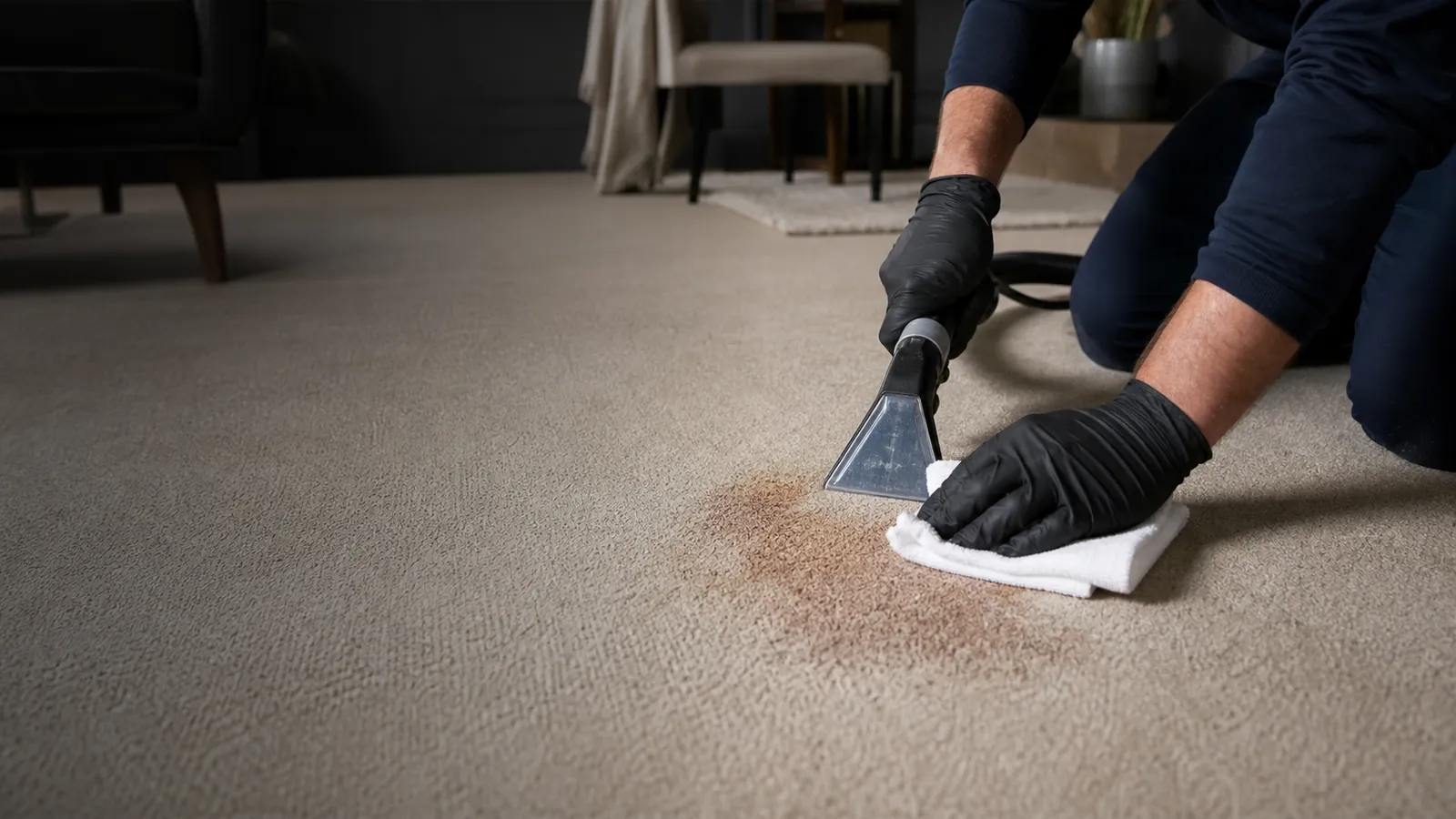
When a customer points to a mark, the most useful information is often what happened before it appeared. A drink, tracked material, pet accident, household product or unknown substance can leave similar colours while behaving differently under treatment. For an Canning Town booking, we build the spot plan from history and testing rather than selecting chemistry by visual guesswork.
Age matters as well. A fresh spill that has been blotted may still sit mainly within the pile; an older patch may have oxidised, migrated into backing or been altered by several cleaning attempts. We ask when the incident occurred, whether heat or scrubbing was used, and how the appearance changed. An honest ‘unknown’ is safer than a confident but invented answer.
Spot treatment is then separated from the whole-room clean. General dullness benefits from detailed dry extraction and even pre-conditioning. The isolated concern receives its own discreet test and controlled application. Keeping those tasks distinct prevents an unnecessarily strong solution from being spread across sound carpet merely because one mark is stubborn.
Not every colour can be extracted. Bleaching removes dye; abrasion changes fibre; some substances permanently bond or transfer colour. Continuing to wet such an area may spread it, disturb backing or delay drying without improving the finish. A professional result includes knowing when to stop and explaining why the remaining patch is no longer ordinary soil.
Customers planning several household services should keep each one visible in the brief. Upholstery cleaning can address a related spill on seating, and domestic cleaning covers routine surrounding surfaces. Neither should be assumed within the carpet quotation merely because the contamination crossed from one item to another.
SERVICE TEAMS / THE AGREED WORK
Dry matter appears differently across a floor

Coarse particles near an entrance
Visible crumbs and grit are collected before pre-spray. The operative also checks beneath the surface because repeated steps can drive smaller material beyond what an ordinary quick vacuum reveals.

A grey route through the room
The band may combine dust, sticky soil and abrasion. Dry extraction removes its particulate component; later treatment addresses bonded residue, while the handover identifies physical wear that remains.

Dust along skirting and corners
Edges need an appropriate narrow tool and patient passes. Flooding the boundary is not a substitute, especially where gaps, finishing strips or looseness make uncontrolled moisture undesirable.

A cleaner patch beneath furniture
Protected pile helps establish a reference for colour and handle. It can show what soil removal may reveal, although fading and compression elsewhere still limit a perfect match.
Dry-soil control is a foundation rather than a complete method. Oily films, spills and water-soluble residue still require their own compatible treatment after the loose load is reduced. The advantage is diagnostic as well as practical: once grit is lifted, the cleaner can judge remaining discolouration more accurately and avoid mistaking a layer of particles for a stain that needs concentrated chemistry.
More heat is not automatically safer or cleaner
Temperature interacts with fibre, dye, chemistry and soil. The chosen range must serve the material and method. Strong heat used as a selling point cannot replace inspection, preparation or adequate solution recovery.
Dry passes are active work
An extraction stroke without additional solution helps recover retained moisture and residue. It may look less dramatic than spraying, but it is a meaningful part of the process and supports a more manageable handover.
Do not trap damp pile beneath dense items
Follow advice before returning furniture, storage boxes or protective sheets. Restricting airflow can prolong drying or create transfer concerns. Light objects should also wait until the cleaner confirms the appropriate arrangement.
Upholstery follows another moisture profile
Cushions, linings and frames alter how seating is treated and dried. If furniture needs attention, upholstery cleaning supplies the separate assessment rather than copying carpet settings.
PRICING / CLEAR STARTING POINTS
Timing requirements clarify scope; they do not manufacture certainty
Room measurements, steps, carpet condition, fibre information, furnishings, access and notable spots support the quotation. A return-to-use preference should also be disclosed. Published guidance sits on the prices page; the Canning Town appointment is costed from its declared work rather than an arbitrary fast-dry label.
01
Single room
From £15 / room
Compact bedroom or study
02
Double room
From £15 / room
Standard double bedroom
03
Lounge
From £15 / room
Living room with clear equipment access
04
Stairs
Quotation
Standard flight, subject to construction
05
Hallway
Quotation
Reachable hall or landing
06
Whole property
Quotation
Measured rooms and fibre types
Prices are guide prices.
Final quotation depends on the property, condition and requirements.
PROCESS / FOUR DECISIONS
Cleaning action balanced with an efficient dry-down
01
Agree priorities and exclusions
The operative confirms rooms, urgent spaces, furniture limits and later visitors. Textile condition is recorded, including areas where permanent wear may affect appearance even after soil removal.
02
Reduce the load while it is dry
Methodical vacuum extraction addresses open pile, edges and traffic routes. This preparation supports the later rinse and avoids using water to transport particulate matter that could be removed more efficiently first.
03
Apply controlled cleaning action
Pre-conditioner, agitation and contact time are matched to the carpet. The rinse lifts suspended contamination; solution flow is monitored and additional dry strokes improve recovery rather than leaving speed to excessive heat or chemistry.
04
Make the handover room-specific
The finished floor is reviewed for residual spots, shading and moisture. The customer receives practical instructions about footwear, furniture, ventilation and the safest order for bringing each space back into service.
VISIT / HANDOVER
Do not hide the entrance route before inspection


Clear small items but leave photographs or descriptions showing where soil normally enters and travels. Mention building work, unusual debris or sharp material for safety. If carpet care accompanies end of tenancy cleaning, schedule vacuum-heavy work before the clean floor must be protected.
SERVICE SCOPE / READ BEFORE BOOKING
What a stair-aware Canning Town service includes
Included in this brief
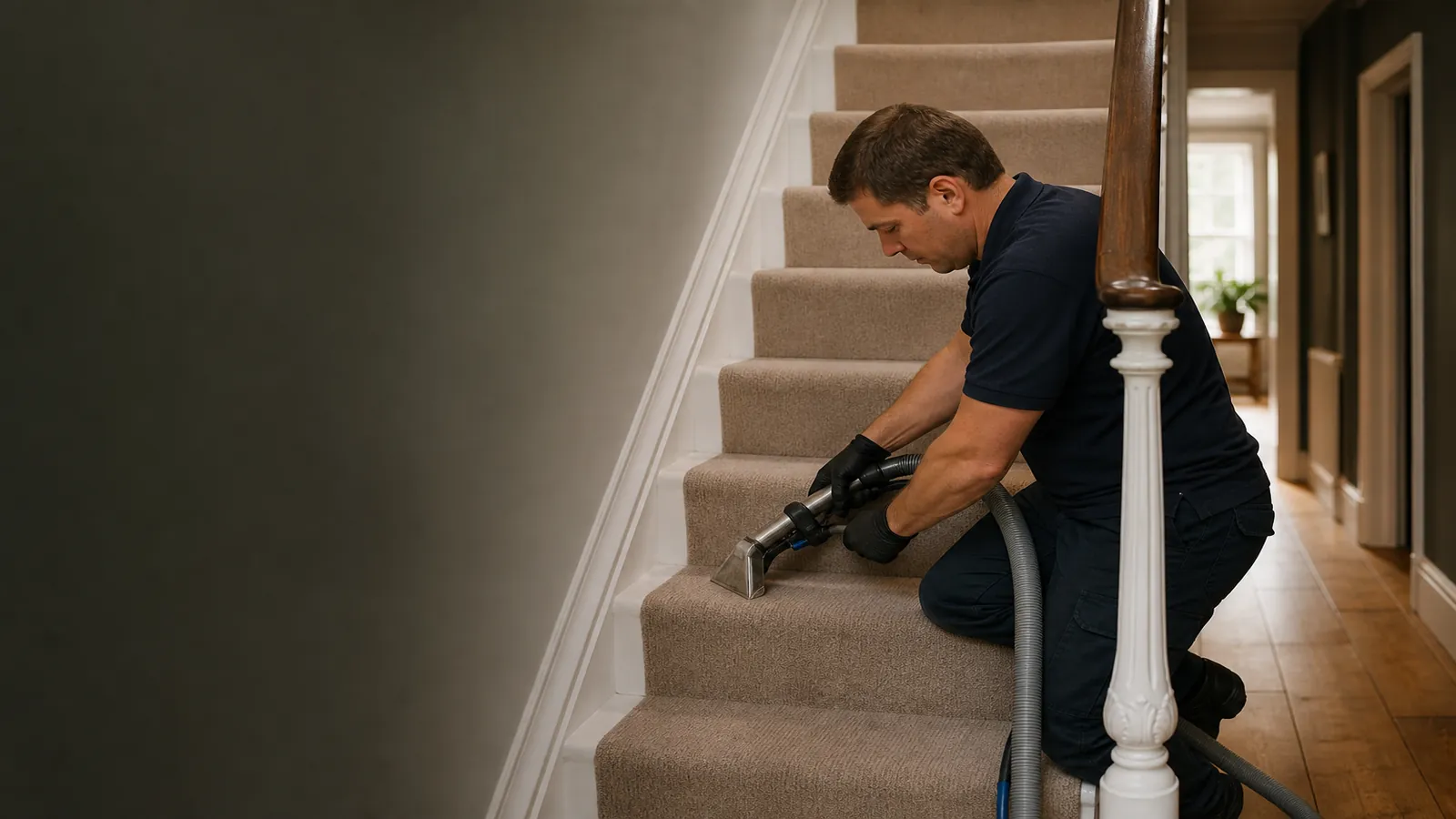
- A count and condition review of rooms, landings and carpeted steps
- Detailed vacuum work along corners, edges, treads and transitions
- Controlled pre-treatment and extraction suited to the installed carpet
- Final viewing from multiple directions with drying and access advice
Outside this cleaning brief
- Refixing loose carpet, repairing nosings or replacing damaged underlay
- A promise that abrasion on the leading edge will disappear
- Cleaning unlisted runners, rugs or fabric furnishings

MAP / COVERAGE CONTEXT
Plan the route into the Canning Town property.
Coverage context for Canning Town. This map does not represent a staffed local office.
EXPLORE / NEXT
Related services in Canning Town
EXPLORE / NEXT
Nearby areas for carpet cleaning
Possibly, when its weight, condition, route and available space make movement safe and it has been agreed. No item is shifted automatically merely because carpet lies beneath it.
Canning Town questions about furniture and carpet access
Will you move my sofa?
Only reachable carpet can be treated properly. Tool clearance varies, and the operative will not promise complete access under a low or complex frame that remains assembled.
Can you clean under a bed without dismantling it?
Suitable protection can reduce contact between damp pile and materials that might transfer colour, rust or restrict drying. The cleaner explains when it can be removed based on the actual carpet.
Why use tabs under furniture legs?
Do not empty or move heavy storage unless this has been discussed and a safe plan exists. The floor beneath a fixed or loaded wardrobe will normally remain outside the reachable scope.
Should I empty a wardrobe before the visit?
No. It describes service coverage and practical local context, not a staffed branch.
Build a Canning Town booking around the handover
List the carpeted rooms and stairs, identify the space needed first, describe furnishings and state who will enter afterwards. Include fibre information and mark photographs where available. We can then discuss a cleaning sequence and realistic aftercare instead of attaching an unsupported drying time to an unseen floor. If access is available only during a narrow window, say so before confirmation. The appointment needs sufficient time for inspection, preparation, treatment and recovery; compressing those stages to satisfy an undisclosed departure time would not be responsible.