
Catford / SE6
Carpet Cleaning Catford: Remove Renovation Dust Before Adding Moisture
- Building-work history included in the carpet survey
- Repeated dry extraction prioritised for fine particulate matter
- Paint, adhesive and damage assessed as separate limitations
- Carpet cleaning scheduled after dusty work is genuinely complete

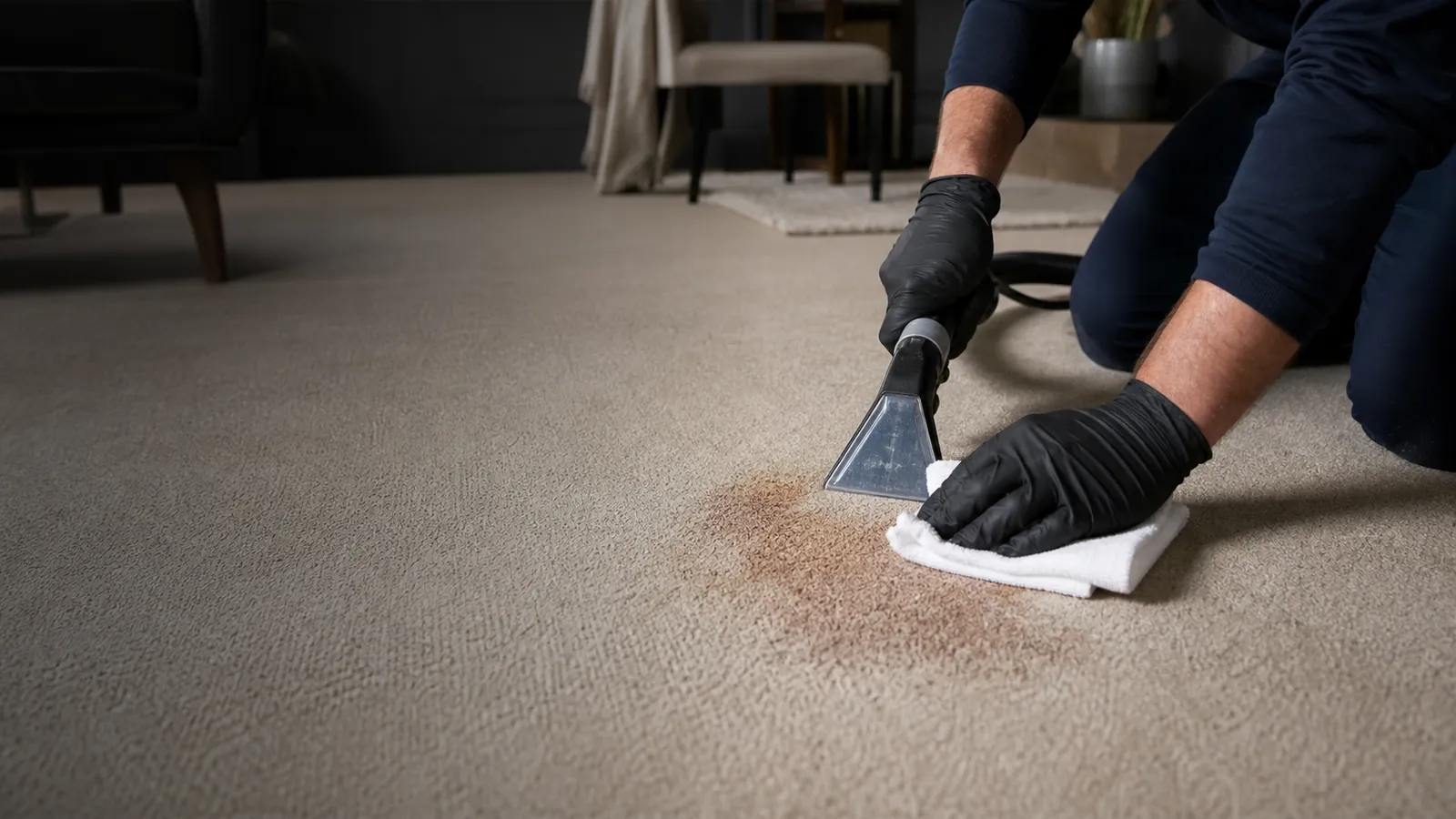
Fine dust changes the preparation, not the laws of the textile
Decorating and minor building work can leave carpet looking uniformly pale or gritty even when dust sheets were used. Fine particles travel along edges, settle beneath movable items and return from adjoining rooms. Introducing moisture too early can turn that dry load into a more difficult residue. For a Catford carpet-cleaning enquiry after works, the first priority is to establish what happened, whether dust-producing tasks have ended and which areas were exposed.
The preparation stage may need several deliberate vacuuming directions rather than one quick pass. Edges, transitions and traffic routes deserve attention, and filters or bags must function properly. This is not theatrical repetition: the aim is to remove as much loose material as practical before the carpet receives any suitable pre-treatment. A wet method should not be expected to compensate for incomplete dry extraction.
Building projects also create marks that are not ordinary soil. Paint, plaster compounds, adhesive, sealant, rust, cuts and compressed pile require individual assessment. Some deposits may support cautious local work; others risk fibre or colour damage if scraped or dissolved aggressively. Physical damage remains a repair issue. The customer should describe materials used instead of calling every leftover mark dust.
Where the wider property needs an end of tenancy cleaning, construction debris and unfinished work should be resolved before the final textile appointment. Trades returning after carpet cleaning can undo the result immediately. A realistic schedule leaves time for dust to settle, hard surfaces to be cleaned and the carpet to dry before inspection.
The finished carpet is reviewed for remaining wear and project-related limitations. Cleaning can improve clarity and remove suitable embedded matter, but it cannot promise to reverse bleach, paint dyeing, torn fibres or permanent pile distortion. A precise handover is preferable to repeated chemistry used only because a renovation deadline is close.
SCOPE / CONFIRM BEFORE BOOKING
A post-works carpet clean with preparation at its centre
Included in this brief
- Project history: review of recent decorating, sanding, drilling or plaster work and the carpet protection used.
- Enhanced dry stage: systematic vacuuming of accessible pile, boundaries and routes before suitable wet treatment.
- Deposit triage: separate assessment of dust, paint, adhesive and unknown project marks rather than one blanket promise.
- Final condition review: explanation of what was removed and what represents staining, colour change or physical damage.
Outside this cleaning brief
- Removal of bulk rubble, sharp waste, nails, wet plaster or hazardous construction material is not carpet-cleaning preparation.
- The service does not guarantee removal of cured paint, adhesive, sealant or dye change caused by project chemicals.
- Cleaning should not proceed through active dust production or while trades still need to cross the carpet with tools and materials.

PREPARATION / BEFORE THE VISIT
Prepare the Catford address without pre-cleaning it.
- Confirm the entrance and any requirement involving street-specific parking controls.
- List the rooms or items covered by carpet cleaning.
- Point out sensitive finishes, pets, alarms and anything that must not be moved.
- Agree the key return, completion contact and any building time restriction.
PRICING / CLEAR STARTING POINTS
Describe the works as carefully as the room count
A post-works quote needs the number and size of carpeted areas, stairs and landings, plus the nature of the project and how the flooring was protected. Mention visible fine dust, paint spots, adhesive, furniture left in place and any room where work is unfinished. The cleaning prices page offers general context; the accepted quotation should define ordinary cleaning and any mark that requires inspection before inclusion. Photographs help show project residue but cannot establish fibre damage or how deeply particles have travelled. Preparation time is part of the workload and should not be hidden behind a cheap room figure. Equally, a cleaner should not sell speculative chemical treatment for every speck. Accurate history supports a proportionate plan and a date after the source of dust has stopped.
01
Single room
From £15 / room
Compact bedroom or study
02
Double room
From £15 / room
Standard double bedroom
03
Lounge
From £15 / room
Living room with clear equipment access
04
Stairs
Quotation
Standard flight, subject to construction
05
Hallway
Quotation
Reachable hall or landing
06
Whole property
Quotation
Measured rooms and fibre types
Prices are guide prices.
Final quotation depends on the property, condition and requirements.
SERVICE TEAMS / THE AGREED WORK
Four post-works findings with different answers

Loose plaster or sanding dust
Dry particles should be removed methodically before moisture. Several controlled passes may be appropriate, with equipment maintained so captured dust is not recirculated. Edges and adjoining routes remain part of the survey.

A paint droplet
Paint type, age, quantity and fibre influence whether local treatment is reasonable. Picking or aggressive solvent use can damage pile and colour. The technician tests cautiously and states when the risk outweighs likely improvement.

Adhesive or sealant residue
Sticky construction products vary widely and may have bonded with fibres. Product information is helpful. No universal spotter safely dissolves every adhesive, and permanent texture change may remain.

Pile crushed beneath protection
Boards, furniture and repeated trade traffic can compress or abrade carpet. Cleaning may improve soil-related appearance without rebuilding the texture. The limitation is documented rather than treated as a stain.
Once building dust is controlled, ongoing domestic cleaning can maintain hard surfaces and loose debris. Keep wet floor products away from carpet edges and use suitable vacuuming routinely.
PROCESS / FOUR DECISIONS
Finish the works, remove dry matter, then clean
01
Confirm that dust production has ended
The customer identifies completed and outstanding work. Unsafe debris is removed by the responsible trade or waste service before the textile appointment.
02
Survey deposits and damage
The cleaner maps exposed carpet, protection boundaries, paint or adhesive spots, cuts and wear. Material information is recorded where known.
03
Prioritise dry recovery
Accessible carpet is vacuumed systematically. Only after loose matter is reduced does the suitable cleaning and local treatment plan proceed.
04
Review after the project context is considered
Remaining colour or texture changes are linked to their likely cause. Drying and access advice protects the carpet from trades or furniture returning too quickly.
VISIT / HANDOVER
Do not book the final carpet stage before the final dusty task


Remove tools, offcuts, screws, sharp debris and unused materials. Complete sanding, drilling and plaster work and clean high surfaces first. Retain labels for paint or adhesive involved in a mark. Do not scrape cured deposits or flood fine dust. Tell the cleaner whether carpet protection was taped, since adhesive residue can remain at its edges.
Dust sheets reduce exposure but do not prove protection
Particles can enter at joins, travel under foot and settle when sheets are lifted. The technician checks the carpet rather than assuming covered means clean. Tape and backing may also leave their own marks.
Wet plaster is not a normal spot
Fresh construction material should be handled as part of the works, not rubbed into carpet. Once cured, removal risk depends on fibre and deposit. The cleaner may limit treatment to avoid tearing or discolouration.
Airborne dust can return from other rooms
Clean shelves, ledges and adjoining hard floors before the carpet appointment. Otherwise ordinary movement may resettle fine matter onto the finished pile, creating the impression that the clean failed.
Upholstery may have collected the same project dust
If seating remained in the work zone, upholstery cleaning needs a separate fabric survey. Vacuuming and cleaning choices for furniture cannot be copied automatically from fitted carpet.
MAP / COVERAGE CONTEXT
Route planning for carpet cleaning in Catford.
Coverage context for Catford. This map does not represent a staffed local office.
RELATED SERVICES / SAME AREA
Related services in Catford
NEARBY AREAS / SAME SERVICE
Carpet Cleaning near Catford
It is usually counterproductive if dust, paint or traffic will continue. Complete dusty work and agree a protected final sequence before booking carpet care.
Post-renovation carpet questions for Catford
Can you clean while decorators are still working?
Thorough dry recovery is important, but outcome depends on particle depth, carpet construction and exposure. The cleaner assesses what remains before selecting later stages.
Will vacuuming remove all plaster dust?
No. Paint chemistry, curing, fibre and previous attempts matter. Treatment is tested where suitable, and permanent residue or damage may remain.
Can every paint spot be removed?
No. Adding water can turn dry particulate matter into residue within the pile. Prioritise suitable vacuuming and professional assessment.
Should I shampoo fine dust myself first?
No. The map describes service coverage; it does not identify a staffed local branch.
Tell us what the project left behind
For carpet cleaning in Catford after decorating or building work, list exposed rooms, project materials, protection used and any unfinished tasks. A truthful project history allows enough time for dry preparation and separates cleanable debris from deposits or damage that need another answer.