
Dalston /
Carpet Cleaning Dalston: Work with Family and Pet Routines
- High-use zones identified without labelling the whole carpet
- Spills, tracked grit and odour concerns assessed separately
- Products kept proportionate to the textile and the problem
- Aftercare designed for a home that returns to daily life
SERVICE TEAMS / THE AGREED WORK
Four post-works findings with different answers

Loose plaster or sanding dust
Dry particles should be removed methodically before moisture. Several controlled passes may be appropriate, with equipment maintained so captured dust is not recirculated. Edges and adjoining routes remain part of the survey.

A paint droplet
Paint type, age, quantity and fibre influence whether local treatment is reasonable. Picking or aggressive solvent use can damage pile and colour. The technician tests cautiously and states when the risk outweighs likely improvement.

Adhesive or sealant residue
Sticky construction products vary widely and may have bonded with fibres. Product information is helpful. No universal spotter safely dissolves every adhesive, and permanent texture change may remain.

Pile crushed beneath protection
Boards, furniture and repeated trade traffic can compress or abrade carpet. Cleaning may improve soil-related appearance without rebuilding the texture. The limitation is documented rather than treated as a stain.
Once building dust is controlled, ongoing domestic cleaning can maintain hard surfaces and loose debris. Keep wet floor products away from carpet edges and use suitable vacuuming routinely.
Busy rooms need a map of use, not a harsher clean
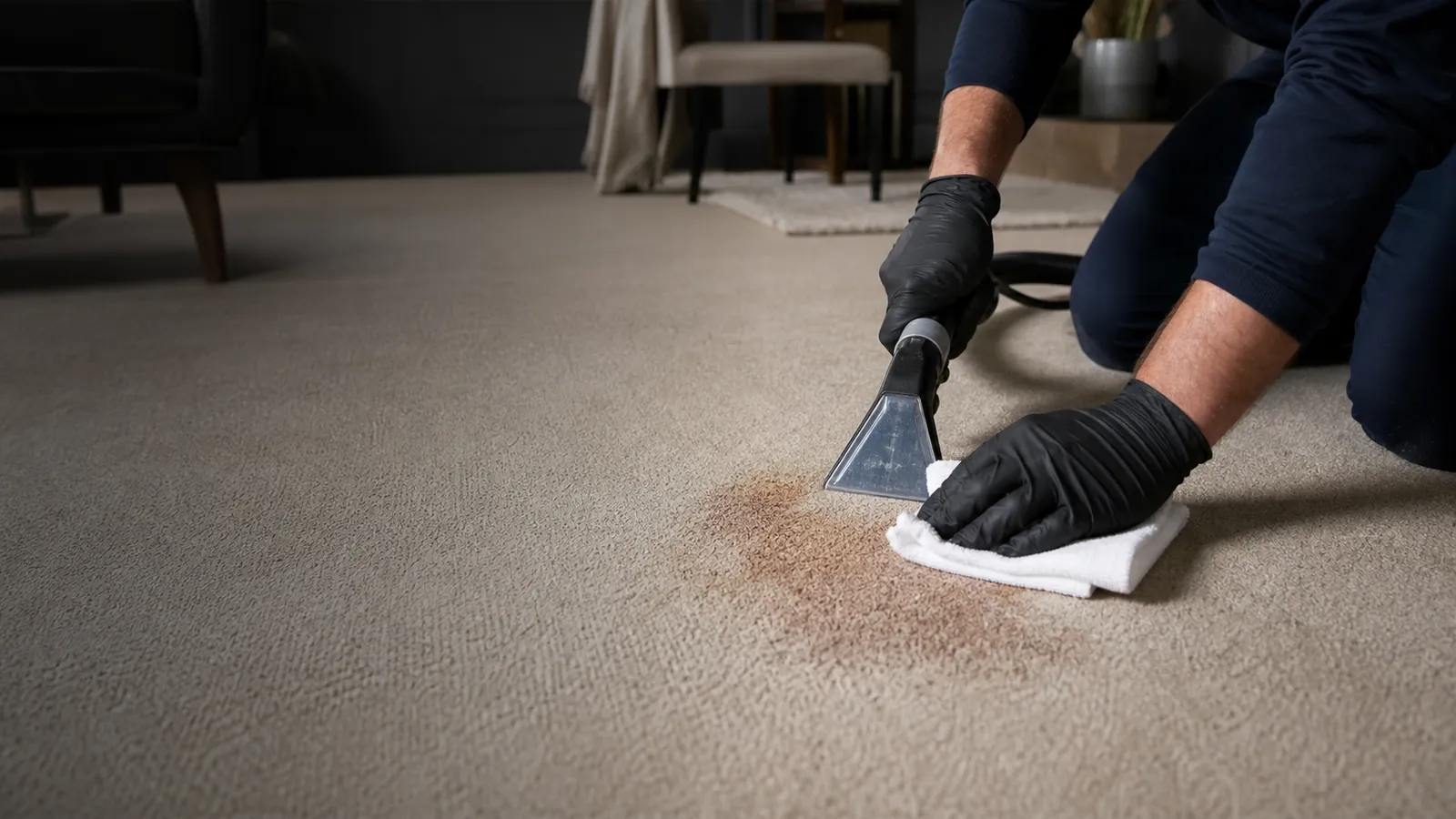
Family life rarely wears a carpet evenly. The route from an outside door, the space around a sofa, a child’s play area and a pet’s preferred resting place can each show a different combination of debris, marks and flattened pile. For a Dalston carpet-cleaning brief, it helps to describe those patterns rather than calling every room heavily soiled. The technician can then distinguish where dry grit is concentrated, where a local spill deserves attention and where appearance is mainly physical wear.
Children and animals do not automatically require a special branded treatment. The important questions concern the actual carpet, the substance present and the way the space must be used afterwards. An unknown odour needs a source discussion; a food spill needs a history; fine outdoor particles need thorough vacuuming. Applying an aggressive product to the whole floor simply because a pet lives in the property is neither precise nor necessarily useful.
Preparation includes a household plan. Toys, feeding items, pet bedding and small furniture should be moved by the occupier. Animals need a secure room away from open doors, hoses and damp carpet. Children should not use the work area as the technician moves equipment. These arrangements protect the household and allow the cleaner to follow a consistent route instead of repeatedly stopping to clear objects.
A carpet visit may form part of regular domestic cleaning, yet the two routines operate at different depths and intervals. Everyday vacuuming and prompt spill response support the carpet between professional appointments. General surface products should not be sprayed onto textile areas, and a professional clean should not be treated as a replacement for ongoing dry-soil removal.
The handover returns the rooms to real use gradually. The customer is told how to ventilate, which routes to keep quiet and when pet beds, rugs or furniture may be replaced. Freshly cleaned pile can pick up debris quickly while damp, so outdoor paws and shoes should stay away. A sensible plan recognises that the property cannot become a showroom; it simply protects the finish during the vulnerable drying period.
SCOPE / CONFIRM BEFORE BOOKING
A post-works carpet clean with preparation at its centre
Included in this brief
- Project history: review of recent decorating, sanding, drilling or plaster work and the carpet protection used.
- Enhanced dry stage: systematic vacuuming of accessible pile, boundaries and routes before suitable wet treatment.
- Deposit triage: separate assessment of dust, paint, adhesive and unknown project marks rather than one blanket promise.
- Final condition review: explanation of what was removed and what represents staining, colour change or physical damage.
Outside this cleaning brief
- Removal of bulk rubble, sharp waste, nails, wet plaster or hazardous construction material is not carpet-cleaning preparation.
- The service does not guarantee removal of cured paint, adhesive, sealant or dye change caused by project chemicals.
- Cleaning should not proceed through active dust production or while trades still need to cross the carpet with tools and materials.
PREPARATION / BEFORE THE VISIT
Prepare the Dalston address without pre-cleaning it.
- Confirm the entrance and any requirement involving street-specific parking controls.
- List the rooms or items covered by carpet cleaning.
- Point out sensitive finishes, pets, alarms and anything that must not be moved.
- Agree the key return, completion contact and any building time restriction.
PRICING / CLEAR STARTING POINTS
Describe the works as carefully as the room count
A post-works quote needs the number and size of carpeted areas, stairs and landings, plus the nature of the project and how the flooring was protected. Mention visible fine dust, paint spots, adhesive, furniture left in place and any room where work is unfinished. The cleaning prices page offers general context; the accepted quotation should define ordinary cleaning and any mark that requires inspection before inclusion. Photographs help show project residue but cannot establish fibre damage or how deeply particles have travelled. Preparation time is part of the workload and should not be hidden behind a cheap room figure. Equally, a cleaner should not sell speculative chemical treatment for every speck. Accurate history supports a proportionate plan and a date after the source of dust has stopped.
01
Single room
From £15 / room
Compact bedroom or study
02
Double room
From £15 / room
Standard double bedroom
03
Lounge
From £15 / room
Living room with clear equipment access
04
Stairs
Quotation
Standard flight, subject to construction
05
Hallway
Quotation
Reachable hall or landing
06
Whole property
Quotation
Measured rooms and fibre types
Prices are guide prices.
Final quotation depends on the property, condition and requirements.
Cardboard can hide moisture history
Boxes absorb humidity and can transfer dirt or print. A softened or stained box is a reason to inspect the carpet beneath rather than placing it elsewhere and booking fragrance treatment.
Metal feet may leave rust
Rust can penetrate and alter carpet colour. Outcome depends on fibre and age, and aggressive chemistry may be unsafe. Mention the source and do not reinstall the item until the carpet is dry and protected.
A closed room still needs routine vacuuming
Once reopened, low traffic reduces but does not eliminate dust. Maintain accessible edges and move light items occasionally where safe. Observation prevents years of hidden accumulation.
A full-property schedule needs order
Where reopening accompanies domestic cleaning, complete dusty room tasks before carpet care and avoid carrying dirty storage containers back across the finished floor.
PROCESS / FOUR DECISIONS
Empty, inspect, clean the room, then restock
01
Clear and identify discoveries
The customer removes belongings and notes dampness, rust, transfer or pests. Unsafe conditions are addressed before the carpet appointment.
02
Clean high surfaces first
Shelves, skirting and settled room dust are handled so debris does not fall onto completed textile. The technician then surveys the exposed carpet.
03
Prepare boundaries and treat suitably
Vacuuming covers the whole accessible room. Fibre and marks inform the selected cleaning process, with permanent outlines recorded.
04
Dry before reoccupation
The customer follows airflow guidance and returns clean belongings only when the carpet is ready, protecting it from immediate compression and transfer.
VISIT / HANDOVER
Let the empty room reveal its condition


Remove boxes and small furniture early enough to inspect underneath. Do not drag rusty metal or damp items across the pile. Clean shelves and ledges, but keep wet hard-surface products away from the floor. Photograph newly revealed marks, note smells and pause if active moisture or pests appear. Tell the cleaner which substantial item will remain and where the room’s clear route begins.
MAP / COVERAGE CONTEXT
Route planning for carpet cleaning in Dalston.
Coverage context for Dalston. This map does not represent a staffed local office.
RELATED SERVICES / SAME AREA
Related services in Dalston
NEARBY AREAS / SAME SERVICE
Carpet Cleaning near Dalston
It may have retained original colour and avoided traffic. Cleaning surrounding soil cannot reverse fading or make exposure history identical.
Stored-room carpet questions for Dalston
Why is the carpet darker under furniture?
No. Some pile may relax, but weight, duration and construction influence recovery. Physical change is not guaranteed away.
Can you remove every furniture dent?
No. Remove them beforehand when safe so the full carpet and any hidden concern can be assessed and quoted accurately.
Should boxes stay until the cleaner arrives?
Only suitable accessible carpet can be treated. The source may sit in belongings, moisture or concealed layers and needs identification first.
Will cleaning solve a musty room?
No. The map describes service coverage; it does not identify a staffed local branch.
Clear the room before defining the clean
For carpet cleaning in Dalston, describe a reopened room after contents are removed. Share furniture outlines, rust, transfer, dampness or odour and identify anything that remains. The resulting scope can address the actual exposed carpet while keeping storage damage and hidden-source concerns within honest boundaries.