
Gipsy Hill / SE19, SE27
Carpet Cleaning Gipsy Hill: Start with the Condition, Not the Machine
- A room-by-room brief before equipment is set up
- Separate plans for loose grit, spills and worn pile
- Measured moisture with a practical drying handover
- Straight answers where cleaning cannot reverse damage

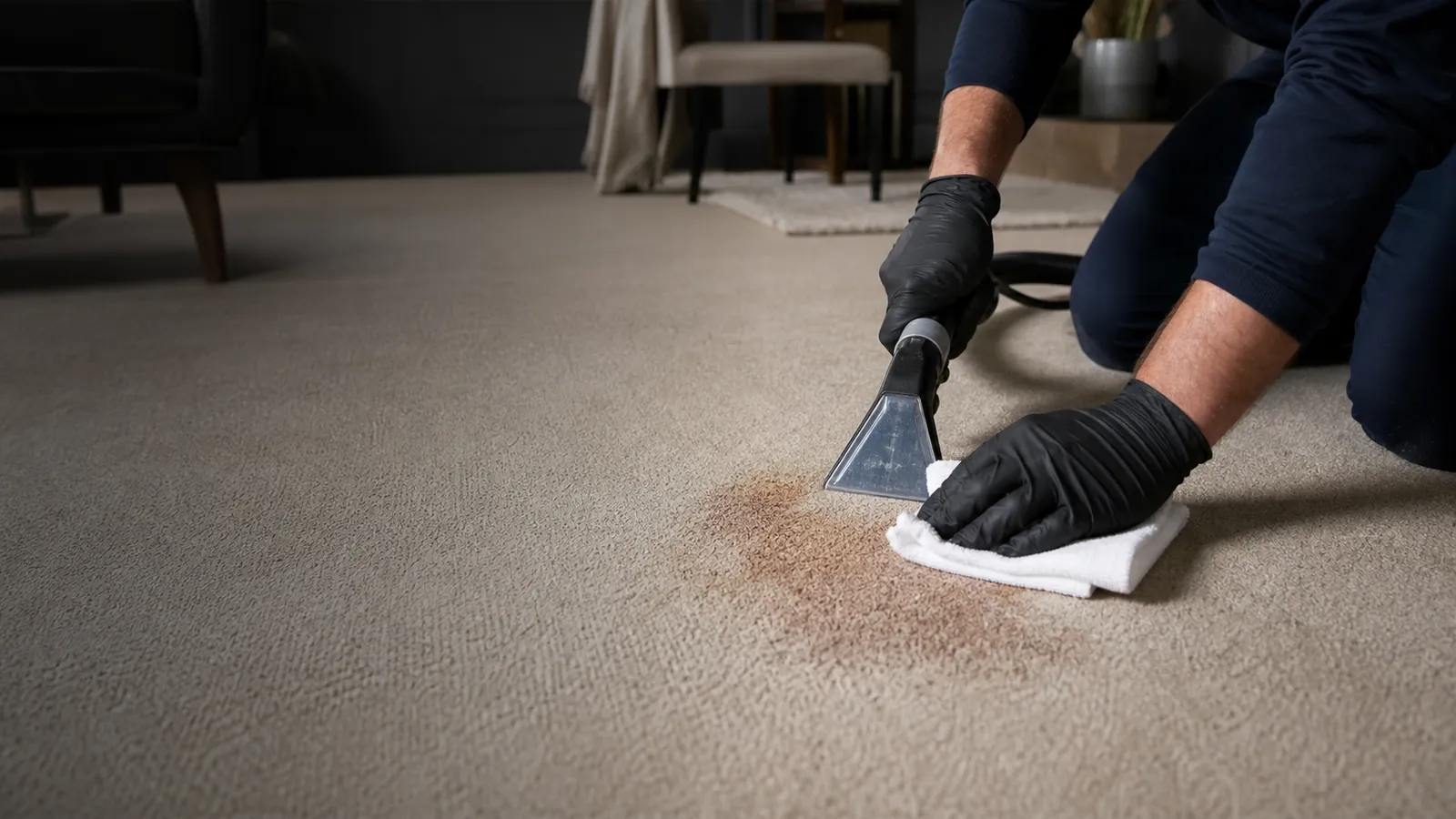
The carpet tells us what sort of appointment it needs
Carpet cleaning is easier to plan when the conversation begins with condition rather than a list of machines. A dull route across a sitting room may be carrying dry grit, but a darker patch beside a favourite chair could also be flattened pile. A pale mark near a window may be colour loss rather than soil. Those distinctions matter because adding more solution is not an answer to wear, fading or fibre damage. For an Gipsy Hill booking, we first establish which rooms are included, how they are used and what has changed since the carpet last looked satisfactory.
The initial walkthrough turns a vague request for a ‘deep clean’ into a workable brief. We note doorways, edges, stairs, furniture positions and any isolated marks the customer wants discussed. The aim is not to attach a dramatic label to every imperfection. It is to decide which problems are likely to improve through vacuuming, controlled pre-treatment and an appropriate cleaning method, and which should be recorded as limitations before work starts.
Carpets that look similar can behave differently. Fibre content, construction, colour response, backing, fitting and previous products all influence the sensible approach. Where uncertainty remains, an unobtrusive test is more useful than confidence based on appearance alone. A test may lead to a gentler method, a change in spot treatment or a decision not to pursue a mark that carries an avoidable risk. That caution is part of professional carpet care, not an excuse to do less.
Some households arrange carpet work alongside domestic cleaning. The two services can share a timetable, although their scopes should remain distinct. General room cleaning deals with surfaces and household dust; carpet care needs its own inspection, preparation, solution choice and drying guidance. Keeping those responsibilities clear prevents a broad cleaning checklist from obscuring a textile-specific concern.
A useful result is judged across the whole room. Concentrating only on the most obvious spot can leave traffic routes, edges and the space beneath movable items looking inconsistent. We therefore plan an order for the booked area and review the finish from normal viewing positions. The closing conversation covers what changed, what did not, and how the carpet should be used while it dries.
PROCESS / FOUR DECISIONS
Move from known facts to the safest supported action
01
Gather labels and history
The customer shares available information and previous product use. Missing facts are recorded plainly rather than inferred from colour or price.
02
Inspect condition before testing
Wear, fitting, marks and vulnerable points guide which questions matter. Testing is targeted to those decisions.
03
Begin conservatively and observe
Dry debris is removed, then a suitable method proceeds with attention to colour, texture and recovery. The technique changes if the carpet gives a reason.
04
Explain without over-diagnosing
The customer reviews the finish and receives a straightforward account of what was done, what remained and how the carpet behaved.
VISIT / HANDOVER
Bring evidence if it exists; do not create a fibre story


Look for labels at accessible edges or in installation documents without pulling up fitted carpet. Keep records of previous cleaning and spot products. Clear small belongings and mention repaired sections or rooms installed at another time. Avoid last-minute chemicals that could change colour response. If the carpet has loose seams or damage, point them out before equipment is prepared.
Blends complicate visual identification
Two fibres can be combined within a pile or construction. A surface that resembles wool or synthetic carpet may not behave uniformly. This is one reason method decisions rely on evidence and response rather than appearance alone.
Previous cleaning changes present behaviour
Residue, repeated wetting and colour alteration can affect how an otherwise known fibre responds. Tell the technician what happened; current condition matters as much as original specification.
A cautious stop is a professional outcome
If a test shows colour movement or another unacceptable change, refusing the requested procedure protects the textile. The cleaner should explain the observation and any safer alternative rather than hiding the decision.
General room care remains straightforward
Between visits, suitable vacuuming and careful spill response support the carpet regardless of uncertain fibre. A domestic cleaning routine should keep hard-surface sprays away from textile edges.
SERVICE TEAMS / THE AGREED WORK
Four coordination decisions inside one room

Which surface is inspected first?
Both can be surveyed during the walkthrough, but tests remain attached to their own textile. The findings shape equipment order and reveal whether a requested item needs a cautious limit.

Where can furniture stand?
An item moved for carpet access cannot block the working route or rest on damp pile after its own cleaning. Weight, stability and available hard flooring influence the plan.

How are spots kept distinct?
A drink may have reached sofa and floor but behaved differently in each. Product history is recorded for both. Treatment and expected outcome are not copied from one to the other.

How will air reach both textiles?
Cushion arrangement, room ventilation and space beneath furniture affect drying. The handover avoids crowding everything back into its normal position too early.
If the room clean is part of domestic cleaning, finish dusting and hard-surface work before textiles where practical. Keep sprays from settling onto either fabric.
PRICING / CLEAR STARTING POINTS
A combined quote needs two itemised lists
For the carpet, provide rooms, dimensions, stairs, condition and furniture boundaries. For upholstery, list each item, seats, loose cushions, fabric information if known and priority marks. The cleaning prices page provides general context, while the final quotation should keep both subtotals or scopes understandable. A combined date may improve logistics, but it does not justify a single undefined bundle. Photographs help with layout and item identification; on-site inspection still governs method. A transparent quote also reserves enough time and floor space so neither textile is rushed to accommodate the other.
01
Single room
From £15 / room
Compact bedroom or study
02
Double room
From £15 / room
Standard double bedroom
03
Lounge
From £15 / room
Living room with clear equipment access
04
Stairs
Quotation
Standard flight, subject to construction
05
Hallway
Quotation
Reachable hall or landing
06
Whole property
Quotation
Measured rooms and fibre types
Prices are guide prices.
Final quotation depends on the property, condition and requirements.
SCOPE / CONFIRM BEFORE BOOKING
What coordinated textile care includes
Included in this brief
- Two-surface inventory: carpet areas and upholstered items listed separately with their own concerns.
- Room-layout decision: safe positions for furniture, tools and drying agreed before work starts.
- Independent methods: inspection, tests, products and equipment chosen for each material rather than shared by assumption.
- Combined handover: separate results and a practical plan for airflow, cushions, furniture and foot traffic.
Outside this cleaning brief
- Upholstery is not included within a carpet room price, and carpet beneath fixed furniture is not automatically accessible.
- The cleaner cannot guarantee identical stain results across textiles with different fibres, dyes and histories.
- Unsafe lifting, dismantling furniture and moving items without adequate drying space lie outside an ordinary combined booking.

PREPARATION / BEFORE THE VISIT
Prepare the Gipsy Hill address without pre-cleaning it.
- Confirm the entrance and any requirement involving street-specific parking controls.
- List the rooms or items covered by carpet cleaning.
- Point out sensitive finishes, pets, alarms and anything that must not be moved.
- Agree the key return, completion contact and any building time restriction.
MAP / COVERAGE CONTEXT
Route planning for carpet cleaning in Gipsy Hill.
Coverage context for Gipsy Hill. This map does not represent a staffed local office.
RELATED SERVICES / SAME AREA
Related services in Gipsy Hill
NEARBY AREAS / SAME SERVICE
Carpet Cleaning near Gipsy Hill
No. Share reliable information if available and state uncertainty. The technician inspects and tests where useful before finalising the method.
Unknown-carpet questions for Gipsy Hill
Must I know the fibre before booking?
It may show texture and condition but rarely proves composition, backing or dye stability. It supports the enquiry rather than replacing inspection.
Can a photograph identify the carpet?
No test removes every uncertainty. It provides evidence at a small point and helps the cleaner choose or reject a procedure.
Does testing guarantee no damage?
Not necessarily. A supported gentler process can still achieve useful cleaning. The priority is improvement without taking an unjustified risk.
Will caution mean the carpet stays dirty?
No. The map describes service coverage; it does not identify a staffed local branch.
Book an inspection-led clean without pretending certainty
For carpet cleaning in Gipsy Hill, send the room list, condition, marks and any reliable installation or product history. If fibre is unknown, say so. The service can test where it informs a decision, adapt the method to observed behaviour and explain the result without inventing a material claim.