
Swiss Cottage / NW3
Plan Conservatory & Garden Cleaning in Swiss Cottage
A material register for conservatory and garden cleaning
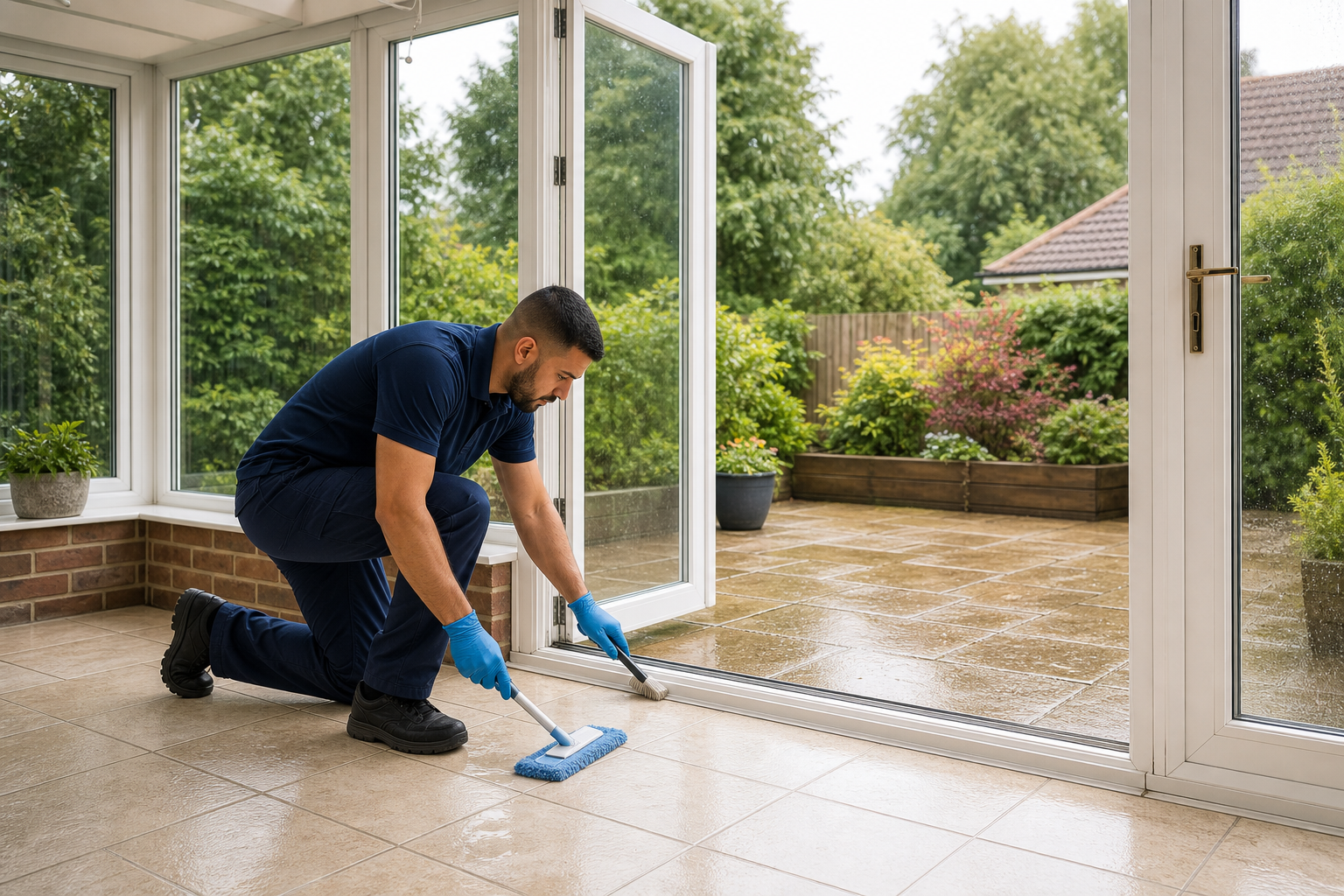

One garden room can contain many finishes
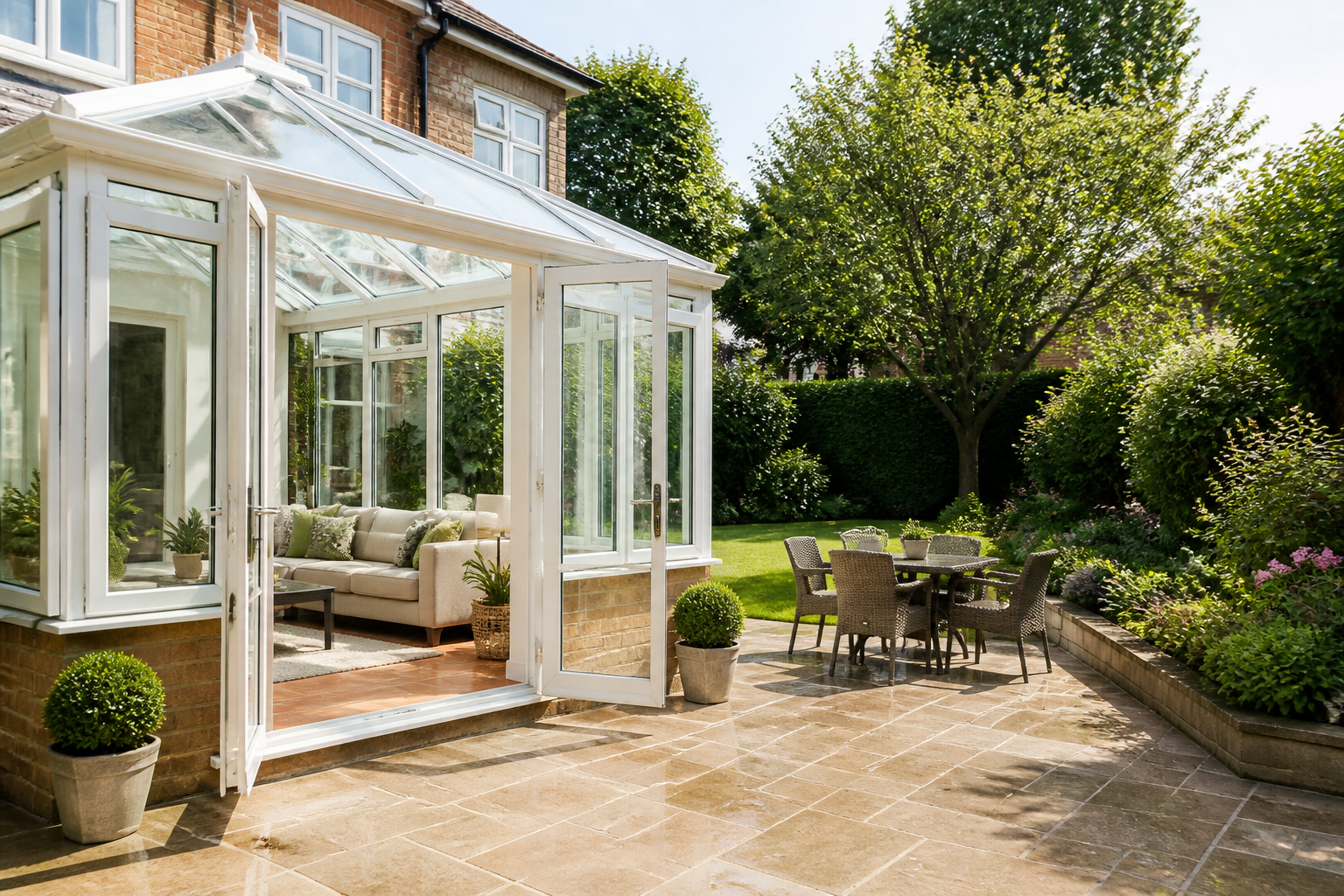
A conservatory and its approach may combine glass, coated metal, uPVC, painted timber, sealed floor, natural stone and composite furniture. Colour similarity does not make those materials interchangeable. The survey creates a register before products are chosen.
Labels, installation information and recent repairs help, but present condition still matters. Loose coating, open grain, failed sealant and porous stone can change the safe response. Uncertainty is recorded instead of converted into a confident material claim.
Testing has a purpose. A small check can inform colour stability, residue response or whether a finish marks under light agitation. It does not guarantee that every stain across the property will behave identically.
The principal service overview is available through conservatory and garden cleaning; it remains a scope guide, not permission to carry one product from glazing onto every garden object.
At handover, each registered material is reviewed against its own start point. Different methods and outcomes can still represent a consistent professional standard.
SCOPE / CONFIRM BEFORE BOOKING
Create a finish register before combining indoor and outdoor work
Included in this brief
- Safely reachable glass and sound coated frames
- Named sealed floors or stable paving after identification
- Garden fixtures explicitly tested and included
- A material-by-material outcome and aftercare note
Outside this cleaning brief
- Stripping, sanding, sealing or refinishing damaged materials
- Assumed treatment of unlabeled electrical or fragile objects
- A universal stain guarantee across different finishes
PRICING / CLEAR STARTING POINTS
Build the quotation from evidence
The estimate groups surfaces by material, density, access and condition. Several small finishes can require more setup than one open area. The cleaning prices guide helps only after photographs and labels show what the combined request actually contains.
01
Small conservatory
Quotation
Reachable internal glazing and frames
02
Medium conservatory
Quotation
Additional panels and agreed garden features
03
Conservatory and patio
Quotation
Combined scope with drainage planning
04
High or complex glazing
Quotation
Safe reach and equipment assessed first
Prices are guide prices.
Final quotation depends on the property, condition and requirements.
SERVICE TEAMS / THE AGREED WORK
Assign roles for this architecture

Material registrar
Labels each included finish and repair boundary.

Test-and-detail operative
Uses small checks to support a practical method decision.

Ground-finish cleaner
Matches outdoor tools to porosity, joints and coating.

Outcome recorder
Explains different results without forcing a false visual match.
The team follows the recorded surfaces, materials and constraints rather than a generic area routine. The Swiss Cottage site record links the opening question “One garden room can contain many finishes” with the measured boundary “Create a finish register before combining indoor and outdoor work”. Before arrival, photographs should show the transition between those ideas, not just a close-up mark. The crew then uses the solar sequence to decide where equipment can stand and which material deserves a small test. Appearance alone does not establish coating durability. Items need explicit inclusion and condition review. Another point comes from painted timber frames: Loose or weathered coating can lift under unsuitable work. Cleaning is not repainting. These observations remain cleaning evidence rather than authority for repairs, horticulture, waste or unlisted space. A heat-aware estimate records glass faces, frame density, safe reach, blinds, shade and the timed outdoor area. The cleaning prices guide cannot predict how many sections can be worked before direct sun changes conditions. The final quotation names the surfaces and allows a practical change of order. At the final walkthrough, the customer receives the indoor faces, outdoor hard areas, drying notes and permanent exclusions in one repeatable list.
PROCESS / FOUR DECISIONS
A four-stage delivery sequence
01
Read light and heat
Record sun direction, blinds, room view and outdoor shade.
02
Release dry debris
Remove pollen and dust before warm surfaces receive moisture.
03
Work in cooling sections
Move through stable panes, frames and paving without chasing rapid drying.
04
Review after the angle changes
Inspect from normal positions and document sealed-unit or fading limits.
PREPARATION / BEFORE THE VISIT
Prepare the Swiss Cottage address without pre-cleaning it.
- Confirm the entrance and any requirement involving controlled parking zones.
- List the rooms or items covered by conservatory and garden cleaning.
- Point out sensitive finishes, pets, alarms and anything that must not be moved.
- Agree the key return, completion contact and any building time restriction.
VISIT / HANDOVER
Prepare the agreed route

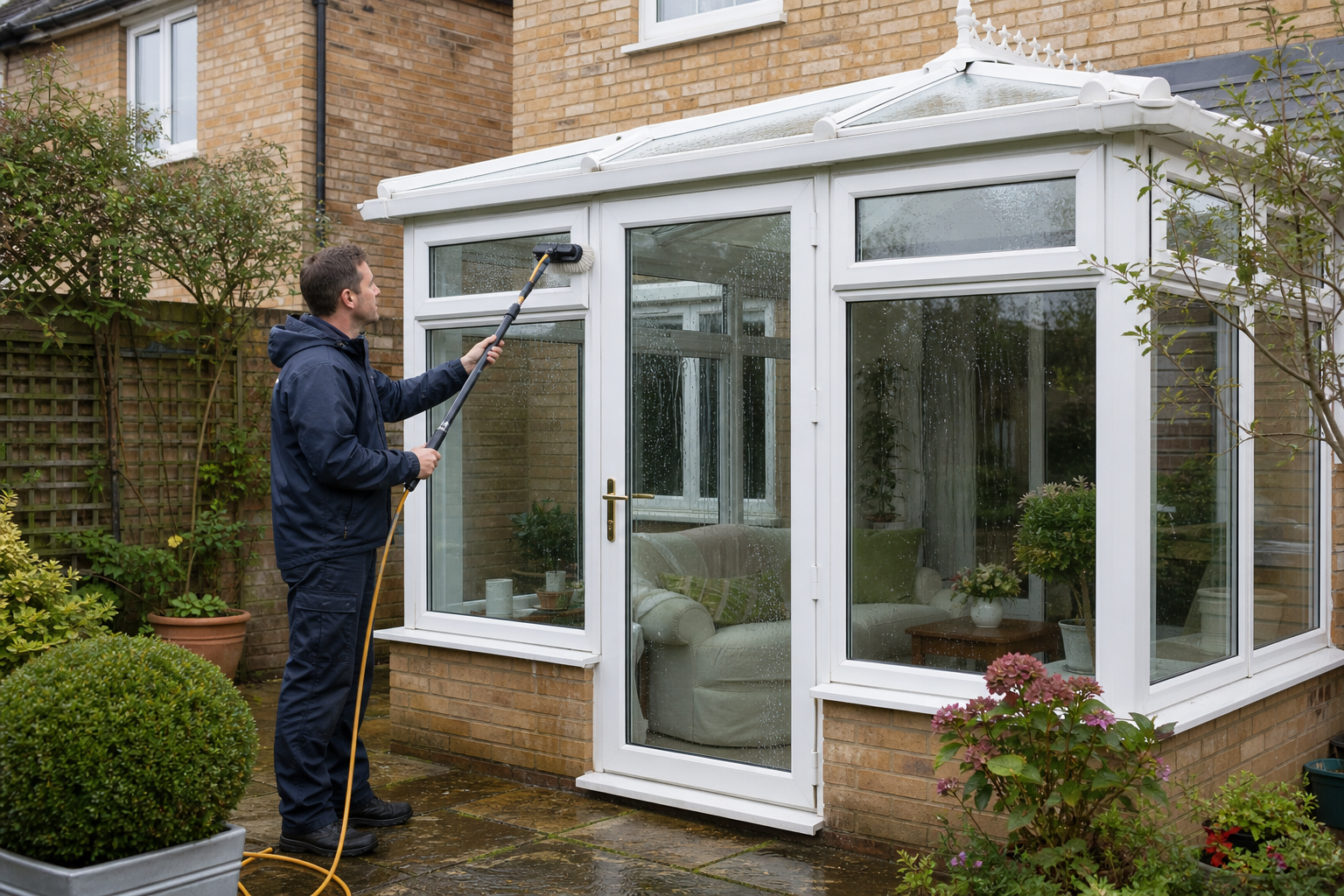
Open or close blinds only through their normal safe operation, clear the main view line and identify recently replaced panes or sealant. Avoid heating the room immediately before arrival. A second Swiss Cottage review keeps three practical points visible. First, painted timber frames: Loose or weathered coating can lift under unsuitable work. Cleaning is not repainting. The adjacent concern is natural stone porosity, where old staining can sit within the material; pressure and chemistry are selected cautiously. Before equipment moves, the team follows the instruction “List every finish” and walk from glazing to garden and record transitions. The solar architecture adds another observation: Glare changes what can be seen. A pane that appears clear from the ladder position may show residue from a chair or doorway. The survey identifies the everyday view lines, then the final inspection returns to them after the surface has settled. This matters to the quotation because the estimate groups surfaces by material, density, access and condition. several small finishes can require more setup than one open area. the cleaning prices guide helps only after photographs and labels show what the combined request actually contains. The customer should also retain the answer to a common question—Can roof glass be cleaned in full sun? Only if temperature, access and product behaviour support safe work; order or timing may change.—and make the relevant access or material evidence available before arrival. Finally, List surfaces and fixtures by room position, with labels, repairs and photographs. A material register allows safer decisions than a one-product garden package. Bringing these points together inside the existing preparation block makes the Swiss Cottage page auditable without adding another visual section or implying a service beyond the authorised hard surfaces.
Thermal stress is not a cleaning target
Very hot glass should not receive abrupt cold treatment. The team adjusts timing rather than risking a pane to meet a fixed order.
Glare hides and reveals residue
Inspection from more than one position distinguishes a missed area from reflection, scratches or marks inside a sealed unit.
Shade lines on paving
Different exposure can create permanent colour contrast. Cleaning suitable soil does not equalise years of sunlight.
Furniture beneath warm frames
Items are kept clear until drips and frame edges are dry; electrical equipment remains outside the wet route.
MAP / COVERAGE CONTEXT
Route context for conservatory & garden cleaning in Swiss Cottage.
Coverage context for Swiss Cottage. This map does not represent a staffed local office.
RELATED SERVICES / SAME AREA
Related cleaning services in Swiss Cottage
NEARBY AREAS / LOCAL ROUTES
Nearby cleaning coverage around Swiss Cottage
Only if temperature, access and product behaviour support safe work; order or timing may change.
Questions to resolve before booking
Can roof glass be cleaned in full sun?
No. Fading is colour change, not a removable layer.
Will cleaning remove sun fading?
That is often where everyday reflections and streaks are actually noticed.
Why inspect from a chair?
Yes. A responsible sequence follows material and conditions rather than a fixed list.
Can outdoor work move into shade first?
No. The map describes service coverage; it does not identify a staffed local branch.
Request a defined conservatory and garden plan
Send photographs at the time glare is most noticeable, plus shade, blind, access and patio notes. A temperature-aware plan can protect glass and produce a fairer visual review.